
Historical · U.S. House · Texas · District 6
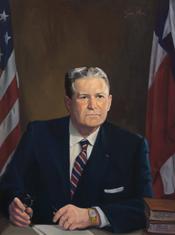
Olin Teague
Former U.S. Representative · Texas District 6 · 1946–1979 · Democratic
Olin Teague represented Texas's District 6 in the United States House of Representatives (1946–1979) for the Democratic party. The page below collects sourced biographical facts, term history, committee roles, and provenance for Teague.
Bioguide ID: T000110
Key facts
- Full name
- Olin Teague
- State
- Texas
- District
- District 6
- Party
- Democratic
- House service
- 1946–1979
- First House term
- 1946
- Status
- Left office
- Current term ends
- —
- Born
- 1910
- Bioguide ID
- T000110
- Committee assignments
- —
- Dataset version
- 1.20260606
Biographical narrative
1,011 words · sourced from the Wikipedia REST extract
Olin E. Teague was a prominent American politician and veteran who served as a U.S. Representative for Texas's 6th congressional district from 1946 until 1979. A member of the Democratic Party, Teague was known for his extensive legislative work, particularly in veterans' affairs, and for his contributions to space exploration during his long tenure in Congress. His military service during World War II and his subsequent political career marked him as a significant figure in Texas and national politics.
Early life and career
Olin Earl Teague was born on April 6, 1910, in Oklahoma. He spent his formative years in Mena, Arkansas, where he developed a reputation as an athlete, earning the nickname "Tiger" due to his prowess on the football field during high school. Teague pursued higher education at the Agricultural and Mechanical College of Texas, now known as Texas A&M University, from which he graduated in 1932.
Following his graduation, Teague joined the United States Army in 1940, beginning his military career as a lieutenant. His service in World War II was distinguished; he rose to the rank of colonel by the time of his discharge in 1946. Teague participated in significant military operations, including the D-Day invasion of Normandy. His bravery and leadership earned him several military honors, including the Silver Star with two clusters, the Bronze Star, and two Purple Hearts, reflecting his commitment and sacrifice during the war.
Teague's military service and educational background laid the foundation for his later political career, as he transitioned from the armed forces to public service.
House tenure
Teague's congressional career began when he was elected to the U.S. House of Representatives in 1946, representing Texas's 6th congressional district. Over the course of his 32-year tenure, he served a total of 17 terms, becoming a well-respected figure in the House. His long service is notable for its focus on veterans' issues, reflecting his own experiences as a veteran.
Throughout his time in Congress, Teague was recognized for his advocacy on behalf of veterans. He authored more veterans' legislation than any other member of Congress prior to him, demonstrating a strong commitment to improving the lives of servicemen and women. His efforts included significant reforms to veterans' benefits, particularly the overhaul of survivor benefits in 1956, which led to the establishment of the Dependency and Indemnity Compensation program.
Teague's political career was not without controversy. He was part of the majority of the Texas delegation that chose not to sign the 1956 Southern Manifesto, which opposed the Supreme Court's decision in Brown v. Board of Education that mandated the desegregation of public schools. However, he voted against several key civil rights measures, including the Civil Rights Acts of 1957, 1960, 1964, and 1968, as well as the Voting Rights Act of 1965 and the 24th Amendment to the U.S. Constitution.
In addition to his work on veterans' issues, Teague was involved in various legislative initiatives throughout his career. He proposed numerous amendments addressing a wide range of topics, including the electoral process, representation for the District of Columbia, and equal rights regardless of sex. His legislative efforts reflected a broad interest in governance and civil rights, although his voting record on specific civil rights legislation has been a point of discussion among historians.
Teague held several leadership positions during his time in Congress. He served as chairman of the House Democratic Caucus and was the chairman of the House Committee on Veterans Affairs from 1955 to 1972. His leadership in this committee was instrumental in shaping policies that affected veterans and their families. Later in his career, he also chaired the House Committee on Science and Astronautics from 1973 to 1978, overseeing significant developments in space exploration, including NASA's efforts to land a man on the moon. In 1976, he played a key role in establishing the Office of Science and Technology Policy, further solidifying his influence in scientific and technological advancements.
Legislative focus and committees
Teague's legislative focus was primarily centered on veterans' affairs, reflecting his background and commitment to those who served in the military. His efforts to improve veterans' benefits and services were a hallmark of his congressional career. He was particularly known for his work on survivor benefits, which provided critical support to the families of deceased servicemen.
In addition to veterans' issues, Teague's legislative agenda included a variety of proposals aimed at reforming the electoral process and expanding civil rights. His amendments sought to address the electoral college, representation for the District of Columbia, and equal rights for women. These proposals indicated his engagement with broader social issues, even as his voting record on civil rights legislation has drawn scrutiny.
Teague's leadership roles in Congress allowed him to influence significant legislative outcomes. As chairman of the House Committee on Veterans Affairs, he was instrumental in advocating for policies that directly impacted the lives of veterans and their families. His tenure in this position coincided with a period of significant change in how the government addressed veterans' needs, and his contributions were pivotal in shaping the landscape of veterans' affairs.
His later role as chairman of the House Committee on Science and Astronautics placed him at the forefront of the United States' space exploration efforts during a critical time in history. His oversight of NASA's initiatives, including the Apollo program, underscored his commitment to advancing scientific research and exploration.
Teague's legacy is reflected not only in the legislation he championed but also in the institutions and awards named in his honor. The Olin E. Teague Veterans Center in Temple, Texas, serves as a testament to his dedication to improving the quality of life for veterans. Additionally, the annual Olin E. Teague Award recognizes contributions to the welfare of disabled veterans, further solidifying his impact on veterans' affairs.
Olin E. Teague passed away on January 23, 1981, leaving behind a complex legacy as a veteran, legislator, and advocate for those who served in the military. His burial in Arlington National Cemetery marks his service to the nation, both in uniform and as a public servant.
Notable legislation
Sponsored and co-sponsored legislation for Olin Teague is pending operator curation. The biographical narrative above carries the same provenance trail until per-bill rows are written.
Sources
- [1]https://en.wikipedia.org/wiki/Olin_E._TeagueWikipedia · retrieved 2026-06-06
Notable quotes
Sourced quotes for Olin Teague are pending operator curation. Narrative-scope provenance remains attached below.
Sources
- [1]https://en.wikipedia.org/wiki/Olin_E._TeagueWikipedia · retrieved 2026-06-06
Key positions
Curated policy positions for Olin Teague are pending operator review. The biographical narrative above carries the same provenance trail until per-topic positions are written.
Sources
- [1]https://en.wikipedia.org/wiki/Olin_E._TeagueWikipedia · retrieved 2026-06-06
Terms served
- 1946–1947U.S. House · Term 1 · Democratic
- 1947–1949U.S. House · Term 2 · Democratic
- 1949–1951U.S. House · Term 3 · Democratic
- 1951–1953U.S. House · Term 4 · Democratic
- 1953–1955U.S. House · Term 5 · Democratic
- 1955–1957U.S. House · Term 6 · Democratic
- 1957–1959U.S. House · Term 7 · Democratic
- 1959–1961U.S. House · Term 8 · Democratic
- 1961–1963U.S. House · Term 9 · Democratic
- 1963–1965U.S. House · Term 10 · Democratic
- 1965–1967U.S. House · Term 11 · Democratic
- 1967–1969U.S. House · Term 12 · Democratic
- 1969–1971U.S. House · Term 13 · Democratic
- 1971–1973U.S. House · Term 14 · Democratic
- 1973–1975U.S. House · Term 15 · Democratic
- 1975–1977U.S. House · Term 16 · Democratic
- 1977–1979U.S. House · Term 17 · Democratic
Sources & provenance
Every attributable claim above carries a per-section [N] marker that resolves to the corresponding URL below. Each entry records the upstream provider, the canonical URL, and the timestamp at which the source was retrieved by the ingest pipeline.
Key facts
- https://bioguide.congress.gov/search/bio/T000110bioguide · retrieved 2026-06-06
- https://www.govtrack.us/congress/members/410692govtrack · retrieved 2026-06-06
Biographical narrative
- https://en.wikipedia.org/wiki/Olin_E._Teaguewikipedia · retrieved 2026-06-06
Find your representative
Every U.S. state elects representatives by district. Browse Texas’s delegation, the full former-representative roster, or explore the role and term length.
Related on The Candidate
- Preceded by Luther JohnsonEarlier holder of the Texas District 6 House seat · Democratic.Open
- Succeeded by Joe BartonLater holder of the Texas District 6 House seat · Republican.Open
- Charles StewartFormer U.S. Representative · Texas District 1 · DemocraticOpen
- David KaufmanFormer U.S. Representative · Texas District 1 · DemocraticOpen
- Eugene BlackFormer U.S. Representative · Texas District 1 · DemocraticOpen
- George SmythFormer U.S. Representative · Texas District 1 · DemocraticOpen