
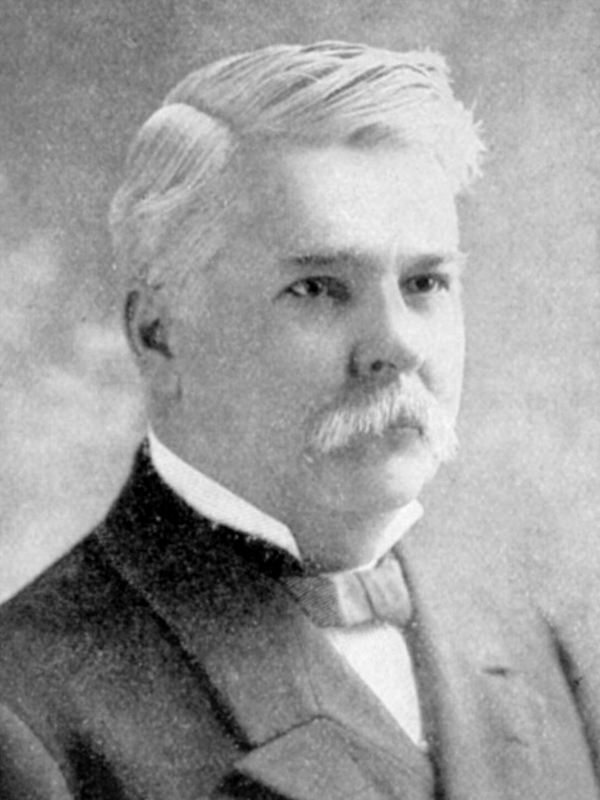
Historical · U.S. House · Texas · District 9
Joseph Sayers
Former U.S. Representative · Texas District 9 · 1885–1899 · Democratic
Joseph Sayers represented Texas's District 9 in the United States House of Representatives (1885–1899) for the Democratic party. The page below collects sourced biographical facts, term history, committee roles, and provenance for Sayers.
Bioguide ID: S000099
Key facts
- Full name
- Joseph Sayers
- State
- Texas
- District
- District 9
- Party
- Democratic
- House service
- 1885–1899
- First House term
- 1885
- Status
- Left office
- Current term ends
- —
- Born
- 1841
- Bioguide ID
- S000099
- Committee assignments
- —
- Dataset version
- 1.20260606
Biographical narrative
906 words · sourced from the Wikipedia REST extract
Joseph Sayers was a prominent American politician and lawyer who served as a U.S. Representative for Texas's 9th congressional district from 1885 until 1899. A member of the Democratic Party, Sayers was known for his conservative views and played a significant role in Texas politics during the late 19th century. Following his tenure in the House of Representatives, he became the 22nd governor of Texas, serving from 1899 to 1903. His political career was marked by a commitment to education, social services, and labor rights, as well as a focus on the needs of his constituents during times of crisis.
Early life and career
Joseph Sayers was born on September 23, 1841, in Grenada, Mississippi, to David Sayers and Mary Thomas (née Peete). His early life was marked by personal tragedy, as his mother passed away in 1847. Shortly thereafter, Sayers moved to Texas with his father and younger brother, William. The family settled in Bastrop, Texas, where Sayers and his brother attended the Bastrop Military Institute, an educational institution that provided them with a foundation for their future endeavors.
With the onset of the Civil War, Sayers joined the Confederate States Army, enlisting in the 5th Texas Regiment, a cavalry unit under the command of General Tom Green. He demonstrated bravery during the conflict, notably participating in the Battle of Valverde in New Mexico, where he was recognized for his valor in capturing an artillery battery. His military service continued as he was wounded in the Battle of Fort Bisland in Louisiana, which led to his promotion to major and appointment as chief of staff to General Green. Sayers sustained another injury at the Battle of Mansfield and ultimately served as the assistant adjutant to General Richard Taylor after Green's death.
After the war, Sayers returned to Texas and transitioned into civilian life. He opened a school while simultaneously studying law, eventually gaining admission to the bar. He formed a legal partnership with G. "Wash" Jones, which marked the beginning of his professional career in law.
In his personal life, Sayers married Ada Walton in 1868, but she died just three years later. He later married Ada's younger sister, Orline Walton, in 1879. Orline was an amateur painter and was actively involved in the Methodist Church and its educational initiatives. Their marriage coincided with Sayers's rise in political prominence.
House tenure
Sayers's political career began in earnest in 1873 when he was elected as a state senator in the 13th Texas Legislature. During his time in the Senate, he worked to reverse many of the policies enacted by the Radical Republicans. After his Senate term, he served as chairman of the Texas State Democratic Executive Committee for three years, presiding over state Democratic conventions in 1876 and 1878. His political influence grew, and in 1878, he was elected lieutenant governor under Oran M. Roberts.
Sayers first entered the U.S. House of Representatives in 1885, representing Texas's 10th congressional district. He was elected to the 49th Congress and subsequently re-elected for six additional terms, serving a total of seven terms in the House. His electoral success included victories against notable opponents, such as the Republican candidate Augustus Belknap in 1888. Sayers's tenure in Congress was characterized by his commitment to his constituents and his advocacy for policies that aligned with his Democratic values.
In 1898, Sayers decided to run for governor of Texas, culminating in his election victory against Barnett Gibbs, the Populist party candidate. His time in Congress laid the groundwork for his gubernatorial campaign, where he leveraged his legislative experience and established political connections.
Legislative focus and committees
During his time in the House of Representatives, Sayers focused on a range of legislative issues that reflected the interests and needs of his constituents. His work in Congress was marked by a commitment to education, labor rights, and social services. Sayers was known for his conservative approach, advocating for policies that aimed to protect public lands for homesteaders and educational institutions rather than allowing them to be sold cheaply to speculators.
Sayers's legislative efforts included supporting measures that exempted labor unions from antitrust laws and outlawed blacklists, which were significant issues during his time. He also championed increased funding for education, prisons, and social service institutions, reflecting a broader commitment to improving the welfare of Texans. His leadership in these areas contributed to a more robust framework for public services in the state.
After leaving Congress in 1899, Sayers continued to influence Texas politics as he assumed the governorship. His gubernatorial term was marked by significant challenges, including natural disasters such as the devastating Galveston Hurricane of 1900 and severe droughts affecting agricultural production. Sayers's administration was noted for its effective management of disaster relief and the distribution of funds to assist those affected by these crises.
In summary, Joseph Sayers's career as a U.S. Representative and later as governor of Texas was characterized by his dedication to public service, a focus on education and labor rights, and a commitment to addressing the needs of his constituents during challenging times. His legacy in Texas politics is remembered for his contributions to the state's legislative framework and his role in shaping the Democratic Party's direction in the late 19th century. After his political career, Sayers returned to his law practice and continued to serve in various capacities until his death on May 15, 1929. He is buried in Fairview Cemetery in Bastrop, Texas.
Notable legislation
Sponsored and co-sponsored legislation for Joseph Sayers is pending operator curation. The biographical narrative above carries the same provenance trail until per-bill rows are written.
Sources
- [1]https://en.wikipedia.org/wiki/Joseph_D._SayersWikipedia · retrieved 2026-06-06
Notable quotes
Sourced quotes for Joseph Sayers are pending operator curation. Narrative-scope provenance remains attached below.
Sources
- [1]https://en.wikipedia.org/wiki/Joseph_D._SayersWikipedia · retrieved 2026-06-06
Key positions
Curated policy positions for Joseph Sayers are pending operator review. The biographical narrative above carries the same provenance trail until per-topic positions are written.
Sources
- [1]https://en.wikipedia.org/wiki/Joseph_D._SayersWikipedia · retrieved 2026-06-06
Terms served
- 1885–1887U.S. House · Term 1 · Democratic
- 1887–1889U.S. House · Term 2 · Democratic
- 1889–1891U.S. House · Term 3 · Democratic
- 1891–1893U.S. House · Term 4 · Democratic
- 1893–1895U.S. House · Term 5 · Democratic
- 1895–1897U.S. House · Term 6 · Democratic
- 1897–1899U.S. House · Term 7 · Democratic
Sources & provenance
Every attributable claim above carries a per-section [N] marker that resolves to the corresponding URL below. Each entry records the upstream provider, the canonical URL, and the timestamp at which the source was retrieved by the ingest pipeline.
Key facts
- https://bioguide.congress.gov/search/bio/S000099bioguide · retrieved 2026-06-06
- https://www.govtrack.us/congress/members/409609govtrack · retrieved 2026-06-06
Biographical narrative
- https://en.wikipedia.org/wiki/Joseph_D._Sayerswikipedia · retrieved 2026-06-06
Find your representative
Every U.S. state elects representatives by district. Browse Texas’s delegation, the full former-representative roster, or explore the role and term length.
Related on The Candidate
- Succeeded by George BurgessLater holder of the Texas District 9 House seat · Democratic.Open
- Charles StewartFormer U.S. Representative · Texas District 1 · DemocraticOpen
- David KaufmanFormer U.S. Representative · Texas District 1 · DemocraticOpen
- Eugene BlackFormer U.S. Representative · Texas District 1 · DemocraticOpen
- George SmythFormer U.S. Representative · Texas District 1 · DemocraticOpen
- Democratic PartyFederal candidates and office holders on the Democratic line.Open