
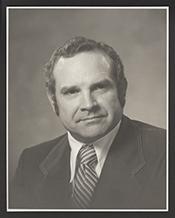
Historical · U.S. House · Utah · District 2
Allan Howe
Former U.S. Representative · Utah District 2 · 1975–1977 · Democratic
Allan Howe represented Utah's District 2 in the United States House of Representatives (1975–1977) for the Democratic party. The page below collects sourced biographical facts, term history, committee roles, and provenance for Howe.
Bioguide ID: H000851
Key facts
- Full name
- Allan Howe
- State
- Utah
- District
- District 2
- Party
- Democratic
- House service
- 1975–1977
- First House term
- 1975
- Status
- Left office
- Current term ends
- —
- Born
- 1927
- Bioguide ID
- H000851
- Committee assignments
- —
- Dataset version
- 1.20260605
Biographical narrative
855 words · sourced from the Wikipedia REST extract
Allan Howe was a U.S. Representative from Utah, serving in the House of Representatives as a member of the Democratic Party. His congressional career began in 1975 and concluded in 1977. Howe's tenure was marked by various legal and political experiences, as well as a notable controversy that affected his re-election bid. He was born on September 6, 1927, in South Cottonwood, Utah, and passed away on December 14, 2000, in Arlington, Virginia.
Early life and career
Allan Howe was born in South Cottonwood, a community near Murray, Utah. He completed his primary and secondary education in local public schools before pursuing higher education at the University of Utah. He earned a Bachelor of Science degree in 1952, followed by a Juris Doctor degree in 1954. After completing his education, Howe served in the United States Coast Guard from 1946 to 1947, a period that contributed to his sense of public service.
Following his military service, Howe embarked on a diverse career in law and government. He began his professional journey as a deputy Salt Lake County attorney and later served as the city attorney for South Salt Lake. His legal career expanded when he became an administrative assistant and field representative for U.S. Senator Frank E. Moss from 1959 to 1964. This position allowed him to gain valuable experience in federal legislative processes and constituent services.
In the mid-1960s, Howe continued to build his career in public service by serving as the assistant attorney general of Utah from 1965 to 1966. He then transitioned to a role as administrative assistant to Governor Cal Rampton from 1966 to 1968. His commitment to regional development was further demonstrated when he became the executive director of the Four Corners Regional Development Commission, a position he held from 1968 to 1972. In addition to his governmental roles, Howe maintained a law practice in Salt Lake City.
Howe was actively involved in the Democratic Party at the state level, serving as a delegate to Utah State Democratic conventions from 1954 to 1960. He also participated as an alternate delegate to the 1960 Democratic National Convention, further solidifying his engagement in the political landscape of Utah.
House tenure
Allan Howe was elected to the U.S. House of Representatives in 1974, representing Utah's 2nd congressional district. His election to the Ninety-fourth Congress marked the beginning of his formal legislative career at the federal level. During his time in office, Howe participated in various legislative activities and engaged with constituents on issues pertinent to his district.
However, his tenure was not without controversy. In June 1976, Howe was arrested in Salt Lake City on misdemeanor charges related to soliciting sex for hire. The incident occurred when he allegedly propositioned an undercover police officer posing as a prostitute. Given the cultural context of his district, which was predominantly composed of members of the Church of Jesus Christ of Latter-day Saints, the scandal had significant implications for his political career. Howe maintained his innocence, asserting that he was the target of a politically motivated setup.
Despite the controversy surrounding his arrest, Howe retained the support of local Democratic officials, as he had already secured his nomination at the party convention. However, he faced increasing pressure to resign from his position. Ultimately, he chose not to step down, leading the state Democratic Party executive committee to co-endorse another candidate, Daryl J. McCarty, as a write-in option for the upcoming election.
Howe's re-election campaign was ultimately unsuccessful. He lost to Republican candidate Dan Marriott in November 1976, marking the end of his congressional career. His defeat was influenced not only by the scandal but also by the broader political climate of the time.
Legislative focus and committees
During his time in the House of Representatives, Allan Howe's legislative focus encompassed various issues relevant to his constituents and the broader interests of the state of Utah. While specific details regarding the bills he sponsored or the committees he served on are not available, it can be inferred that his background in law and public service informed his approach to legislative matters.
Howe's experience as a former attorney and his roles in state government likely shaped his perspectives on legal and regulatory issues. His involvement in regional development through the Four Corners Regional Development Commission may have also influenced his priorities, particularly in areas related to economic development, infrastructure, and community services.
Despite the challenges he faced during his tenure, including the impact of the scandal on his public image and electoral prospects, Howe's time in Congress was characterized by his engagement in the legislative process and his efforts to represent the interests of his constituents.
After leaving Congress, Howe continued to work in Washington, D.C., where he transitioned to a career as a lobbyist. He eventually represented the National Park and Hospitality Association, contributing to discussions on issues related to national parks and tourism.
Allan Howe passed away on December 14, 2000, in Arlington, Virginia, at the age of 73. His life and career reflect the complexities of public service, the challenges of political life, and the impact of personal conduct on professional trajectories.
Notable legislation
Sponsored and co-sponsored legislation for Allan Howe is pending operator curation. The biographical narrative above carries the same provenance trail until per-bill rows are written.
Sources
- [1]https://en.wikipedia.org/wiki/Allan_Turner_HoweWikipedia · retrieved 2026-06-05
Notable quotes
Sourced quotes for Allan Howe are pending operator curation. Narrative-scope provenance remains attached below.
Sources
- [1]https://en.wikipedia.org/wiki/Allan_Turner_HoweWikipedia · retrieved 2026-06-05
Key positions
Curated policy positions for Allan Howe are pending operator review. The biographical narrative above carries the same provenance trail until per-topic positions are written.
Sources
- [1]https://en.wikipedia.org/wiki/Allan_Turner_HoweWikipedia · retrieved 2026-06-05
Terms served
- 1975–1977U.S. House · Term 1 · Democratic
Sources & provenance
Every attributable claim above carries a per-section [N] marker that resolves to the corresponding URL below. Each entry records the upstream provider, the canonical URL, and the timestamp at which the source was retrieved by the ingest pipeline.
Key facts
- https://bioguide.congress.gov/search/bio/H000851bioguide · retrieved 2026-06-05
- https://www.govtrack.us/congress/members/405698govtrack · retrieved 2026-06-05
Biographical narrative
- https://en.wikipedia.org/wiki/Allan_Turner_Howewikipedia · retrieved 2026-06-05
Find your representative
Every U.S. state elects representatives by district. Browse Utah’s delegation, the full former-representative roster, or explore the role and term length.
Related on The Candidate
- Preceded by Sherman LloydEarlier holder of the Utah District 2 House seat · Republican.Open
- Succeeded by David MarriottLater holder of the Utah District 2 House seat · Republican.Open
- Clarence AllenFormer U.S. Representative · Utah District 1 · RepublicanOpen
- Don ColtonFormer U.S. Representative · Utah District 1 · RepublicanOpen
- Douglas StringfellowFormer U.S. Representative · Utah District 1 · RepublicanOpen
- Henry DixonFormer U.S. Representative · Utah District 1 · RepublicanOpen