
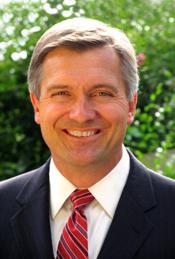
Historical · U.S. House · Utah · District 4
Jim Matheson
Former U.S. Representative · Utah District 4 · 2001–2015 · Democratic
Jim Matheson represented Utah's District 4 in the United States House of Representatives (2001–2015) for the Democratic party. The page below collects sourced biographical facts, term history, committee roles, and provenance for Matheson.
Bioguide ID: M001142
Key facts
- Full name
- Jim Matheson
- State
- Utah
- District
- District 4
- Party
- Democratic
- House service
- 2001–2015
- First House term
- 2001
- Status
- Left office
- Current term ends
- —
- Born
- 1960
- Bioguide ID
- M001142
- Committee assignments
- —
- Dataset version
- 1.20260605
Biographical narrative
943 words · sourced from the Wikipedia REST extract
James David Matheson is a former American politician who served as a United States Representative for Utah from 2001 until 2015. A member of the Democratic Party, he represented Utah's 2nd congressional district from 2001 to 2013 and subsequently the 4th congressional district from 2013 to 2015. During his time in office, Matheson was notable for being the only Democrat in Utah's congressional delegation, representing a district that was characterized as one of the most Republican-leaning areas in the country to be held by a Democrat. After announcing he would not seek re-election in 2014, Matheson transitioned to a career in the private sector, including roles in lobbying and as the CEO of a trade organization.
Early life and career
Jim Matheson was born on March 21, 1960, in Salt Lake City, Utah. He comes from a politically active family; his father, Scott M. Matheson, served as the governor of Utah from 1977 to 1985, while his mother, Norma Matheson, was the First Lady of Utah and a prominent figure in the state’s Democratic Party. His brother, Scott Matheson, Jr., was the Democratic nominee for governor in 2004. Matheson is a member of the Church of Jesus Christ of Latter-day Saints, which has influenced his values and community involvement.
For his education, Matheson attended Harvard College, where he earned an A.B. degree, and later obtained an M.B.A. from the UCLA Anderson School of Management. Before entering politics, he worked in the energy sector, gaining experience with various companies and focusing on environmental policy. He eventually established his own energy consulting firm, which allowed him to apply his expertise in a practical context.
Matheson’s personal life includes his marriage to Amy, a pediatrician, with whom he has two sons, William and Harris. His advocacy work includes involvement in initiatives aimed at increasing compensation for individuals affected by radiation exposure from Cold War atomic testing, a cause that holds personal significance due to the impact of such exposure on his father's health.
House tenure
Matheson began his congressional career in January 2001, serving in the U.S. House of Representatives. He was elected to represent Utah's 2nd congressional district, where he served until the district was redrawn in 2013. Following redistricting, he continued his service as the representative for Utah's 4th congressional district until his departure from Congress in January 2015. Over the course of his tenure, Matheson was elected to a total of seven terms in the House.
During his time in Congress, Matheson was known for his moderate and centrist positions, often aligning with the Blue Dog Coalition, a group of conservative Democrats. He also participated in the New Democrat Coalition, which focuses on pro-business and centrist policies. Matheson’s voting record reflected a blend of conservative and liberal stances, making him one of the more centrist members of the Democratic Party. His approach to governance often emphasized bipartisanship and pragmatic solutions to policy issues.
In December 2013, Matheson announced that he would not seek re-election in the upcoming 2014 elections. His decision was influenced by various factors, including the political landscape in Utah, where he faced challenges as a Democrat in a predominantly Republican state. Following his departure from Congress, speculation arose regarding potential future political ambitions, including a possible run for governor or a U.S. Senate seat in Utah, though he ultimately did not pursue these opportunities.
Legislative focus and committees
Throughout his congressional career, Matheson was involved in a variety of legislative issues, reflecting his moderate stance within the Democratic Party. He was recognized for his relatively conservative voting record compared to his colleagues, often aligning with centrist and conservative positions on key issues. For instance, he voted against requiring public disclosure of bonuses and golden parachute arrangements, a measure that was widely supported by his party.
Matheson’s foreign policy positions included support for military engagements in the Middle East. He voted in favor of the 2003 invasion of Iraq and opposed measures aimed at withdrawing troops from Iraq and Libya. However, he did support establishing a timetable for withdrawal from Afghanistan, indicating a nuanced approach to foreign military involvement.
On social issues, Matheson held a complex stance on abortion, leaning towards anti-abortion views while also supporting federal funding for embryonic stem cell research. His ratings from various advocacy groups reflected this mixed record, demonstrating the balancing act he maintained between his personal beliefs and the expectations of his constituents.
In economic matters, Matheson was a proponent of fiscal responsibility, voting against raising the federal debt limit and opposing budgets that did not prioritize deficit reduction. He played a role in supporting Wall Street regulation, voting in favor of the Dodd-Frank Wall Street Reform and Consumer Protection Act, which aimed to address the financial crisis of the late 2000s. Additionally, he was one of the few Democrats to support the Cut, Cap and Balance Act, which sought to impose strict limits on federal spending.
Education and healthcare were also significant areas of focus for Matheson. He opposed the No Child Left Behind Act, advocating for more local control over education and flexibility in teacher qualification standards. In healthcare, he voted against the Affordable Health Care for America Act during the contentious debates over health reform, reflecting his concerns about the legislation's implications.
After leaving Congress, Matheson transitioned into the private sector, joining the law firm Squire Patton Boggs as a lobbyist in 2015. Later, he became the CEO of the National Rural Electric Cooperative Association, a position he assumed in June 2016. In this role, he continues to engage with issues related to energy and rural development, drawing on his extensive background in the energy sector and public service.
Notable legislation
Sponsored and co-sponsored legislation for Jim Matheson is pending operator curation. The biographical narrative above carries the same provenance trail until per-bill rows are written.
Sources
- [1]https://en.wikipedia.org/wiki/Jim_MathesonWikipedia · retrieved 2026-06-05
Notable quotes
Sourced quotes for Jim Matheson are pending operator curation. Narrative-scope provenance remains attached below.
Sources
- [1]https://en.wikipedia.org/wiki/Jim_MathesonWikipedia · retrieved 2026-06-05
Key positions
Curated policy positions for Jim Matheson are pending operator review. The biographical narrative above carries the same provenance trail until per-topic positions are written.
Sources
- [1]https://en.wikipedia.org/wiki/Jim_MathesonWikipedia · retrieved 2026-06-05
Terms served
- 2001–2003U.S. House · Term 1 · Democratic
- 2003–2005U.S. House · Term 2 · Democratic
- 2005–2007U.S. House · Term 3 · Democratic
- 2007–2009U.S. House · Term 4 · Democratic
- 2009–2011U.S. House · Term 5 · Democratic
- 2011–2013U.S. House · Term 6 · Democratic
- 2013–2015U.S. House · Term 7 · Democratic
Sources & provenance
Every attributable claim above carries a per-section [N] marker that resolves to the corresponding URL below. Each entry records the upstream provider, the canonical URL, and the timestamp at which the source was retrieved by the ingest pipeline.
Key facts
- https://bioguide.congress.gov/search/bio/M001142bioguide · retrieved 2026-06-05
- http://matheson.house.govhouse.gov · retrieved 2026-06-05
Biographical narrative
- https://en.wikipedia.org/wiki/Jim_Mathesonwikipedia · retrieved 2026-06-05
Find your representative
Every U.S. state elects representatives by district. Browse Utah’s delegation, the full former-representative roster, or explore the role and term length.
Related on The Candidate
- Succeeded by Mia LoveLater holder of the Utah District 4 House seat · Republican.Open
- Clarence AllenFormer U.S. Representative · Utah District 1 · RepublicanOpen
- Don ColtonFormer U.S. Representative · Utah District 1 · RepublicanOpen
- Douglas StringfellowFormer U.S. Representative · Utah District 1 · RepublicanOpen
- Henry DixonFormer U.S. Representative · Utah District 1 · RepublicanOpen
- Democratic PartyFederal candidates and office holders on the Democratic line.Open