
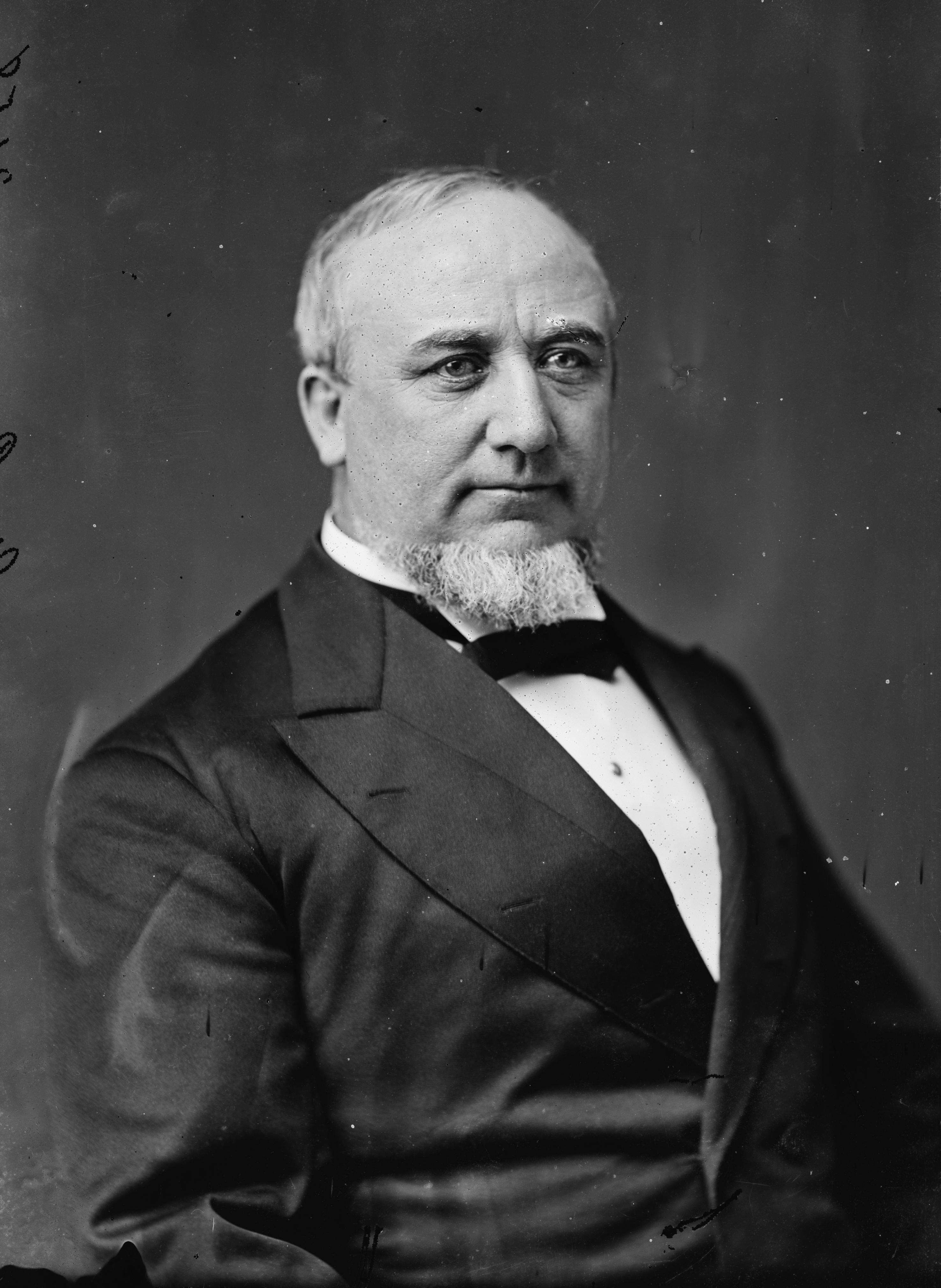
Historical · U.S. House · Utah · At-Large
George Cannon
Former U.S. Representative · Utah At-Large · 1873–1883 · Republican
George Cannon represented Utah's At-Large in the United States House of Representatives (1873–1883) for the Republican party. The page below collects sourced biographical facts, term history, committee roles, and provenance for Cannon.
Bioguide ID: C000119
Key facts
- Full name
- George Cannon
- State
- Utah
- District
- At-Large
- Party
- Republican
- House service
- 1873–1883
- First House term
- 1873
- Status
- Left office
- Current term ends
- —
- Born
- 1827
- Bioguide ID
- C000119
- Committee assignments
- —
- Dataset version
- 1.20260606
Biographical narrative
942 words · sourced from the Wikipedia REST extract
George Cannon was a prominent political and religious figure in the 19th century, serving as a U.S. Representative for the Utah at-large district. A member of the Republican Party, he held office in the House of Representatives for five terms, with his final term concluding in March 1883. In addition to his political career, Cannon was a significant leader within the Church of Jesus Christ of Latter-day Saints (LDS Church), where he was an early member of the Quorum of the Twelve Apostles and served in various leadership roles, including the First Presidency under four church presidents.
Early life and career
George Cannon was born on January 11, 1827, in Liverpool, England, to George Cannon and Ann Quayle. He was the eldest of six children in a family with roots in the Isle of Man. His family's religious journey began when they were introduced to the Church of Jesus Christ of Latter-day Saints through a relative, Leonora Cannon, who had married future church leader John Taylor. In 1840, the entire Cannon family was baptized into the church, with George Q. Cannon being just 13 years old at the time.
In 1842, seeking to join the church community in the United States, the Cannon family set sail for America, although the journey was marked by tragedy as Cannon's mother passed away during the voyage. The family arrived in Nauvoo, Illinois, in the spring of 1843, where they were reunited with their uncle, John Taylor. Young Cannon worked in the printing office of the Times and Seasons and the Nauvoo Neighbor, which were edited by Taylor. His involvement in these publications provided him with valuable skills that would later aid him in his political and religious endeavors.
Following the death of Joseph Smith and Hyrum Smith in June 1844, Cannon took on additional responsibilities in the printing office while Taylor recovered from injuries sustained during the incident. After the death of his father in 1845, Cannon accompanied the Taylor family to Winter Quarters, Nebraska, and later traveled with them to the Salt Lake Valley, arriving in October 1847.
Cannon's early church service included a missionary assignment in California, where he worked among gold miners and later in Hawaii, focusing on teaching Native Hawaiians about the church. His efforts in Hawaii were significant, as he organized multiple branches of the church and engaged with local government officials to secure recognition for the church. His missionary work laid the foundation for his future leadership roles within the church.
Upon returning to Utah Territory, Cannon married Elizabeth Hoagland and continued his involvement in church affairs. He was appointed to various leadership positions, including president of the church's Oregon and California Mission and later as president of the Eastern States Mission. His experiences during this period were instrumental in shaping his future contributions to both the church and his political career.
House tenure
George Cannon's political career began when he was elected as a delegate to the U.S. Congress, representing the Utah Territory. His first term in the House of Representatives commenced in 1873, and he was re-elected for a total of five terms, serving until March 3, 1883. As a delegate, Cannon's role was to advocate for the interests of Utah and its residents, particularly in the context of the territory's quest for statehood.
During his time in Congress, Cannon was known for his efforts to promote the political and social interests of the Latter-day Saints and the broader Utah community. His experience as a church leader provided him with a unique perspective on the challenges facing the territory, including issues related to governance, land rights, and the integration of Utah into the Union.
Cannon's tenure in the House was marked by a commitment to representing the needs of his constituents, and he worked diligently to navigate the complexities of federal legislation that impacted the territory. His dual role as a religious leader and a political representative allowed him to build coalitions and advocate effectively for policies that aligned with the values and needs of the Latter-day Saints.
Legislative focus and committees
Throughout his congressional career, George Cannon's legislative focus was closely tied to the interests of the Utah Territory and the Latter-day Saints community. He was particularly concerned with issues related to statehood, land rights, and the representation of Utah's unique cultural and religious identity within the broader framework of American politics.
Cannon's experience as a church leader informed his approach to legislation, as he sought to ensure that the voices of his constituents were heard in the halls of Congress. He was involved in discussions surrounding the governance of the territory, advocating for policies that would facilitate Utah's transition to statehood and promote the welfare of its residents.
In addition to his legislative work, Cannon served on various committees during his time in the House. These committees provided him with platforms to address issues pertinent to Utah and its residents, allowing him to influence legislation that would have lasting impacts on the territory's development.
Cannon's contributions to Congress were shaped by his dual identity as a political representative and a leader within the LDS Church. His ability to navigate the complexities of both roles allowed him to advocate effectively for the interests of Utah, making him a significant figure in the early political landscape of the territory.
Following his departure from Congress in 1883, Cannon continued to be active in church leadership and community affairs until his passing on April 12, 1901. His legacy as a political and religious leader remains a notable part of Utah's history, reflecting the intertwined nature of faith and politics in the region during the 19th century.
Notable legislation
Sponsored and co-sponsored legislation for George Cannon is pending operator curation. The biographical narrative above carries the same provenance trail until per-bill rows are written.
Sources
- [1]https://en.wikipedia.org/wiki/George_Q._CannonWikipedia · retrieved 2026-06-06
Notable quotes
Sourced quotes for George Cannon are pending operator curation. Narrative-scope provenance remains attached below.
Sources
- [1]https://en.wikipedia.org/wiki/George_Q._CannonWikipedia · retrieved 2026-06-06
Key positions
Curated policy positions for George Cannon are pending operator review. The biographical narrative above carries the same provenance trail until per-topic positions are written.
Sources
- [1]https://en.wikipedia.org/wiki/George_Q._CannonWikipedia · retrieved 2026-06-06
Terms served
- 1873–1875U.S. House · Term 1 · Republican
- 1875–1877U.S. House · Term 2 · Republican
- 1877–1879U.S. House · Term 3 · Republican
- 1879–1881U.S. House · Term 4 · Republican
- 1881–1883U.S. House · Term 5 · Republican
Sources & provenance
Every attributable claim above carries a per-section [N] marker that resolves to the corresponding URL below. Each entry records the upstream provider, the canonical URL, and the timestamp at which the source was retrieved by the ingest pipeline.
Key facts
- https://bioguide.congress.gov/search/bio/C000119bioguide · retrieved 2026-06-06
- https://www.govtrack.us/congress/members/402270govtrack · retrieved 2026-06-06
Biographical narrative
- https://en.wikipedia.org/wiki/George_Q._Cannonwikipedia · retrieved 2026-06-06
Find your representative
Every U.S. state elects representatives by district. Browse Utah’s delegation, the full former-representative roster, or explore the role and term length.
Related on The Candidate
- Preceded by William HooperEarlier holder of the Utah At-Large House seat · Democratic.Open
- Succeeded by Jacob JohnsonLater holder of the Utah At-Large House seat · Republican.Open
- Clarence AllenFormer U.S. Representative · Utah District 1 · RepublicanOpen
- Don ColtonFormer U.S. Representative · Utah District 1 · RepublicanOpen
- Douglas StringfellowFormer U.S. Representative · Utah District 1 · RepublicanOpen
- Henry DixonFormer U.S. Representative · Utah District 1 · RepublicanOpen