
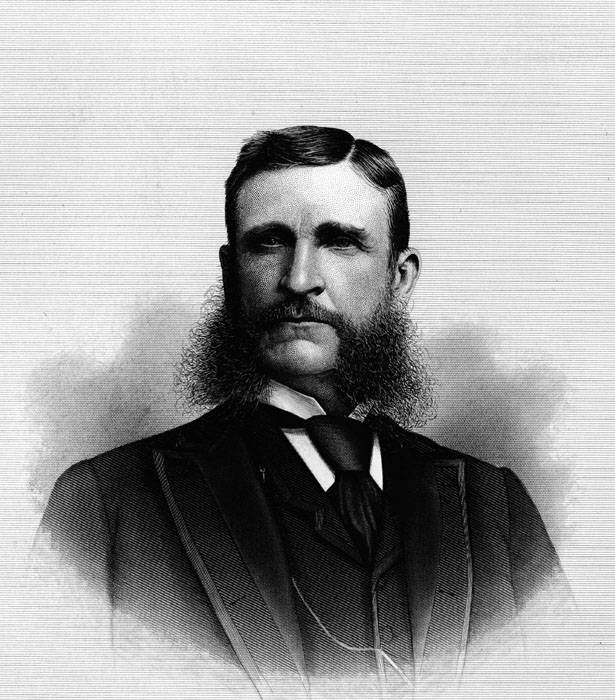
Historical · U.S. House · Utah · At-Large
John Caine
Former U.S. Representative · Utah At-Large · 1881–1893 · Democratic
John Caine represented Utah's At-Large in the United States House of Representatives (1881–1893) for the Democratic party. The page below collects sourced biographical facts, term history, committee roles, and provenance for Caine.
Bioguide ID: C000023
Key facts
- Full name
- John Caine
- State
- Utah
- District
- At-Large
- Party
- Democratic
- House service
- 1881–1893
- First House term
- 1881
- Status
- Left office
- Current term ends
- —
- Born
- 1829
- Bioguide ID
- C000023
- Committee assignments
- —
- Dataset version
- 1.20260606
Biographical narrative
975 words · sourced from the Wikipedia REST extract
John Caine was a prominent political figure in the late 19th century, serving as a U.S. Representative for the at-large district of Utah. A member of the Democratic Party, he played a significant role in the early political landscape of Utah, particularly during its transition from a territory to statehood. Caine's congressional tenure spanned over a decade, during which he was involved in various legislative efforts and local governance. His contributions to the region's development and his engagement with the Church of Jesus Christ of Latter-day Saints marked his career, which began in the early 1880s and concluded in the early 1890s.
Early life and career
John Caine was born on January 8, 1829, in the parish of Patrick on the Isle of Man. He received his early education at common schools in Douglas, Isle of Man. In 1846, Caine immigrated to the United States, initially settling in New York City. His time in New York was marked by a significant personal transformation; he converted to the Church of Jesus Christ of Latter-day Saints in March 1847. Following his conversion, he married Margaret Nightingale on October 22, 1847.
In 1848, Caine moved to St. Louis, Missouri, where he continued to develop his career. By 1852, he had relocated to the Territory of Utah, where he began his professional life as a schoolteacher. His involvement in education was complemented by his engagement in local governance. Caine served as the secretary of the territorial council during several sessions between 1856 and 1860, which helped him gain valuable political experience.
Caine's contributions to the community extended beyond education and governance. He was one of the founders of the Salt Lake Herald in 1870, where he took on the roles of managing editor and president. His work in journalism allowed him to influence public opinion and engage with the issues of the day. Additionally, he participated in the Utah constitutional conventions in 1872 and 1882, further establishing his role in shaping the political framework of the territory. Caine was also a member of the territorial council in multiple years, including 1874, 1876, 1880, and 1882, and served as the City Recorder of Salt Lake City during several terms.
House tenure
Caine's congressional career began when he was elected as a Democrat to the Forty-seventh Congress. His election was notable due to the circumstances surrounding it; he filled a vacancy created by the House's decision to declare the initially elected delegate ineligible. The election had been contested, with George Quayle Cannon receiving the majority of votes, but the House ultimately chose to seat Caine instead. This marked the beginning of his six terms in the House of Representatives, during which he served from November 7, 1882, until March 3, 1893.
Caine was reelected to the Forty-eighth, Forty-ninth, and Fiftieth Congresses, demonstrating his ability to maintain support among his constituents. His political alignment shifted when he ran on the People's Party ticket for the Fifty-first and Fifty-second Congresses, reflecting the evolving political landscape of the time. His tenure in Congress was characterized by his efforts to represent the interests of Utah's residents and to navigate the complexities of territorial and state politics.
During his time in Congress, Caine was involved in significant events, including the dissemination of information regarding the Church of Jesus Christ of Latter-day Saints' stance on polygamy. Following the announcement of the Manifesto by LDS prophet Wilford Woodruff in September 1890, which stated that the Church would no longer sanction additional polygamist marriages, Caine played a key role in communicating this development to both Congress and the media in the Eastern United States.
Caine's congressional career concluded when he chose not to seek renomination in 1892. His decision to step back from national politics coincided with the impending transition of Utah from a territory to a state, which was formalized with the Act of Statehood taking effect on January 2, 1896.
Legislative focus and committees
Throughout his congressional tenure, Caine focused on issues pertinent to the Territory of Utah and its residents. His legislative efforts were influenced by the unique challenges faced by a territory seeking statehood and the interests of the local population, which included a significant number of members of the Church of Jesus Christ of Latter-day Saints. Caine's background in education and journalism likely informed his approach to legislation, as he sought to advocate for policies that would benefit his constituents.
Caine's involvement in various committees during his time in the House is indicative of his commitment to addressing the needs of Utah's residents. While specific committee assignments during his tenure are not detailed, it is common for representatives to serve on committees that align with their interests and the needs of their districts. Caine's experience in local governance and his understanding of the political landscape would have equipped him to contribute meaningfully to discussions and decisions affecting the territory.
After his congressional career, Caine continued to engage in public service. He was an unsuccessful candidate for the position of the first governor of the newly formed State of Utah in 1895. Following this, he was elected to the Utah State Senate in 1896, where he served for one term before returning to his role in managing the Salt Lake Herald. His ongoing involvement in journalism and local politics reflects his dedication to the community and his desire to remain active in public life.
Caine passed away on September 20, 1911, in Salt Lake City, Utah, due to cystitis. He was interred in the Salt Lake City Cemetery, leaving behind a legacy as a significant figure in Utah's early political history. His contributions to the region's governance and his role in the transition from territory to statehood remain noteworthy aspects of his biography. Additionally, Caine is remembered as the namesake of Caineville, Utah, a testament to his lasting impact on the state.
Notable legislation
Sponsored and co-sponsored legislation for John Caine is pending operator curation. The biographical narrative above carries the same provenance trail until per-bill rows are written.
Sources
- [1]https://en.wikipedia.org/wiki/John_T._CaineWikipedia · retrieved 2026-06-06
Notable quotes
Sourced quotes for John Caine are pending operator curation. Narrative-scope provenance remains attached below.
Sources
- [1]https://en.wikipedia.org/wiki/John_T._CaineWikipedia · retrieved 2026-06-06
Key positions
Curated policy positions for John Caine are pending operator review. The biographical narrative above carries the same provenance trail until per-topic positions are written.
Sources
- [1]https://en.wikipedia.org/wiki/John_T._CaineWikipedia · retrieved 2026-06-06
Terms served
- 1881–1883U.S. House · Term 1 · Democratic
- 1883–1885U.S. House · Term 2 · Democratic
- 1885–1887U.S. House · Term 3 · Democratic
- 1887–1889U.S. House · Term 4 · Democratic
- 1889–1891U.S. House · Term 5 · Democratic
- 1891–1893U.S. House · Term 6 · Democratic
Sources & provenance
Every attributable claim above carries a per-section [N] marker that resolves to the corresponding URL below. Each entry records the upstream provider, the canonical URL, and the timestamp at which the source was retrieved by the ingest pipeline.
Key facts
- https://bioguide.congress.gov/search/bio/C000023bioguide · retrieved 2026-06-06
- https://www.govtrack.us/congress/members/402184govtrack · retrieved 2026-06-06
Biographical narrative
- https://en.wikipedia.org/wiki/John_T._Cainewikipedia · retrieved 2026-06-06
Find your representative
Every U.S. state elects representatives by district. Browse Utah’s delegation, the full former-representative roster, or explore the role and term length.
Related on The Candidate
- Preceded by William HooperEarlier holder of the Utah At-Large House seat · Democratic.Open
- Succeeded by Jacob JohnsonLater holder of the Utah At-Large House seat · Republican.Open
- Clarence AllenFormer U.S. Representative · Utah District 1 · RepublicanOpen
- Don ColtonFormer U.S. Representative · Utah District 1 · RepublicanOpen
- Douglas StringfellowFormer U.S. Representative · Utah District 1 · RepublicanOpen
- Henry DixonFormer U.S. Representative · Utah District 1 · RepublicanOpen