
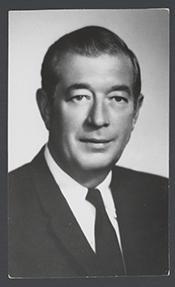
Historical · U.S. House · Virginia · District 1
Thomas Downing
Former U.S. Representative · Virginia District 1 · 1959–1977 · Democratic
Thomas Downing represented Virginia's District 1 in the United States House of Representatives (1959–1977) for the Democratic party. The page below collects sourced biographical facts, term history, committee roles, and provenance for Downing.
Bioguide ID: D000474
Key facts
- Full name
- Thomas Downing
- State
- Virginia
- District
- District 1
- Party
- Democratic
- House service
- 1959–1977
- First House term
- 1959
- Status
- Left office
- Current term ends
- —
- Born
- 1919
- Bioguide ID
- D000474
- Committee assignments
- —
- Dataset version
- 1.20260605
Biographical narrative
805 words · sourced from the Wikipedia REST extract
Thomas N. Downing was an American lawyer and politician who served as a Democratic member of the U.S. House of Representatives from Virginia's 1st congressional district. His congressional career spanned from 1959 to 1977, during which he was elected to nine consecutive terms. Downing is particularly noted for his role as the chairman of the House Select Committee on Assassinations, where he investigated the circumstances surrounding the assassination of President John F. Kennedy.
Early life and career
Thomas Nelms Downing was born on February 1, 1919, in Newport News, Virginia. He grew up in this coastal city, where he completed his early education at Newport News High School. Following high school, Downing attended the Virginia Military Institute, graduating in 1940. His education was interrupted by World War II, during which he served in the United States Army from 1942 to 1946. After the war, he pursued a legal education at the University of Virginia Law School, earning his law degree in 1948.
Upon completing his legal education, Downing began his career as a practicing attorney. He also served as a substitute judge for the municipal court of Warwick, Virginia, contributing to his legal and civic experience. His background in law and public service laid the foundation for his future political career.
House tenure
Downing entered politics in the late 1950s, running as a Democrat for a seat in the U.S. House of Representatives. He was first elected to Congress in 1958, winning his election unopposed. This initial success set the stage for a lengthy tenure in the House, during which he was re-elected eight additional times. His electoral victories included several unopposed elections, as well as contests where he received a significant majority of the votes, such as in 1964 and 1972.
Throughout his time in Congress, Downing served a total of nine terms, amounting to 18 years in office. His service concluded when he chose not to seek re-election in 1976, and he officially left office on January 3, 1977. During his tenure, Downing was involved in various legislative activities and was known for his commitment to his constituents in Virginia's 1st congressional district.
Legislative focus and committees
One of Downing's most significant contributions during his congressional career was his role as chairman of the House Select Committee on Assassinations (HSCA). He was appointed to this position by Carl Albert, the Speaker of the House, and the committee was established to investigate new evidence related to the assassination of President John F. Kennedy, which had not been available to the Warren Commission during its original inquiry.
Downing was a vocal advocate for a thorough investigation into the circumstances surrounding Kennedy's assassination. He expressed his belief that there was a conspiracy involved in the event, a stance he maintained throughout his career. His commitment to this investigation was evident as he pushed for the formation of the HSCA nearly two years before it was officially established. Under his leadership, the committee sought to explore various theories and evidence that suggested alternative narratives to the findings of the Warren Commission.
In August 1976, Downing released affidavits from two individuals who claimed that former President Richard Nixon had approved a plan by right-wing Cuban exiles to eliminate left-wing Cuban exiles following the Bay of Pigs invasion. This revelation raised questions about the potential involvement of right-wing Cubans in Kennedy's assassination, further complicating the narrative surrounding the event.
Downing's skepticism regarding the official account of the assassination was reflected in his comments about the capabilities of Lee Harvey Oswald, the man accused of killing Kennedy. He doubted that Oswald could have fired the necessary shots with precision in the short time frame required. Additionally, Downing analyzed the Zapruder film, which captured the assassination, and suggested that it indicated Kennedy was struck from both the front and the rear.
His theories about the assassination included the possibility that anti-Castro Cuban exiles were involved due to their discontent with Kennedy's policies following the Bay of Pigs invasion. Downing articulated his belief that these exiles anticipated that pro-Castro Cubans would be blamed for the assassination, creating a complex web of motivations and potential conspirators.
Despite his significant role in the HSCA, Downing's views were met with skepticism by some, including Robert P. Gemberling, who had led the FBI's investigation into the assassination. Gemberling suggested that Downing and his successor had preconceived notions about conspiracy theories that influenced their work.
After leaving Congress, Downing continued to be recognized for his contributions to political discourse, particularly regarding the Kennedy assassination. He passed away on October 23, 2001, at the age of 82, following complications from intestinal surgery. His legacy is preserved in the historical record of his service and the investigations he championed during his time in office. He is interred at Peninsula Memorial Park Cemetery in Newport News, Virginia.
Notable legislation
Sponsored and co-sponsored legislation for Thomas Downing is pending operator curation. The biographical narrative above carries the same provenance trail until per-bill rows are written.
Sources
- [1]https://en.wikipedia.org/wiki/Thomas_N._DowningWikipedia · retrieved 2026-06-05
Notable quotes
Sourced quotes for Thomas Downing are pending operator curation. Narrative-scope provenance remains attached below.
Sources
- [1]https://en.wikipedia.org/wiki/Thomas_N._DowningWikipedia · retrieved 2026-06-05
Key positions
Curated policy positions for Thomas Downing are pending operator review. The biographical narrative above carries the same provenance trail until per-topic positions are written.
Sources
- [1]https://en.wikipedia.org/wiki/Thomas_N._DowningWikipedia · retrieved 2026-06-05
Terms served
- 1959–1961U.S. House · Term 1 · Democratic
- 1961–1963U.S. House · Term 2 · Democratic
- 1963–1965U.S. House · Term 3 · Democratic
- 1965–1967U.S. House · Term 4 · Democratic
- 1967–1969U.S. House · Term 5 · Democratic
- 1969–1971U.S. House · Term 6 · Democratic
- 1971–1973U.S. House · Term 7 · Democratic
- 1973–1975U.S. House · Term 8 · Democratic
- 1975–1977U.S. House · Term 9 · Democratic
Sources & provenance
Every attributable claim above carries a per-section [N] marker that resolves to the corresponding URL below. Each entry records the upstream provider, the canonical URL, and the timestamp at which the source was retrieved by the ingest pipeline.
Key facts
- https://bioguide.congress.gov/search/bio/D000474bioguide · retrieved 2026-06-05
- https://www.govtrack.us/congress/members/403583govtrack · retrieved 2026-06-05
Biographical narrative
- https://en.wikipedia.org/wiki/Thomas_N._Downingwikipedia · retrieved 2026-06-05
Find your representative
Every U.S. state elects representatives by district. Browse Virginia’s delegation, the full former-representative roster, or explore the role and term length.
Related on The Candidate
- Preceded by Edward Robeson Jr.Earlier holder of the Virginia District 1 House seat · Democratic.Open
- Succeeded by Herbert BatemanLater holder of the Virginia District 1 House seat · Republican.Open
- Alexander WhiteFormer U.S. Representative · Virginia District 1Open
- Archibald AtkinsonFormer U.S. Representative · Virginia District 1 · DemocraticOpen
- Beverly DouglasFormer U.S. Representative · Virginia District 1 · DemocraticOpen
- Daniel MorganFormer U.S. Representative · Virginia District 1 · FederalistOpen