
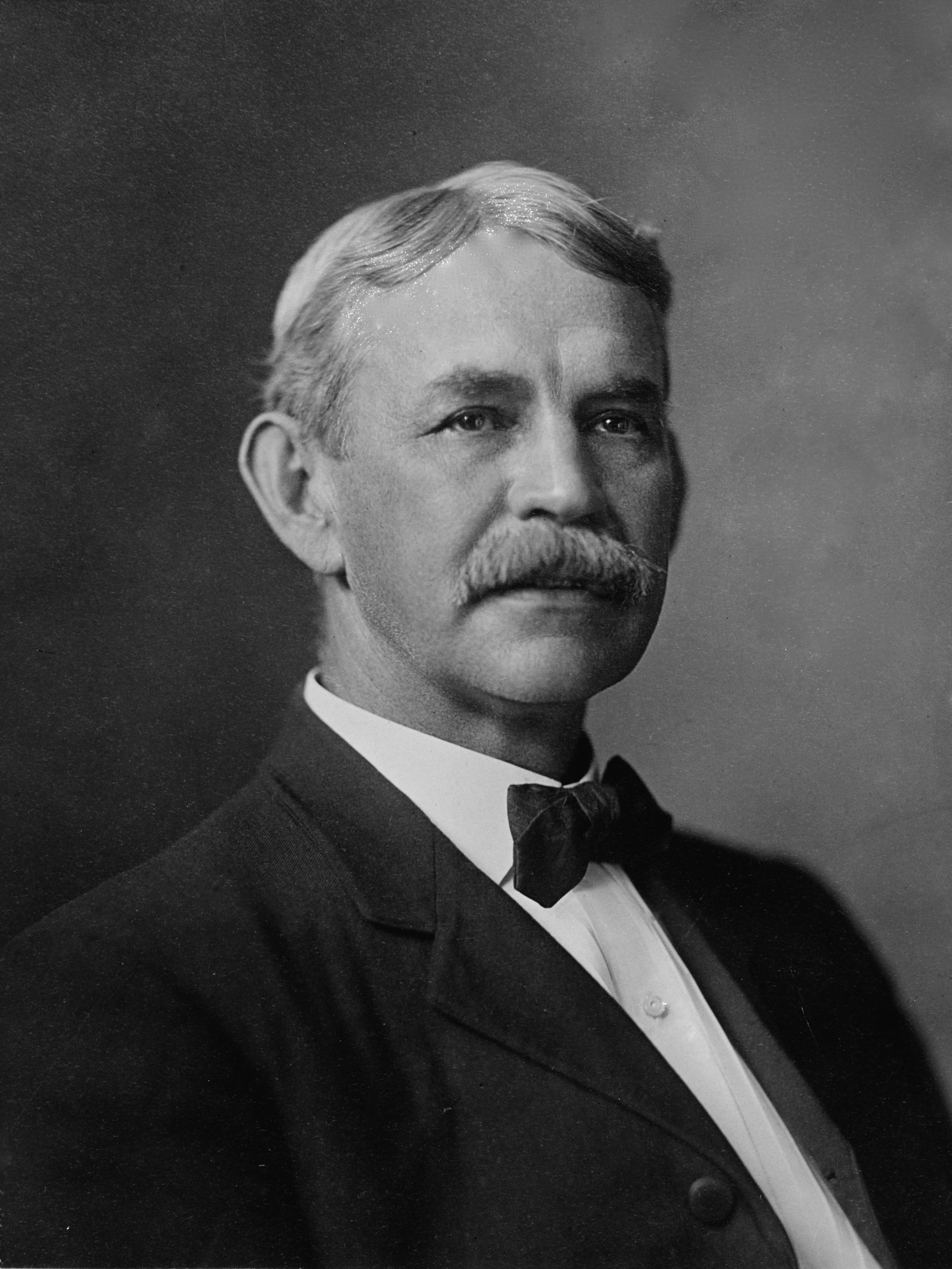
Historical · U.S. House · Virginia · District 10
Henry Tucker
Former U.S. Representative · Virginia District 10 · 1889–1933 · Democratic
Henry Tucker represented Virginia's District 10 in the United States House of Representatives (1889–1933) for the Democratic party. The page below collects sourced biographical facts, term history, committee roles, and provenance for Tucker.
Bioguide ID: T000399
Key facts
- Full name
- Henry Tucker
- State
- Virginia
- District
- District 10
- Party
- Democratic
- House service
- 1889–1933
- First House term
- 1889
- Status
- Left office
- Current term ends
- —
- Born
- 1853
- Bioguide ID
- T000399
- Committee assignments
- —
- Dataset version
- 1.20260606
Biographical narrative
1,056 words · sourced from the Wikipedia REST extract
Henry Tucker was a prominent figure in American politics and law during the late 19th and early 20th centuries. Serving as a U.S. Representative for Virginia's 10th congressional district, Tucker was a member of the Democratic Party and held office for a total of ten terms in the House of Representatives. His legislative career was marked by a significant return to Congress after a lengthy hiatus, during which he also contributed to legal education and the American Bar Association. Tucker's life spanned from April 5, 1853, until July 23, 1932, and he left a legacy as a legal scholar and public servant.
Early life and career
Henry St. George Tucker III was born in Winchester, Virginia, to a family with a strong legal background. His father, John Randolph Tucker, was a lawyer and a notable figure in his own right, which likely influenced Tucker's pursuit of a legal career. His mother, Laura Powell Tucker, also played a significant role in his upbringing. Tucker's academic journey culminated in an LL.B. degree from Washington and Lee University School of Law in 1876, a prestigious institution that has produced many notable legal professionals.
On October 25, 1877, Tucker married Henrietta Preston Johnston, who was the daughter of William Preston Johnston. Together, they had several children, including John Randolph Tucker, born in 1879. The family settled in Lexington, Virginia, where Tucker purchased the Col Alto estate in 1898, further establishing his roots in the community.
Tucker's professional career began in earnest when he was elected to the 51st Congress as a Democrat, marking the start of his long tenure in the House of Representatives. He served four consecutive terms, during which he gained valuable experience and insight into the legislative process. After his initial congressional service, he returned to academia, taking on the role of professor of constitutional law and equity at Washington and Lee University in 1897. His commitment to legal education was evident when he was appointed Dean of the Law School in 1900, a position that allowed him to shape the next generation of legal minds.
In 1903, Tucker transitioned to Washington, D.C., where he became the dean of the law school at Columbian University, now known as George Washington University. His leadership in this role lasted until 1905, after which he took on significant responsibilities as President of the Jamestown Exposition and the American Bar Association. These positions underscored his influence in both legal and civic circles, as he worked to promote legal standards and practices across the nation.
Despite his accomplishments, Tucker faced challenges in his political career. He sought the Democratic nomination for governor of Virginia in both 1909 and 1921 but was unsuccessful in these endeavors. However, his political aspirations did not wane, and he made a notable return to Congress in 1922, nearly 25 years after his initial departure. This comeback was prompted by the death of fellow Congressman Henry D. Flood, which created a vacancy that Tucker successfully filled.
House tenure
Tucker's tenure in the U.S. House of Representatives was marked by his dedication to his constituents and his commitment to the Democratic Party. His first term began in 1889, and he served continuously until his last term ended on March 3, 1933. Over the course of his ten terms, Tucker became a seasoned legislator, navigating the complexities of federal legislation and representing the interests of Virginia's 10th congressional district.
During his time in Congress, Tucker was involved in various legislative initiatives and discussions that reflected the political climate of the era. His long service allowed him to witness and participate in significant historical events, including the Progressive Era and the early stages of the New Deal. Tucker's experience in law and governance positioned him as a knowledgeable figure in legislative matters, and he often drew upon his legal background to inform his decisions and contributions.
Tucker's return to Congress in 1922 was particularly noteworthy, as it came at a time when the nation was grappling with the aftermath of World War I and the onset of the Great Depression. His experience and understanding of constitutional law likely influenced his approach to the pressing issues of the day, including economic recovery and social reform. Throughout his congressional career, Tucker maintained a focus on the needs of his constituents, advocating for policies that would benefit the people of Virginia.
As a member of the House, Tucker was part of a larger legislative body that was responsible for shaping national policy. His ability to navigate the political landscape and build relationships with fellow lawmakers contributed to his effectiveness as a representative. Tucker's long-standing presence in Congress allowed him to develop a deep understanding of the legislative process, which he utilized to advocate for his district's interests.
Legislative focus and committees
Throughout his congressional career, Tucker's legislative focus was informed by his legal background and his commitment to public service. While specific details regarding the bills he sponsored or the committees he served on are not provided, it is clear that his extensive experience in law and governance shaped his approach to legislation. His role as a professor and dean of law schools likely influenced his perspectives on legal issues and constitutional matters, which may have been reflected in his legislative priorities.
As a member of the Democratic Party, Tucker aligned himself with the party's platform and its goals during a time of significant political change in the United States. His involvement in various legislative initiatives would have encompassed a range of issues, including economic policies, social reforms, and civil rights. Tucker's legal expertise would have been an asset in discussions surrounding these topics, allowing him to contribute meaningfully to the legislative process.
In addition to his legislative responsibilities, Tucker's leadership roles within the American Bar Association and other legal organizations positioned him as a key figure in the legal community. His work in these organizations demonstrated his commitment to advancing legal standards and promoting the rule of law, which likely influenced his legislative focus in Congress.
Tucker's career in the House of Representatives came to an end with his passing on July 23, 1932, shortly before the conclusion of his last term. His legacy as a public servant, legal scholar, and educator continues to be recognized, reflecting the impact he had on both his constituents and the broader legal community.
Notable legislation
Sponsored and co-sponsored legislation for Henry Tucker is pending operator curation. The biographical narrative above carries the same provenance trail until per-bill rows are written.
Sources
- [1]https://en.wikipedia.org/wiki/Henry_St._George_Tucker_IIIWikipedia · retrieved 2026-06-06
Notable quotes
Sourced quotes for Henry Tucker are pending operator curation. Narrative-scope provenance remains attached below.
Sources
- [1]https://en.wikipedia.org/wiki/Henry_St._George_Tucker_IIIWikipedia · retrieved 2026-06-06
Key positions
Curated policy positions for Henry Tucker are pending operator review. The biographical narrative above carries the same provenance trail until per-topic positions are written.
Sources
- [1]https://en.wikipedia.org/wiki/Henry_St._George_Tucker_IIIWikipedia · retrieved 2026-06-06
Terms served
- 1889–1891U.S. House · Term 1 · Democratic
- 1891–1893U.S. House · Term 2 · Democratic
- 1893–1895U.S. House · Term 3 · Democratic
- 1895–1897U.S. House · Term 4 · Democratic
- 1921–1923U.S. House · Term 5 · Democratic
- 1923–1925U.S. House · Term 6 · Democratic
- 1925–1927U.S. House · Term 7 · Democratic
- 1927–1929U.S. House · Term 8 · Democratic
- 1929–1931U.S. House · Term 9 · Democratic
- 1931–1933U.S. House · Term 10 · Democratic
Sources & provenance
Every attributable claim above carries a per-section [N] marker that resolves to the corresponding URL below. Each entry records the upstream provider, the canonical URL, and the timestamp at which the source was retrieved by the ingest pipeline.
Key facts
- https://bioguide.congress.gov/search/bio/T000399bioguide · retrieved 2026-06-06
- https://www.govtrack.us/congress/members/410968govtrack · retrieved 2026-06-06
Biographical narrative
- https://en.wikipedia.org/wiki/Henry_St._George_Tucker_IIIwikipedia · retrieved 2026-06-06
Find your representative
Every U.S. state elects representatives by district. Browse Virginia’s delegation, the full former-representative roster, or explore the role and term length.
Related on The Candidate
- Preceded by John TuckerEarlier holder of the Virginia District 10 House seat · Democratic.Open
- Succeeded by Joel BroyhillLater holder of the Virginia District 10 House seat · Republican.Open
- Alexander WhiteFormer U.S. Representative · Virginia District 1Open
- Archibald AtkinsonFormer U.S. Representative · Virginia District 1 · DemocraticOpen
- Beverly DouglasFormer U.S. Representative · Virginia District 1 · DemocraticOpen
- Daniel MorganFormer U.S. Representative · Virginia District 1 · FederalistOpen