
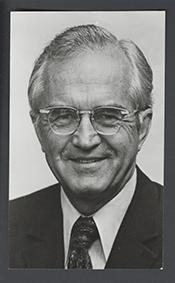
Historical · U.S. House · Virginia · District 10
Joseph Fisher
Former U.S. Representative · Virginia District 10 · 1975–1981 · Democratic
Joseph Fisher represented Virginia's District 10 in the United States House of Representatives (1975–1981) for the Democratic party. The page below collects sourced biographical facts, term history, committee roles, and provenance for Fisher.
Bioguide ID: F000151
Key facts
- Full name
- Joseph Fisher
- State
- Virginia
- District
- District 10
- Party
- Democratic
- House service
- 1975–1981
- First House term
- 1975
- Status
- Left office
- Current term ends
- —
- Born
- 1914
- Bioguide ID
- F000151
- Committee assignments
- —
- Dataset version
- 1.20260605
Biographical narrative
950 words · sourced from the Wikipedia REST extract
Joseph L. Fisher was a U.S. Representative from Virginia's 10th congressional district, serving from 1975 until 1981. A member of the Democratic Party, Fisher was known for his background in economics and his involvement in various public service roles. He was also a founder of Resources for the Future, a non-profit think tank focused on environmental and resource policy. Fisher's tenure in Congress marked a significant period in Virginia's political landscape, as he was the last Democrat to represent his district until 2019.
Early life and career
Joseph L. Fisher was born on January 11, 1914, in Pawtucket, Rhode Island. He pursued higher education at Bowdoin College in Brunswick, Maine, where he graduated in 1935 with a degree in economics. Following his undergraduate studies, Fisher began his professional career in the field of economics, initially working at an accounting firm. In 1939, he joined the National Resource Planning Board, which marked the beginning of his long-standing commitment to public service and economic policy.
Fisher's career took a significant turn when he became an economist for the U.S. Department of State in 1942. His service was interrupted by World War II, during which he was drafted into the U.S. Army in 1943. After the war, he returned to academia and earned a Ph.D. from Harvard University. He subsequently joined the Council of Economic Advisors, where he advanced to the position of senior economist in 1951. In 1953, Fisher became involved with Resources for the Future, Inc., a non-profit organization dedicated to research and policy analysis regarding natural resources and environmental issues.
In addition to his professional endeavors, Fisher was active in his community and various organizations. He was a lifelong Unitarian and served as a volunteer lay leader in the Unitarian Universalist Association (UUA). His leadership roles included serving on the UUA's board of trustees and as moderator, the highest volunteer position within the organization, from 1964 until 1977.
Fisher's personal life included a significant relationship with Margaret "Peggy" Winslow, whom he met on a blind date in 1941. They married on June 27, 1942, and together they raised three daughters and four sons.
House tenure
Fisher's political career in the U.S. House of Representatives began in 1975 when he won election to represent Virginia's 10th congressional district. His victory was notable as it came against the long-serving incumbent, Joel Broyhill, in what was considered an upset. The 10th district, located in the suburbs of Washington, D.C., had historically leaned Republican, making Fisher's election a significant event in the shifting political dynamics of the region.
During his time in Congress, Fisher served three terms, focusing on various issues related to economic policy, environmental conservation, and public resources. His tenure was characterized by an active engagement with constituents and a commitment to addressing the needs of his district. Fisher's legislative work contributed to the evolving landscape of Virginia politics, particularly as he was the last Democrat to hold the seat until 2019, when Jennifer Wexton was elected.
Fisher's time in Congress came to an end in November 1980 when he lost his bid for re-election to Republican candidate Frank Wolf. Following his departure from the House, Fisher continued to influence public policy and economic discourse through various roles in non-profit organizations and academia.
Legislative focus and committees
Throughout his congressional career, Fisher's legislative focus was largely informed by his background in economics and public policy. He was particularly interested in issues related to natural resources, environmental sustainability, and economic development. Fisher's expertise in these areas was shaped by his earlier work with Resources for the Future, where he contributed to discussions on resource management and policy formulation.
In addition to his legislative priorities, Fisher was involved in several committees during his time in the House. His committee assignments allowed him to engage with a range of issues, including economic policy, environmental regulation, and social welfare. Fisher's work in these committees was instrumental in shaping legislation that addressed the pressing concerns of his constituents and the broader national context.
After leaving Congress, Fisher continued to contribute to the field of economics and public policy. He established the Economic Policy Department at The Wilderness Society, a non-governmental organization focused on wildland conservation. This role allowed him to apply his economic expertise to environmental issues, furthering the dialogue on sustainable practices and resource management.
In 1982, Fisher was appointed as Virginia's Secretary of Human Resources, where he continued to influence state policy on social services and community welfare. Later, in 1986, he transitioned to academia, becoming an economics professor at George Mason University, where he shared his knowledge and experience with the next generation of students.
Fisher's contributions to public service extended beyond his formal roles. He was actively involved in local governance, serving as chairman of the Arlington County Board and president of the Washington Metropolitan Council of Governments. His leadership in these organizations demonstrated his commitment to community engagement and regional collaboration.
Fisher authored two notable books, "World Prospects for Natural Resources" and "Resources for America's Future," which reflected his deep understanding of economic and environmental issues. These works contributed to the discourse on resource management and policy, showcasing his expertise and dedication to the field.
Joseph L. Fisher passed away on February 19, 1992, in Arlington, Virginia. His legacy includes his contributions to public policy, economics, and community service, as well as his role in shaping the political landscape of Virginia during a transformative period. His ashes were interred at Arlington National Cemetery, a testament to his service to the nation. Fisher's records and contributions to public discourse are preserved at the Special Collections Research Center at George Mason University, ensuring that his work remains accessible for future generations.
Notable legislation
Sponsored and co-sponsored legislation for Joseph Fisher is pending operator curation. The biographical narrative above carries the same provenance trail until per-bill rows are written.
Sources
- [1]https://en.wikipedia.org/wiki/Joseph_L._FisherWikipedia · retrieved 2026-06-05
Notable quotes
Sourced quotes for Joseph Fisher are pending operator curation. Narrative-scope provenance remains attached below.
Sources
- [1]https://en.wikipedia.org/wiki/Joseph_L._FisherWikipedia · retrieved 2026-06-05
Key positions
Curated policy positions for Joseph Fisher are pending operator review. The biographical narrative above carries the same provenance trail until per-topic positions are written.
Sources
- [1]https://en.wikipedia.org/wiki/Joseph_L._FisherWikipedia · retrieved 2026-06-05
Terms served
- 1975–1977U.S. House · Term 1 · Democratic
- 1977–1979U.S. House · Term 2 · Democratic
- 1979–1981U.S. House · Term 3 · Democratic
Sources & provenance
Every attributable claim above carries a per-section [N] marker that resolves to the corresponding URL below. Each entry records the upstream provider, the canonical URL, and the timestamp at which the source was retrieved by the ingest pipeline.
Key facts
- https://bioguide.congress.gov/search/bio/F000151bioguide · retrieved 2026-06-05
- https://www.govtrack.us/congress/members/404106govtrack · retrieved 2026-06-05
Biographical narrative
- https://en.wikipedia.org/wiki/Joseph_L._Fisherwikipedia · retrieved 2026-06-05
Find your representative
Every U.S. state elects representatives by district. Browse Virginia’s delegation, the full former-representative roster, or explore the role and term length.
Related on The Candidate
- Preceded by Joel BroyhillEarlier holder of the Virginia District 10 House seat · Republican.Open
- Succeeded by Frank WolfLater holder of the Virginia District 10 House seat · Republican.Open
- Alexander WhiteFormer U.S. Representative · Virginia District 1Open
- Archibald AtkinsonFormer U.S. Representative · Virginia District 1 · DemocraticOpen
- Beverly DouglasFormer U.S. Representative · Virginia District 1 · DemocraticOpen
- Daniel MorganFormer U.S. Representative · Virginia District 1 · FederalistOpen