
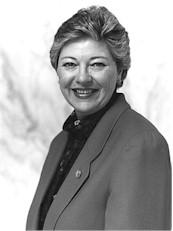
Historical · U.S. House · Virginia · District 11
Leslie Byrne
Former U.S. Representative · Virginia District 11 · 1993–1995 · Democratic
Leslie Byrne represented Virginia's District 11 in the United States House of Representatives (1993–1995) for the Democratic party. The page below collects sourced biographical facts, term history, committee roles, and provenance for Byrne.
Bioguide ID: B001213
Key facts
- Full name
- Leslie Byrne
- State
- Virginia
- District
- District 11
- Party
- Democratic
- House service
- 1993–1995
- First House term
- 1993
- Status
- Left office
- Current term ends
- —
- Born
- 1946
- Bioguide ID
- B001213
- Committee assignments
- —
- Dataset version
- 1.20260605
Biographical narrative
907 words · sourced from the Wikipedia REST extract
Leslie L. Byrne is a former American politician and businesswoman who served as the U.S. Representative for Virginia's 11th congressional district from 1993 to 1995. A member of the Democratic Party, she made history as the first woman elected to the United States House of Representatives from the Commonwealth of Virginia. During her time in Congress, she was known for her legislative initiatives, particularly in the areas of childhood immunization and transportation funding. After serving one term, she was defeated in her bid for re-election in 1994.
Early life and career
Leslie Larkin Byrne was born on October 27, 1946, in Salt Lake City, Utah, to parents Stephen and Shirley Beck. She spent her formative years in Salt Lake City, where she pursued her education at the University of Utah and later at Mount Vernon College in Ohio. In 1971, her family relocated to Northern Virginia, where Byrne became actively involved in various community organizations. Her engagement included participation in the Parent Teacher Association for her children's schools, as well as involvement with the Fairfax Area League of Women Voters and the Fairfax County Commission on Fair Campaign Practices.
Byrne's professional career began to take shape in 1985 when she co-founded Quintech Associates, Inc., a firm specializing in human resources consulting. She held the position of president at Quintech until her election to Congress in 1992. This entrepreneurial experience provided her with insights into business and organizational management, which would later inform her political career.
Byrne's entry into politics was marked by her election to the Virginia House of Delegates in 1985, where she served for six years. She won her seat by defeating a two-term Republican incumbent, Gwen Cody. During her tenure in the Virginia House, Byrne was an advocate for public-private partnerships, particularly in relation to transportation initiatives, including the Dulles Greenway project. Her work in the state legislature laid the groundwork for her subsequent congressional campaign.
House tenure
In 1992, following the results of the 1990 U.S. census, Virginia gained an additional congressional seat, which led to the creation of the 11th congressional district. Leslie Byrne ran for this newly established seat and won, making her the first woman from Virginia to be elected to the U.S. House of Representatives. This election was part of a broader trend known as the "Year of the Woman," characterized by a significant increase in the number of women elected to Congress.
During her time in the 103rd Congress, Byrne served on the Public Works and Transportation Committee, as well as the Post Office and Civil Service Committee. Her colleagues elected her as the freshman caucus whip, a leadership role that underscored her influence among new members of Congress. Notably, she was recognized for her legislative productivity, introducing and passing more legislation than any other freshman representative during her term. Among her notable achievements were two measures related to childhood immunization, which were successfully passed into law. Additionally, she played a role in securing funding for transportation projects, including a rail connection from Tysons Corner to Dulles Airport.
Byrne's congressional career was cut short when she was defeated in the 1994 election by Republican Tom Davis, who was then the chairman of the Fairfax County Board of Supervisors. Davis's campaign focused on portraying Byrne as too liberal for the swing district she represented, emphasizing her voting record and alignment with President Bill Clinton's policies. This defeat marked the end of her tenure in the House of Representatives.
Legislative focus and committees
Throughout her time in Congress, Leslie Byrne's legislative focus encompassed various issues, with a particular emphasis on public health and transportation. Her work on childhood immunization reflected her commitment to improving healthcare access and outcomes for children. By introducing legislation aimed at increasing immunization rates, she sought to address public health concerns and promote preventive care.
In addition to her health-related initiatives, Byrne's involvement in transportation issues demonstrated her understanding of the critical role infrastructure plays in economic development and community well-being. Her support for public-private partnerships in transportation projects illustrated her approach to fostering collaboration between government and private entities to address infrastructure needs.
Byrne's committee assignments on the Public Works and Transportation Committee and the Post Office and Civil Service Committee provided her with platforms to advocate for her legislative priorities. Her leadership role as freshman caucus whip allowed her to influence her peers and contribute to the Democratic Party's agenda during her time in Congress.
After her congressional tenure, Byrne continued to engage in public service and politics. In 1996, she sought the Democratic nomination for the U.S. Senate but was defeated by Mark Warner. She later worked at the United States Information Agency, advising on the au pair program. In 1999, she returned to elected office by winning a seat in the Virginia Senate, where she served one term before opting not to seek re-election due to redistricting challenges.
Byrne's political career also included a candidacy for Lieutenant Governor of Virginia in 2005, where she was defeated by Republican Bill Bolling. In 2008, she attempted to reclaim her former congressional seat but was unsuccessful in the Democratic primary against Gerald Connolly.
Leslie Byrne's contributions to Virginia politics and her role as a trailblazer for women in government have left a lasting impact on the political landscape of the Commonwealth. She is married to Larry Byrne, who leads an international consulting firm, and they have two grown children and three grandchildren.
Notable legislation
Sponsored and co-sponsored legislation for Leslie Byrne is pending operator curation. The biographical narrative above carries the same provenance trail until per-bill rows are written.
Sources
- [1]https://en.wikipedia.org/wiki/Leslie_ByrneWikipedia · retrieved 2026-06-05
Notable quotes
Sourced quotes for Leslie Byrne are pending operator curation. Narrative-scope provenance remains attached below.
Sources
- [1]https://en.wikipedia.org/wiki/Leslie_ByrneWikipedia · retrieved 2026-06-05
Key positions
Curated policy positions for Leslie Byrne are pending operator review. The biographical narrative above carries the same provenance trail until per-topic positions are written.
Sources
- [1]https://en.wikipedia.org/wiki/Leslie_ByrneWikipedia · retrieved 2026-06-05
Terms served
- 1993–1995U.S. House · Term 1 · Democratic
Sources & provenance
Every attributable claim above carries a per-section [N] marker that resolves to the corresponding URL below. Each entry records the upstream provider, the canonical URL, and the timestamp at which the source was retrieved by the ingest pipeline.
Key facts
- https://bioguide.congress.gov/search/bio/B001213bioguide · retrieved 2026-06-05
- https://www.govtrack.us/congress/members/402152govtrack · retrieved 2026-06-05
Biographical narrative
- https://en.wikipedia.org/wiki/Leslie_Byrnewikipedia · retrieved 2026-06-05
Find your representative
Every U.S. state elects representatives by district. Browse Virginia’s delegation, the full former-representative roster, or explore the role and term length.
Related on The Candidate
- Preceded by Albert JenkinsEarlier holder of the Virginia District 11 House seat · Democratic.Open
- Succeeded by Tom Davis IIILater holder of the Virginia District 11 House seat · Republican.Open
- Alexander WhiteFormer U.S. Representative · Virginia District 1Open
- Archibald AtkinsonFormer U.S. Representative · Virginia District 1 · DemocraticOpen
- Beverly DouglasFormer U.S. Representative · Virginia District 1 · DemocraticOpen
- Daniel MorganFormer U.S. Representative · Virginia District 1 · FederalistOpen