
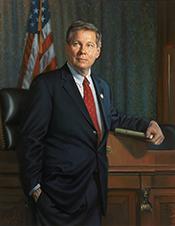
Historical · U.S. House · Virginia · District 11
Tom Davis III
Former U.S. Representative · Virginia District 11 · 1995–2008 · Republican
Tom Davis III represented Virginia's District 11 in the United States House of Representatives (1995–2008) for the Republican party. The page below collects sourced biographical facts, term history, committee roles, and provenance for III.
Bioguide ID: D000136
Key facts
- Full name
- Tom Davis III
- State
- Virginia
- District
- District 11
- Party
- Republican
- House service
- 1995–2008
- First House term
- 1995
- Status
- Left office
- Current term ends
- —
- Born
- 1949
- Bioguide ID
- D000136
- Committee assignments
- —
- Dataset version
- 1.20260605
Biographical narrative
925 words · sourced from the Wikipedia REST extract
Thomas Milburn Davis III, commonly known as Tom Davis, is a former American politician and lobbyist who served as the U.S. Representative for Virginia's 11th congressional district from 1995 until his resignation in 2008. A member of the Republican Party, Davis was known for his moderate positions on various issues and his significant role in the House of Representatives, including his tenure as chairman of the House Government Reform Committee. After leaving Congress, he transitioned into a career in lobbying and higher education administration.
Early life and career
Tom Davis was born on January 5, 1949, in Minot, North Dakota. He moved to Fairfax County, Virginia, at a young age, where he would later establish his political career. Davis attended the United States Capitol Page School, where he graduated as president of his senior class in 1967. He furthered his education at Amherst College, earning a degree before attending the University of Virginia School of Law, where he obtained his law degree.
Davis's early career included military service; he attended the Officer Candidate School of the U.S. Army and served on active duty. He also spent eight years in the Virginia National Guard and the U.S. Army Reserve. Following his military service, Davis entered the private sector, becoming the vice president and general counsel at PRC, Inc., a government contractor. His involvement in local governance began when he was elected to the Fairfax County Board of Supervisors, where he served from 1980 to 1994. During his time on the board, he held the position of chairman from 1991 until his election to the House of Representatives. Under his leadership, Fairfax County was recognized for its financial management, ranking first in a list published by City and State magazine.
House tenure
Davis's congressional career began when he won election to the U.S. House of Representatives in 1994, a pivotal year marked by the Republican Contract with America. He successfully defeated one-term incumbent Leslie Byrne, positioning himself as a proponent of the Contract's principles, which advocated for citizen-legislators and limited terms for elected officials. Although Davis supported the Citizens Legislature Act, which aimed to amend the Constitution to limit congressional terms, the proposal did not garner sufficient support to pass.
Representing a district that was considered a swing area, Davis was reelected five times, often without significant opposition. His popularity in Fairfax County contributed to his electoral success, as evidenced by the absence of a Democratic challenger in both the 1998 and 2002 elections. In the 2006 elections, however, he faced a more formidable opponent in Democrat Andrew Hurst amid a broader Democratic wave that resulted in the party regaining control of the House. Despite this challenge, Davis managed to secure reelection with 55 percent of the vote, marking his lowest electoral support since his initial campaign.
Throughout his congressional career, Davis maintained a voting record that aligned predominantly with the Republican Party, supporting the party's position in approximately 89 percent of recorded votes. While he was often characterized as a moderate, he took stances that included support for certain abortion rights and voting rights for the District of Columbia. He also opposed a proposed phase-out of the state car tax in 2006, reflecting his willingness to diverge from party lines on specific issues.
Davis served as chairman of the National Republican Congressional Committee (NRCC) from 1998 to 2002, where he was responsible for overseeing a substantial fundraising effort. His leadership in this role positioned him as a key figure within the Republican Party, leading to his subsequent pursuit of the chairmanship of the House Government Reform Committee. Although he faced competition from more senior members, his contributions as NRCC chairman were recognized, and he was appointed to lead the committee in 2003.
Legislative focus and committees
As chairman of the House Government Reform Committee, Davis played a significant role in overseeing government operations and accountability. He held this position until 2007, when the Democratic Party regained the majority in the House. During his tenure, Davis renamed the committee to remove "Oversight" from its title, a change that was later reversed by his successor, Henry Waxman, who reinstated the original name.
The committee was known for its broad jurisdiction and investigative capabilities, particularly during the Clinton administration, when it issued numerous subpoenas to investigate alleged misconduct. In contrast, under Davis's leadership, the committee issued only a limited number of subpoenas related to the George W. Bush administration. This difference in approach highlighted the shifting dynamics of congressional oversight depending on the party in power.
Davis's legislative focus included various issues pertinent to his constituents and the broader national landscape. His moderate positions allowed him to engage with a diverse array of stakeholders, and he often sought bipartisan solutions to complex problems. However, his career was not without controversy; his second wife, Jeannemarie Devolites-Davis, was involved in a consulting firm that raised ethical questions regarding potential conflicts of interest during his time in Congress.
After announcing on January 30, 2008, that he would not seek reelection for an eighth term, Davis resigned from Congress on November 24, 2008. Following his departure from the House, he transitioned into the private sector, serving as a director of federal government affairs at Deloitte from 2008 to 2018. He also took on leadership roles in academia, including serving as rector of George Mason University and as a trustee of its Krasnow Institute for Advanced Study until 2019. In 2019, Davis joined the law firm Holland and Knight as a partner, continuing his involvement in public affairs and government relations.
Notable legislation
Sponsored and co-sponsored legislation for Tom Davis III is pending operator curation. The biographical narrative above carries the same provenance trail until per-bill rows are written.
Sources
- [1]https://en.wikipedia.org/wiki/Tom_Davis_(Virginia_politician)Wikipedia · retrieved 2026-06-05
Notable quotes
Sourced quotes for Tom Davis III are pending operator curation. Narrative-scope provenance remains attached below.
Sources
- [1]https://en.wikipedia.org/wiki/Tom_Davis_(Virginia_politician)Wikipedia · retrieved 2026-06-05
Key positions
Curated policy positions for Tom Davis III are pending operator review. The biographical narrative above carries the same provenance trail until per-topic positions are written.
Sources
- [1]https://en.wikipedia.org/wiki/Tom_Davis_(Virginia_politician)Wikipedia · retrieved 2026-06-05
Terms served
- 1995–1997U.S. House · Term 1 · Republican
- 1997–1999U.S. House · Term 2 · Republican
- 1999–2001U.S. House · Term 3 · Republican
- 2001–2003U.S. House · Term 4 · Republican
- 2003–2005U.S. House · Term 5 · Republican
- 2005–2007U.S. House · Term 6 · Republican
- 2007–2008U.S. House · Term 7 · Republican
Sources & provenance
Every attributable claim above carries a per-section [N] marker that resolves to the corresponding URL below. Each entry records the upstream provider, the canonical URL, and the timestamp at which the source was retrieved by the ingest pipeline.
Key facts
- https://bioguide.congress.gov/search/bio/D000136bioguide · retrieved 2026-06-05
- http://tomdavis.house.govhouse.gov · retrieved 2026-06-05
Biographical narrative
- https://en.wikipedia.org/wiki/Tom_Davis_(Virginia_politician)wikipedia · retrieved 2026-06-05
Find your representative
Every U.S. state elects representatives by district. Browse Virginia’s delegation, the full former-representative roster, or explore the role and term length.
Related on The Candidate
- Preceded by Leslie ByrneEarlier holder of the Virginia District 11 House seat · Democratic.Open
- Succeeded by Gerald ConnollyLater holder of the Virginia District 11 House seat · Democratic.Open
- Alexander WhiteFormer U.S. Representative · Virginia District 1Open
- Archibald AtkinsonFormer U.S. Representative · Virginia District 1 · DemocraticOpen
- Beverly DouglasFormer U.S. Representative · Virginia District 1 · DemocraticOpen
- Daniel MorganFormer U.S. Representative · Virginia District 1 · FederalistOpen