
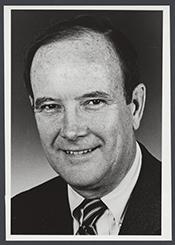
Historical · U.S. House · Virginia · District 2
Owen Pickett
Former U.S. Representative · Virginia District 2 · 1987–2001 · Democratic
Owen Pickett represented Virginia's District 2 in the United States House of Representatives (1987–2001) for the Democratic party. The page below collects sourced biographical facts, term history, committee roles, and provenance for Pickett.
Bioguide ID: P000326
Key facts
- Full name
- Owen Pickett
- State
- Virginia
- District
- District 2
- Party
- Democratic
- House service
- 1987–2001
- First House term
- 1987
- Status
- Left office
- Current term ends
- —
- Born
- 1930
- Bioguide ID
- P000326
- Committee assignments
- —
- Dataset version
- 1.20260605
Biographical narrative
931 words · sourced from the Wikipedia REST extract
Owen B. Pickett was a prominent Democratic politician who served as a U.S. Representative for Virginia's 2nd congressional district from 1987 until 2001. Known for his long tenure in the House of Representatives, Pickett was the last Democratic representative from his district to serve more than two terms. His career in public service spanned several decades, beginning with his involvement in state politics before transitioning to national governance. Throughout his time in office, he was recognized for his contributions to his community and his role in shaping legislation that impacted the lives of his constituents.
Early life and career
Owen Bradford Pickett was born on August 31, 1930, in Richmond, Virginia. He pursued higher education at Virginia Tech, where he graduated in 1952. Following his undergraduate studies, he attended the University of Richmond School of Law, earning his law degree in 1955. Shortly after completing his education, Pickett was admitted to the Virginia State Bar the same year and began practicing law in Virginia Beach, Virginia. His legal career laid the foundation for his future endeavors in public service.
Pickett's entry into politics began at the state level when he was elected to the Virginia House of Delegates in 1972. He represented a district that was primarily centered around Virginia Beach, a region that would become significant in his political career. During his time in the Virginia House of Delegates, which lasted until 1986, he was actively involved in various legislative initiatives and served as the chairman of the Democratic Party of Virginia from 1980 to 1982. His leadership within the party and his legislative experience positioned him as a key figure in Virginia politics.
In 1982, Pickett sought the Democratic nomination for the U.S. Senate, aiming to fill the seat of retiring Senator Harry F. Byrd Jr. His candidacy was initially viewed as strong, but he faced significant challenges, particularly from State Senator L. Douglas Wilder, who opposed Pickett's favorable references to the Byrd Organization, a political machine historically associated with segregationist policies. Recognizing the potential for a contentious three-way race that could jeopardize his chances, Pickett ultimately withdrew from the Senate race. This decision allowed the Democratic Party to nominate Lt. Governor Richard Joseph Davis, who subsequently lost the general election to Republican Paul Trible.
House tenure
In 1986, Owen Pickett successfully transitioned to national politics when he was elected to the U.S. House of Representatives, representing Virginia's 2nd congressional district. His first term began on January 3, 1987, and he would go on to serve a total of seven terms in the House. Pickett's electoral success was notable; he faced Republican A. Joe Canada Jr. and Independent Stephen P. Shao in his initial election, securing approximately 49.48% of the vote. His popularity grew in subsequent elections, as evidenced by his significant victories in 1988, 1990, and beyond, where he often won by substantial margins.
Throughout his tenure, Pickett was re-elected multiple times, demonstrating his strong support within the district. Notably, in 1998, he ran unopposed, reflecting his established presence and the confidence voters had in his leadership. His final term in the House concluded on January 3, 2001, when he announced that he would not seek re-election for the 107th Congress. His decision to step down marked the end of a significant chapter in his political career, during which he had built a reputation as a dedicated public servant.
In recognition of his contributions, the Owen B. Pickett U.S. Custom House in Norfolk, Virginia, was named in his honor in 2001, serving as a lasting tribute to his impact on the community and his service to the nation.
Legislative focus and committees
During his time in the House of Representatives, Owen Pickett was involved in a range of legislative issues and served on various committees that aligned with his interests and the needs of his constituents. While specific details regarding the committees he served on are not provided, it is common for members of Congress to participate in committees that address areas such as transportation, infrastructure, education, and health care, among others. Given his background in law and his experience in state politics, Pickett likely utilized his expertise to advocate for policies that benefited Virginia and its residents.
Pickett's legislative focus was informed by the demographics and priorities of his district, which included Virginia Beach, a region known for its tourism, military presence, and growing population. As a representative, he would have been attentive to the economic and social issues affecting his constituents, working to ensure that their voices were heard in Congress. His long tenure allowed him to build relationships with fellow lawmakers and stakeholders, which is often crucial for advancing legislative initiatives.
Throughout his congressional career, Pickett's commitment to public service and his engagement with the community were evident. He worked to address the concerns of his constituents, advocating for policies that aligned with the values and needs of the people he represented. His ability to connect with voters and his dedication to his role as a public servant contributed to his electoral success and the respect he garnered within the political landscape.
Owen B. Pickett passed away on October 27, 2010, after several years of declining health. His legacy as a dedicated public servant and a prominent figure in Virginia politics remains significant, particularly as the last Democratic representative from his district to serve more than two terms. His contributions to both state and national politics continue to be recognized by those who remember his commitment to his constituents and his role in shaping the legislative landscape during his time in office.
Notable legislation
Sponsored and co-sponsored legislation for Owen Pickett is pending operator curation. The biographical narrative above carries the same provenance trail until per-bill rows are written.
Sources
- [1]https://en.wikipedia.org/wiki/Owen_B._PickettWikipedia · retrieved 2026-06-05
Notable quotes
Sourced quotes for Owen Pickett are pending operator curation. Narrative-scope provenance remains attached below.
Sources
- [1]https://en.wikipedia.org/wiki/Owen_B._PickettWikipedia · retrieved 2026-06-05
Key positions
Curated policy positions for Owen Pickett are pending operator review. The biographical narrative above carries the same provenance trail until per-topic positions are written.
Sources
- [1]https://en.wikipedia.org/wiki/Owen_B._PickettWikipedia · retrieved 2026-06-05
Terms served
- 1987–1989U.S. House · Term 1 · Democratic
- 1989–1991U.S. House · Term 2 · Democratic
- 1991–1993U.S. House · Term 3 · Democratic
- 1993–1995U.S. House · Term 4 · Democratic
- 1995–1997U.S. House · Term 5 · Democratic
- 1997–1999U.S. House · Term 6 · Democratic
- 1999–2001U.S. House · Term 7 · Democratic
Sources & provenance
Every attributable claim above carries a per-section [N] marker that resolves to the corresponding URL below. Each entry records the upstream provider, the canonical URL, and the timestamp at which the source was retrieved by the ingest pipeline.
Key facts
- https://bioguide.congress.gov/search/bio/P000326bioguide · retrieved 2026-06-05
- https://www.govtrack.us/congress/members/400603govtrack · retrieved 2026-06-05
Biographical narrative
- https://en.wikipedia.org/wiki/Owen_B._Pickettwikipedia · retrieved 2026-06-05
Find your representative
Every U.S. state elects representatives by district. Browse Virginia’s delegation, the full former-representative roster, or explore the role and term length.
Related on The Candidate
- Preceded by George WhitehurstEarlier holder of the Virginia District 2 House seat · Republican.Open
- Succeeded by Ed SchrockLater holder of the Virginia District 2 House seat · Republican.Open
- Alexander WhiteFormer U.S. Representative · Virginia District 1Open
- Archibald AtkinsonFormer U.S. Representative · Virginia District 1 · DemocraticOpen
- Beverly DouglasFormer U.S. Representative · Virginia District 1 · DemocraticOpen
- Daniel MorganFormer U.S. Representative · Virginia District 1 · FederalistOpen