
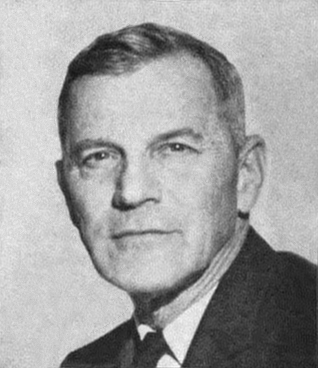
Historical · U.S. House · Virginia · District 2
Porter Hardy Jr.
Former U.S. Representative · Virginia District 2 · 1947–1969 · Democratic
Porter Hardy Jr. represented Virginia's District 2 in the United States House of Representatives (1947–1969) for the Democratic party. The page below collects sourced biographical facts, term history, committee roles, and provenance for Jr..
Bioguide ID: H000197
Key facts
- Full name
- Porter Hardy Jr.
- State
- Virginia
- District
- District 2
- Party
- Democratic
- House service
- 1947–1969
- First House term
- 1947
- Status
- Left office
- Current term ends
- —
- Born
- 1903
- Bioguide ID
- H000197
- Committee assignments
- —
- Dataset version
- 1.20260605
Biographical narrative
880 words · sourced from the Wikipedia REST extract
Porter Hardy Jr. was a prominent Democratic politician who served as a U.S. Representative for Virginia's 2nd congressional district for over two decades. His tenure in the House of Representatives spanned from 1947 to 1969, during which he became known for his independent stance, particularly in a political landscape dominated by the Byrd Organization. Hardy's career was marked by significant electoral success, allowing him to serve eleven consecutive terms in Congress.
Early life and career
Porter Hardy Jr. was born on June 1, 1903, in Bon Air, Virginia. He received his early education in public schools and attended Randolph-Macon Academy in Bedford, Virginia. Hardy graduated from Boykins High School in 1918 and continued his education at Randolph-Macon College in Ashland, Virginia, where he completed his degree in 1922. He furthered his studies at Harvard University, attending the Graduate School of Business Administration from 1923 to 1924.
Following his education, Hardy embarked on a professional career that began in the business sector. From 1924 to 1927, he worked as an accountant and warehouse manager in New York City and Norfolk, Virginia. In 1927, he transitioned to the electrical equipment industry, becoming a wholesaler in Salisbury, Maryland, where he remained until 1932. Subsequently, Hardy moved to Churchland, Virginia, where he took up farming, marking a shift in his career path.
Hardy's entry into politics came during a time of considerable political flux in Virginia. The 2nd congressional district, which included cities such as Norfolk, Portsmouth, and Suffolk, had a history of electing multiple representatives in a short span, a trend that Hardy sought to change. In 1946, he successfully defeated the incumbent in the Democratic primary, a significant achievement considering the Byrd Organization's strong influence over Virginia politics. Hardy's victory in the primary set the stage for his election to the House of Representatives, where he would serve for over two decades.
House tenure
Porter Hardy Jr. was first elected to the U.S. House of Representatives in 1946, beginning his service on January 3, 1947. Over the course of his eleven terms, he established himself as a consistent presence in Congress, winning re-election multiple times. His electoral success included victories against various opponents, including Republicans and independents, and he often secured a significant majority of the vote.
Hardy's tenure in Congress was characterized by his involvement in various legislative matters, particularly as he served as chairman of the House Armed Services Subcommittee. In this role, he focused on investigating waste in federal operations, reflecting his commitment to government accountability and efficiency. His work in this capacity contributed to discussions around military spending and oversight during a period marked by the Cold War.
Despite his alignment with the Democratic Party, Hardy's political positions sometimes diverged from those of the Byrd Organization, which was known for its staunch segregationist policies. He signed the 1956 Southern Manifesto, which opposed the Supreme Court's decision in Brown v. Board of Education regarding the desegregation of public schools. However, he also voted in favor of the Twenty-fourth Amendment to the United States Constitution, which prohibited poll taxes in federal elections, indicating a more nuanced approach to civil rights issues.
Hardy's electoral history reflects his strong support within his district. He faced a mix of opposition throughout his career, including notable races against Republican candidates. In several elections, he won unopposed, demonstrating his solidified position within the Democratic Party and his constituency. His last term in the House concluded on January 3, 1969, after which he announced his retirement, having served for 22 years.
Legislative focus and committees
Throughout his time in the House of Representatives, Porter Hardy Jr. was involved in various legislative initiatives and served on several committees that shaped national policy. As chairman of the House Armed Services Subcommittee, he played a crucial role in overseeing military operations and expenditures. His focus on investigating waste in federal operations underscored his commitment to ensuring that government resources were used effectively and responsibly.
Hardy's legislative record includes a mix of votes on key issues of the time. While he aligned with some of the Byrd Organization's positions, particularly regarding segregation, he also demonstrated a willingness to support certain civil rights measures, such as the Twenty-fourth Amendment. This complexity in his voting patterns reflects the broader tensions within the Democratic Party during the mid-20th century, as it grappled with issues of race and civil rights.
In addition to his work on the Armed Services Committee, Hardy's legislative focus extended to other areas of national importance, including economic and agricultural policies. His background as a businessman and farmer likely influenced his perspectives on these issues, allowing him to advocate for policies that benefited his constituents in Virginia's 2nd district.
After retiring from Congress, Hardy continued to be active in the financial sector, serving as a director of Dominion Bankshares Corporation and other financial institutions in Virginia. His post-congressional career allowed him to remain engaged in public service and contribute to the economic development of his community.
Porter Hardy Jr. passed away on April 19, 1995, and was interred at Eastern Shore Chapel Cemetery in Virginia Beach, Virginia. His legacy as a long-serving member of Congress reflects a significant period in American political history, marked by both challenges and changes in the landscape of civil rights and governance.
Notable legislation
Sponsored and co-sponsored legislation for Porter Hardy Jr. is pending operator curation. The biographical narrative above carries the same provenance trail until per-bill rows are written.
Sources
- [1]https://en.wikipedia.org/wiki/Porter_Hardy_Jr.Wikipedia · retrieved 2026-06-05
Notable quotes
Sourced quotes for Porter Hardy Jr. are pending operator curation. Narrative-scope provenance remains attached below.
Sources
- [1]https://en.wikipedia.org/wiki/Porter_Hardy_Jr.Wikipedia · retrieved 2026-06-05
Key positions
Curated policy positions for Porter Hardy Jr. are pending operator review. The biographical narrative above carries the same provenance trail until per-topic positions are written.
Sources
- [1]https://en.wikipedia.org/wiki/Porter_Hardy_Jr.Wikipedia · retrieved 2026-06-05
Terms served
- 1947–1949U.S. House · Term 1 · Democratic
- 1949–1951U.S. House · Term 2 · Democratic
- 1951–1953U.S. House · Term 3 · Democratic
- 1953–1955U.S. House · Term 4 · Democratic
- 1955–1957U.S. House · Term 5 · Democratic
- 1957–1959U.S. House · Term 6 · Democratic
- 1959–1961U.S. House · Term 7 · Democratic
- 1961–1963U.S. House · Term 8 · Democratic
- 1963–1965U.S. House · Term 9 · Democratic
- 1965–1967U.S. House · Term 10 · Democratic
- 1967–1969U.S. House · Term 11 · Democratic
Sources & provenance
Every attributable claim above carries a per-section [N] marker that resolves to the corresponding URL below. Each entry records the upstream provider, the canonical URL, and the timestamp at which the source was retrieved by the ingest pipeline.
Key facts
- https://bioguide.congress.gov/search/bio/H000197bioguide · retrieved 2026-06-05
- https://www.govtrack.us/congress/members/405078govtrack · retrieved 2026-06-05
Biographical narrative
- https://en.wikipedia.org/wiki/Porter_Hardy_Jr.wikipedia · retrieved 2026-06-05
Find your representative
Every U.S. state elects representatives by district. Browse Virginia’s delegation, the full former-representative roster, or explore the role and term length.
Related on The Candidate
- Preceded by Ralph DaughtonEarlier holder of the Virginia District 2 House seat · Democratic.Open
- Succeeded by George WhitehurstLater holder of the Virginia District 2 House seat · Republican.Open
- Alexander WhiteFormer U.S. Representative · Virginia District 1Open
- Archibald AtkinsonFormer U.S. Representative · Virginia District 1 · DemocraticOpen
- Beverly DouglasFormer U.S. Representative · Virginia District 1 · DemocraticOpen
- Daniel MorganFormer U.S. Representative · Virginia District 1 · FederalistOpen