
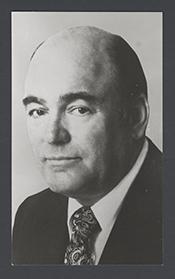
Historical · U.S. House · Virginia · District 3
David Satterfield III
Former U.S. Representative · Virginia District 3 · 1965–1981 · Democratic
David Satterfield III represented Virginia's District 3 in the United States House of Representatives (1965–1981) for the Democratic party. The page below collects sourced biographical facts, term history, committee roles, and provenance for III.
Bioguide ID: S000070
Key facts
- Full name
- David Satterfield III
- State
- Virginia
- District
- District 3
- Party
- Democratic
- House service
- 1965–1981
- First House term
- 1965
- Status
- Left office
- Current term ends
- —
- Born
- 1920
- Bioguide ID
- S000070
- Committee assignments
- —
- Dataset version
- 1.20260605
Biographical narrative
866 words · sourced from the Wikipedia REST extract
David E. Satterfield III was an American lawyer and politician who served as a Democratic U.S. Representative for Virginia's 3rd congressional district from 1965 until 1981. Born on December 2, 1920, in Richmond, Virginia, Satterfield followed in the political footsteps of his father, who also served in the House of Representatives. Over his eight terms in Congress, Satterfield became known for his commitment to his constituents and his involvement in various legislative matters.
Early life and career
David E. Satterfield III was born into a politically active family in Richmond, Virginia. He received his early education in the segregated public schools of Richmond and later attended St. Christopher's School, a private all-boys institution. Satterfield pursued higher education at the University of Richmond before attending the University of Virginia School of Law in Charlottesville, where he earned his law degree.
During World War II, Satterfield volunteered for military service, becoming a fighter pilot in the United States Navy. His father was serving in Congress at the time, which added a unique dimension to his military experience. After the war, Satterfield utilized the GI Bill to further his education and continued his service in the Naval Air Reserve, eventually attaining the rank of commander.
Following his admission to the Virginia bar in 1948, Satterfield began his legal career in private practice. He later served as an assistant United States attorney from 1950 to 1953. However, during the Massive Resistance crisis in Virginia, which arose in response to the Supreme Court's rulings in Brown v. Board of Education, Satterfield resigned from his federal position to return to private practice.
Satterfield's political career began in earnest when he was elected to the Richmond City Council, serving from 1954 to 1956. He subsequently won a seat in the Virginia House of Delegates, where he served from 1960 to 1964. His tenure in the state legislature was marked by a commitment to public service and community engagement, setting the stage for his future congressional career.
In 1964, Satterfield ran for the U.S. House of Representatives in Virginia's 3rd congressional district after the retirement of long-serving incumbent J. Vaughan Gary. He won a closely contested election against Republican Richard Obenshain, securing his first term in Congress by a narrow margin. This election was significant as it represented a shift in the political landscape of the district, which had been dominated by Democrats for decades.
House tenure
Satterfield's congressional career began in 1965, and he was re-elected for a total of eight consecutive terms, serving until January 3, 1981. His initial election was closely contested, with Satterfield receiving 34.48% of the vote against Obenshain and other candidates. However, he quickly established himself in Congress, winning subsequent elections with increasing margins of victory.
In the 1966 election, Satterfield ran unopposed, a testament to his growing popularity and the Democratic Party's stronghold in the district. He continued to secure re-election with significant majorities in the following years, including 60.25% of the vote in 1968 and 67.24% in 1970. His ability to maintain support from his constituents was evident as he faced little opposition, running unopposed again in 1972.
Throughout his tenure, Satterfield's electoral success continued, with overwhelming victories in the mid-1970s. In 1974, he received 88.53% of the vote, and in 1976 and 1978, he garnered 88.06% and 87.85% of the vote, respectively, defeating independent challengers. His consistent re-election reflected his effectiveness as a representative and his alignment with the interests of his constituents.
Despite the changing political dynamics in Virginia and the challenges faced by the Democratic Party during this period, Satterfield remained a prominent figure in the House. He chose not to seek re-election in 1980, opting to focus on his legal practice in Washington, D.C., Arlington, Virginia, and Richmond. His decision marked the end of an era for the 3rd congressional district, which had seen a long-standing Democratic representation.
Legislative focus and committees
During his time in Congress, Satterfield was involved in various legislative initiatives and served on multiple committees. While specific details regarding his committee assignments and legislative achievements are not provided, it is known that he was an active participant in the legislative process, advocating for issues relevant to his constituents and the broader community.
Satterfield's legislative focus likely reflected the priorities of his district, which included urban and suburban areas with diverse needs. His background as a lawyer and his experience in local government would have informed his approach to policy-making and constituent services. As a member of the Democratic Party, he aligned with the party's platform, which during his tenure included civil rights, education, and social welfare initiatives.
The political landscape during Satterfield's time in office was marked by significant national events, including the civil rights movement and shifts in public policy. His role as a congressman would have required navigating these complex issues while representing the interests of his constituents in Virginia.
After leaving Congress in 1981, Satterfield returned to his legal practice and continued to reside in Virginia until his death on September 30, 1988. His legacy includes not only his service in the House of Representatives but also his contributions to the legal profession and his commitment to public service throughout his life.
Notable legislation
Sponsored and co-sponsored legislation for David Satterfield III is pending operator curation. The biographical narrative above carries the same provenance trail until per-bill rows are written.
Sources
- [1]https://en.wikipedia.org/wiki/David_E._Satterfield_IIIWikipedia · retrieved 2026-06-05
Notable quotes
Sourced quotes for David Satterfield III are pending operator curation. Narrative-scope provenance remains attached below.
Sources
- [1]https://en.wikipedia.org/wiki/David_E._Satterfield_IIIWikipedia · retrieved 2026-06-05
Key positions
Curated policy positions for David Satterfield III are pending operator review. The biographical narrative above carries the same provenance trail until per-topic positions are written.
Sources
- [1]https://en.wikipedia.org/wiki/David_E._Satterfield_IIIWikipedia · retrieved 2026-06-05
Terms served
- 1965–1967U.S. House · Term 1 · Democratic
- 1967–1969U.S. House · Term 2 · Democratic
- 1969–1971U.S. House · Term 3 · Democratic
- 1971–1973U.S. House · Term 4 · Democratic
- 1973–1975U.S. House · Term 5 · Democratic
- 1975–1977U.S. House · Term 6 · Democratic
- 1977–1979U.S. House · Term 7 · Democratic
- 1979–1981U.S. House · Term 8 · Democratic
Sources & provenance
Every attributable claim above carries a per-section [N] marker that resolves to the corresponding URL below. Each entry records the upstream provider, the canonical URL, and the timestamp at which the source was retrieved by the ingest pipeline.
Key facts
- https://bioguide.congress.gov/search/bio/S000070bioguide · retrieved 2026-06-05
- https://www.govtrack.us/congress/members/409582govtrack · retrieved 2026-06-05
Biographical narrative
- https://en.wikipedia.org/wiki/David_E._Satterfield_IIIwikipedia · retrieved 2026-06-05
Find your representative
Every U.S. state elects representatives by district. Browse Virginia’s delegation, the full former-representative roster, or explore the role and term length.
Related on The Candidate
- Preceded by Julian GaryEarlier holder of the Virginia District 3 House seat · Democratic.Open
- Alexander WhiteFormer U.S. Representative · Virginia District 1Open
- Archibald AtkinsonFormer U.S. Representative · Virginia District 1 · DemocraticOpen
- Beverly DouglasFormer U.S. Representative · Virginia District 1 · DemocraticOpen
- Daniel MorganFormer U.S. Representative · Virginia District 1 · FederalistOpen
- Democratic PartyFederal candidates and office holders on the Democratic line.Open