
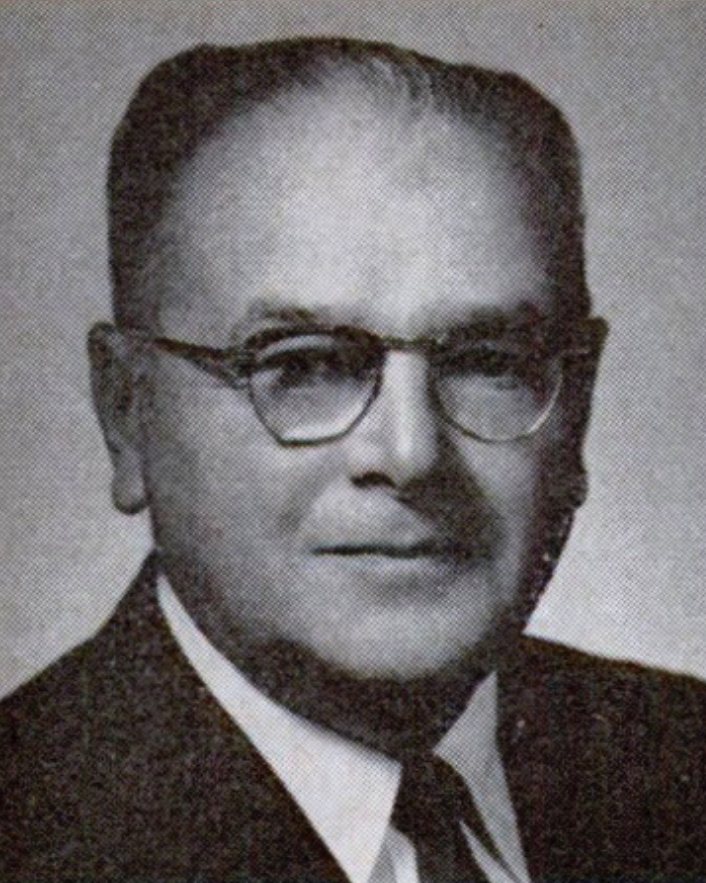
Historical · U.S. House · Virginia · District 3
Julian Gary
Former U.S. Representative · Virginia District 3 · 1945–1965 · Democratic
Julian Gary represented Virginia's District 3 in the United States House of Representatives (1945–1965) for the Democratic party. The page below collects sourced biographical facts, term history, committee roles, and provenance for Gary.
Bioguide ID: G000091
Key facts
- Full name
- Julian Gary
- State
- Virginia
- District
- District 3
- Party
- Democratic
- House service
- 1945–1965
- First House term
- 1945
- Status
- Left office
- Current term ends
- —
- Born
- 1892
- Bioguide ID
- G000091
- Committee assignments
- —
- Dataset version
- 1.20260605
Biographical narrative
1,084 words · sourced from the Wikipedia REST extract
Julian Gary was a prominent figure in Virginia's political landscape, serving as a U.S. Representative for the state's 3rd congressional district from 1945 until 1965. A member of the Democratic Party, Gary's political career spanned two decades, during which he was involved in significant legislative activities and represented his constituents through ten terms in the House of Representatives. His tenure was marked by his involvement in various political issues of the time, including civil rights and education.
Early life and career
Julian Vaughan Gary was born on February 25, 1892, in Richmond, Virginia. His early education culminated in his graduation from the University of Richmond, where he earned a Bachelor of Arts degree in 1912 followed by a Bachelor of Laws in 1915. After completing his education, Gary was admitted to the bar in the same year and began practicing law in Richmond. His legal career commenced at a time when the legal profession was evolving, and he quickly established himself within the local legal community.
In addition to his legal practice, Gary served in the United States Army during World War I. His military service contributed to his understanding of governance and civic duty, which would later inform his political career. After the war, he returned to Virginia and took on a role as counsel and executive assistant for the Virginia tax board, a position he held from 1919 to 1924. This experience provided him with insights into state governance and fiscal policy, further preparing him for his future political endeavors.
Gary's political career began in earnest when he was elected to the Virginia House of Delegates, where he served from 1926 to 1933. This role allowed him to engage directly with legislative processes at the state level and build a network of political contacts. His contributions during this time helped shape his understanding of the needs and concerns of his constituents, which would be pivotal in his later role as a U.S. Representative. Additionally, he was involved in the governance of higher education as a member of the board of trustees of the University of Richmond, reflecting his commitment to education and public service.
House tenure
Julian Gary's journey to the U.S. House of Representatives began with a special election held on March 6, 1945, to fill the vacancy left by the resignation of Dave E. Satterfield, Jr. Elected as a Democrat, Gary's initial victory marked the beginning of a lengthy and impactful congressional career. He was subsequently re-elected to nine additional terms, serving continuously until January 3, 1965. His electoral success can be attributed to his ability to connect with voters and address the issues that mattered most to them.
Throughout his tenure, Gary participated in various legislative activities and was involved in significant national discussions. His political alignment with the Democratic Party positioned him within a broader context of post-war America, where issues such as civil rights, education, and economic development were at the forefront of political discourse. Gary's voting record and public statements reflected the prevailing attitudes of his party during this transformative period in U.S. history.
Gary's electoral history reveals a pattern of increasing support from his constituents. In his first election to the House, he secured approximately 48.55% of the vote, defeating fellow Democrat Ashton Dovell and Republican Curtis M. Dozier. His subsequent re-elections demonstrated a growing confidence from the electorate, as he garnered substantial majorities in later contests. For instance, in the 1946 election, he received approximately 73.35% of the vote, and by 1950, his support had surged to nearly 89.73%. This upward trajectory in voter support can be attributed to his legislative efforts and his responsiveness to the needs of his district.
However, Gary's tenure was not without controversy. He was a signatory to the 1956 Southern Manifesto, a document that opposed the Supreme Court's decision in Brown v. Board of Education, which mandated the desegregation of public schools. This stance placed him in alignment with certain segments of his constituency who resisted the changes brought about by the civil rights movement. His position on this issue reflects the complexities of political alignment during a time of significant social change in the United States.
Gary chose not to seek renomination in 1964 for the Eighty-ninth Congress, concluding a two-decade-long career in the House. Following his departure from Congress, he returned to his legal practice in Richmond, where he continued to engage with the community until his retirement. His decision to step away from the political arena marked the end of a significant chapter in his life, but he remained a respected figure in his community.
Legislative focus and committees
During his time in the House of Representatives, Julian Gary was involved in a range of legislative issues that reflected the priorities of his constituents and the broader Democratic agenda. His legislative focus encompassed various areas, including education, civil rights, and economic development. As a member of the House, he had the opportunity to participate in discussions and debates that shaped national policy during a critical period in American history.
Gary's involvement in education policy was particularly notable, given his background and commitment to higher education. His role on the board of trustees at the University of Richmond underscored his dedication to educational issues, and this commitment likely influenced his legislative priorities in Congress. He recognized the importance of education as a means of fostering opportunity and addressing social inequalities.
In addition to education, Gary's legislative activities included engagement with civil rights issues, although his stance on specific matters, such as desegregation, indicated a more conservative viewpoint that aligned with certain factions within his party and constituency. This duality in his legislative focus illustrates the complexities of political representation during a time of significant societal change.
Throughout his congressional career, Gary served on various committees that allowed him to influence legislation directly. These committees provided a platform for him to advocate for the interests of his constituents and engage with national issues. His participation in these committees was integral to his effectiveness as a legislator and his ability to navigate the complexities of federal governance.
After concluding his congressional service, Gary returned to Richmond, where he lived until his death on September 6, 1973. He is interred in Hollywood Cemetery, a site that reflects his long-standing connection to the city and its history. His legacy as a public servant remains a part of Virginia's political narrative, illustrating the role of local representatives in shaping national policy during a transformative era in American history.
Notable legislation
Sponsored and co-sponsored legislation for Julian Gary is pending operator curation. The biographical narrative above carries the same provenance trail until per-bill rows are written.
Sources
- [1]https://en.wikipedia.org/wiki/J._Vaughan_GaryWikipedia · retrieved 2026-06-05
Notable quotes
Sourced quotes for Julian Gary are pending operator curation. Narrative-scope provenance remains attached below.
Sources
- [1]https://en.wikipedia.org/wiki/J._Vaughan_GaryWikipedia · retrieved 2026-06-05
Key positions
Curated policy positions for Julian Gary are pending operator review. The biographical narrative above carries the same provenance trail until per-topic positions are written.
Sources
- [1]https://en.wikipedia.org/wiki/J._Vaughan_GaryWikipedia · retrieved 2026-06-05
Terms served
- 1945–1947U.S. House · Term 1 · Democratic
- 1947–1949U.S. House · Term 2 · Democratic
- 1949–1951U.S. House · Term 3 · Democratic
- 1951–1953U.S. House · Term 4 · Democratic
- 1953–1955U.S. House · Term 5 · Democratic
- 1955–1957U.S. House · Term 6 · Democratic
- 1957–1959U.S. House · Term 7 · Democratic
- 1959–1961U.S. House · Term 8 · Democratic
- 1961–1963U.S. House · Term 9 · Democratic
- 1963–1965U.S. House · Term 10 · Democratic
Sources & provenance
Every attributable claim above carries a per-section [N] marker that resolves to the corresponding URL below. Each entry records the upstream provider, the canonical URL, and the timestamp at which the source was retrieved by the ingest pipeline.
Key facts
- https://bioguide.congress.gov/search/bio/G000091bioguide · retrieved 2026-06-05
- https://www.govtrack.us/congress/members/404463govtrack · retrieved 2026-06-05
Biographical narrative
- https://en.wikipedia.org/wiki/J._Vaughan_Garywikipedia · retrieved 2026-06-05
Find your representative
Every U.S. state elects representatives by district. Browse Virginia’s delegation, the full former-representative roster, or explore the role and term length.
Related on The Candidate
- Preceded by Andrew MontagueEarlier holder of the Virginia District 3 House seat · Democratic.Open
- Succeeded by David Satterfield IIILater holder of the Virginia District 3 House seat · Democratic.Open
- Alexander WhiteFormer U.S. Representative · Virginia District 1Open
- Archibald AtkinsonFormer U.S. Representative · Virginia District 1 · DemocraticOpen
- Beverly DouglasFormer U.S. Representative · Virginia District 1 · DemocraticOpen
- Daniel MorganFormer U.S. Representative · Virginia District 1 · FederalistOpen