
Historical · U.S. House · Virginia · District 5
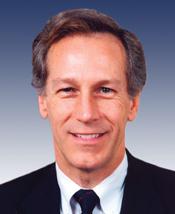
Virgil Goode Jr.
Former U.S. Representative · Virginia District 5 · 1997–2009 · Republican
Virgil Goode Jr. represented Virginia's District 5 in the United States House of Representatives (1997–2009) for the Republican party. The page below collects sourced biographical facts, term history, committee roles, and provenance for Jr..
Bioguide ID: G000280
Key facts
- Full name
- Virgil Goode Jr.
- State
- Virginia
- District
- District 5
- Party
- Republican
- House service
- 1997–2009
- First House term
- 1997
- Status
- Left office
- Current term ends
- —
- Born
- 1946
- Bioguide ID
- G000280
- Committee assignments
- —
- Dataset version
- 1.20260605
Biographical narrative
996 words · sourced from the Wikipedia REST extract
Virgil H. Goode Jr. is a former American politician who served as a member of the United States House of Representatives, representing Virginia's 5th congressional district from 1997 until 2009. Initially a member of the Democratic Party, Goode transitioned to an independent status in 2000 before aligning with the Republican Party in 2002. His political career spanned multiple decades and included significant involvement in both state and federal legislatures. Goode's tenure in Congress concluded with a narrow defeat in the 2008 election, after which he briefly pursued a presidential nomination with the Constitution Party in 2012.
Early life and career
Virgil Hamlin Goode Jr. was born on October 17, 1946, in Richmond, Virginia. He is the son of Alice Clara Besecker and Virgil Hamlin Goode Sr. While he was born in Richmond, Goode spent the majority of his life in Rocky Mount, Virginia, located south of Roanoke. His father had a notable political career, serving in the Virginia House of Delegates from 1940 to 1948 and later as the commonwealth's attorney of Franklin County from 1948 to 1972. This familial connection to politics established a legacy, as both father and son represented Franklin County at various levels of government for nearly seven decades, with only a brief interruption.
Goode's educational background includes a Bachelor of Arts degree from the University of Richmond, where he was inducted into the Phi Beta Kappa honor society, and a Juris Doctor from the University of Virginia School of Law. He was also a member of the Lambda Chi Alpha fraternity during his college years. In addition to his academic pursuits, Goode served in the Army National Guard from 1969 to 1975, which contributed to his understanding of military and veteran affairs.
Goode's political career began shortly after he completed his education. At the age of 27, he won a special election to the Virginia State Senate, representing a district in Southside Virginia. This election was prompted by the death of the long-serving Democratic incumbent, William F. Stone. During his campaign, Goode emphasized his support for the Equal Rights Amendment, a significant issue at the time. Following his election, he officially joined the Democratic Party, although his conservative views often set him apart from the party's mainstream.
Throughout his time in the Virginia Senate, Goode maintained a conservative stance, particularly on issues related to gun rights and tobacco. He was known for his advocacy of the tobacco industry, expressing concerns about the implications of anti-tobacco measures on personal freedoms. Goode also supported L. Douglas Wilder, who would later become the first elected African American governor of Virginia, and played a role in Wilder's nomination for lieutenant governor at the Democratic Party's state convention in 1985. Despite his party affiliation, Goode's conservative positions sometimes led to tension within the Democratic Party, particularly during the 1995 elections, which resulted in a split Senate. His actions during this period hinted at a growing alignment with Republican lawmakers.
House tenure
Goode's transition to the U.S. House of Representatives began in 1996 when he won the Democratic nomination to succeed retiring Congressman Lewis Payne. His state senate district largely overlapped with the southern portion of the 5th congressional district, which facilitated his election to Congress. Goode won the general election against Republican nominee George Landrith with a significant margin.
In 1998, Goode was re-elected to a second term without opposition, reflecting his strong hold on the district. However, in 2000, he made a notable shift by changing his party affiliation from Democrat to independent. He framed this change as a reflection of his commitment to serving his constituents, portraying himself as a representative who was independent-minded. This strategy proved effective, as he won re-election to a third term with a substantial majority of the vote.
By 2002, Goode had officially joined the Republican Party, becoming the first Republican to represent Virginia's 5th congressional district since 1889. His alignment with the Republican Party coincided with congressional redistricting efforts, where he collaborated with both Republican and Democratic colleagues to ensure that their respective districts remained intact. Goode won re-election in 2002 with a significant majority, further solidifying his position in Congress.
Over the next few election cycles, Goode continued to secure victories, winning his fifth and sixth terms in 2004 and 2006, respectively. His electoral success was characterized by a consistent ability to appeal to the conservative base of his district, which remained a stronghold for his political career. However, the political landscape began to shift, and in 2008, Goode faced a challenging re-election campaign against Democrat Tom Perriello. Despite winning a majority of the counties in the district, Goode ultimately lost by a narrow margin, marking the end of his congressional tenure.
Legislative focus and committees
During his time in the U.S. House of Representatives, Goode was involved in various legislative initiatives and served on multiple committees. His legislative focus reflected his conservative values, particularly in areas such as gun rights, taxation, and rural issues. He was known for advocating policies that aligned with the interests of his constituents in the largely rural and conservative 5th congressional district.
Goode's committee assignments allowed him to influence legislation on a range of topics. He participated in discussions and decision-making processes that addressed issues pertinent to his district, including agriculture, education, and veterans' affairs. His experience in state politics provided him with insights into the needs and concerns of his constituents, which he sought to address through his legislative work.
After leaving Congress, Goode briefly pursued a presidential nomination with the Constitution Party in 2012, where he received a small percentage of the total votes cast. This move reflected his ongoing engagement in political discourse, even after his departure from the House of Representatives. Overall, Goode's political career was marked by a series of significant transitions, from his early days as a Democrat to his eventual alignment with the Republican Party, illustrating the evolving nature of his political identity and the changing dynamics of Virginia's political landscape.
Notable legislation
Sponsored and co-sponsored legislation for Virgil Goode Jr. is pending operator curation. The biographical narrative above carries the same provenance trail until per-bill rows are written.
Sources
- [1]https://en.wikipedia.org/wiki/Virgil_GoodeWikipedia · retrieved 2026-06-05
Notable quotes
Sourced quotes for Virgil Goode Jr. are pending operator curation. Narrative-scope provenance remains attached below.
Sources
- [1]https://en.wikipedia.org/wiki/Virgil_GoodeWikipedia · retrieved 2026-06-05
Key positions
Curated policy positions for Virgil Goode Jr. are pending operator review. The biographical narrative above carries the same provenance trail until per-topic positions are written.
Sources
- [1]https://en.wikipedia.org/wiki/Virgil_GoodeWikipedia · retrieved 2026-06-05
Terms served
- 1997–1999U.S. House · Term 1 · Democratic
- 1999–2001U.S. House · Term 2 · Independent
- 2001–2003U.S. House · Term 3 · Republican
- 2003–2005U.S. House · Term 4 · Republican
- 2005–2007U.S. House · Term 5 · Republican
- 2007–2009U.S. House · Term 6 · Republican
Sources & provenance
Every attributable claim above carries a per-section [N] marker that resolves to the corresponding URL below. Each entry records the upstream provider, the canonical URL, and the timestamp at which the source was retrieved by the ingest pipeline.
Key facts
- https://bioguide.congress.gov/search/bio/G000280bioguide · retrieved 2026-06-05
- http://www.house.gov/goode house.gov · retrieved 2026-06-05
Biographical narrative
- https://en.wikipedia.org/wiki/Virgil_Goodewikipedia · retrieved 2026-06-05
Find your representative
Every U.S. state elects representatives by district. Browse Virginia’s delegation, the full former-representative roster, or explore the role and term length.
Related on The Candidate
- Preceded by Lewis Payne Jr.Earlier holder of the Virginia District 5 House seat · Democratic.Open
- Succeeded by Thomas PerrielloLater holder of the Virginia District 5 House seat · Democratic.Open
- Alexander WhiteFormer U.S. Representative · Virginia District 1Open
- Archibald AtkinsonFormer U.S. Representative · Virginia District 1 · DemocraticOpen
- Beverly DouglasFormer U.S. Representative · Virginia District 1 · DemocraticOpen
- Daniel MorganFormer U.S. Representative · Virginia District 1 · FederalistOpen