
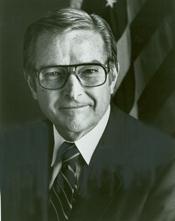
Historical · U.S. House · Virginia · District 6
James Olin
Former U.S. Representative · Virginia District 6 · 1983–1993 · Democratic
James Olin represented Virginia's District 6 in the United States House of Representatives (1983–1993) for the Democratic party. The page below collects sourced biographical facts, term history, committee roles, and provenance for Olin.
Bioguide ID: O000069
Key facts
- Full name
- James Olin
- State
- Virginia
- District
- District 6
- Party
- Democratic
- House service
- 1983–1993
- First House term
- 1983
- Status
- Left office
- Current term ends
- —
- Born
- 1920
- Bioguide ID
- O000069
- Committee assignments
- —
- Dataset version
- 1.20260605
Biographical narrative
981 words · sourced from the Wikipedia REST extract
James R. Olin was an American politician who served as a U.S. Representative for Virginia's 6th congressional district from 1983 until 1993. A member of the Democratic Party, Olin was notable for being the first Democrat to hold this seat since 1953, marking a significant shift in the political landscape of the district, which had been predominantly Republican for decades. His tenure in Congress was characterized by a moderate political stance and involvement in various legislative matters, particularly in agriculture and budgetary issues.
Early life and career
James Randolph Olin was born on February 28, 1920, in Chicago, Illinois, into a family of Swedish immigrants. He was raised in Kenilworth, Illinois, where he likely developed a strong foundation in the values of hard work and community service. Olin pursued higher education at Deep Springs College before transferring to Cornell University, where he earned a degree in electrical engineering in 1943. His academic background in engineering would later inform his professional career and public service.
Following his graduation, Olin served in the Signal Corps of the United States Army from 1943 to 1946, contributing to the military efforts during World War II. After his service, he transitioned into the corporate sector, joining General Electric (GE). Over a span of 35 years, he held various positions within the company, eventually becoming a corporate vice president and general manager of industrial electronics. His career at GE took him to several locations, including Schenectady, New York; Erie, Pennsylvania; and Salem, Virginia. This extensive experience in the corporate world provided Olin with insights into business and economic issues that would later influence his political career.
Olin's entry into politics began in 1953 when he was elected as the supervisor for Rotterdam, New York. He also served on the Schenectady County Board of Supervisors, gaining valuable experience in local governance. His early political career laid the groundwork for his later ambitions on a larger stage.
House tenure
In 1982, Olin made a significant leap into national politics by winning election to the U.S. House of Representatives, representing Virginia's 6th congressional district. This district had a historical tendency to lean Republican, and Olin's victory was notable as it marked the first time a Democrat had held the seat since 1953. He won the election with a narrow margin, securing approximately 51% of the vote against Republican Kevin Grey Miller. This victory was indicative of a shifting political climate in the region.
Olin's initial success in the House was followed by a series of re-elections. In 1984, he successfully defended his seat, receiving 54% of the vote despite the fact that Republican Ronald Reagan won the district in a landslide during the presidential election. Olin's ability to maintain his position was further solidified in subsequent elections, where he achieved substantial victories, including 70% of the vote in 1986, 64% in 1988, and 84% in 1990. His electoral success demonstrated his growing popularity and the effectiveness of his representation in the district.
Throughout his five terms in Congress, Olin was recognized as a moderate member of the Virginia delegation. His legislative actions and voting record reflected a centrist approach, often aligning with both Democratic and Republican colleagues on various issues. However, he also took stances that distinguished him from many of his party members. For instance, in 1990, he was one of only three Democrats to vote against the Americans with Disabilities Act, a landmark piece of legislation aimed at protecting the rights of individuals with disabilities.
Olin's tenure also included notable moments of political conflict. He publicly clashed with President George H. W. Bush regarding budget proposals, indicating his willingness to challenge the administration on fiscal matters. Additionally, Olin opposed the Persian Gulf War in 1991, aligning himself with a more pacifist perspective during a time of military engagement.
Despite his successes, Olin chose not to seek re-election for a sixth term in 1992. His decision came at a time when the political landscape in his district was shifting back toward Republican dominance. In the same year, he received an honorary LLD from Washington and Lee University, recognizing his contributions to public service and education.
Legislative focus and committees
During his time in the House, Olin served on the United States House Committee on Agriculture, where he focused on various agricultural policies and issues affecting rural communities. His work on this committee was significant, particularly in advocating for the reduction of milk price subsidies, a contentious issue that reflected broader debates about agricultural support and economic sustainability.
Olin's moderate stance often placed him at the intersection of various political ideologies, allowing him to navigate complex legislative waters. His ability to work across party lines was a hallmark of his approach, enabling him to build coalitions and foster dialogue on contentious issues. This collaborative spirit was particularly evident in his dealings with both Democratic and Republican colleagues, as he sought to find common ground on policies that impacted his constituents.
In addition to his work on agricultural issues, Olin's legislative focus encompassed a range of topics, including budgetary matters and social policies. His opposition to the Americans with Disabilities Act and the Persian Gulf War highlighted his willingness to take positions that were sometimes at odds with his party, reflecting a commitment to his principles and the interests of his constituents.
After leaving Congress, Olin's political legacy continued to resonate in Virginia's 6th district. The district, which had been a battleground for political control during his tenure, shifted back to Republican representation following his departure. No Democrat has since achieved significant electoral success in the district, underscoring the challenges faced by the party in that region.
James R. Olin passed away on July 29, 2006, in Charlottesville, Virginia, at the age of 86. His life and career remain a testament to the complexities of American politics and the evolving dynamics of representation in the United States Congress.
Notable legislation
Sponsored and co-sponsored legislation for James Olin is pending operator curation. The biographical narrative above carries the same provenance trail until per-bill rows are written.
Sources
- [1]https://en.wikipedia.org/wiki/Jim_OlinWikipedia · retrieved 2026-06-05
Notable quotes
Sourced quotes for James Olin are pending operator curation. Narrative-scope provenance remains attached below.
Sources
- [1]https://en.wikipedia.org/wiki/Jim_OlinWikipedia · retrieved 2026-06-05
Key positions
Curated policy positions for James Olin are pending operator review. The biographical narrative above carries the same provenance trail until per-topic positions are written.
Sources
- [1]https://en.wikipedia.org/wiki/Jim_OlinWikipedia · retrieved 2026-06-05
Terms served
- 1983–1985U.S. House · Term 1 · Democratic
- 1985–1987U.S. House · Term 2 · Democratic
- 1987–1989U.S. House · Term 3 · Democratic
- 1989–1991U.S. House · Term 4 · Democratic
- 1991–1993U.S. House · Term 5 · Democratic
Sources & provenance
Every attributable claim above carries a per-section [N] marker that resolves to the corresponding URL below. Each entry records the upstream provider, the canonical URL, and the timestamp at which the source was retrieved by the ingest pipeline.
Key facts
- https://bioguide.congress.gov/search/bio/O000069bioguide · retrieved 2026-06-05
- https://www.govtrack.us/congress/members/408342govtrack · retrieved 2026-06-05
Biographical narrative
- https://en.wikipedia.org/wiki/Jim_Olinwikipedia · retrieved 2026-06-05
Find your representative
Every U.S. state elects representatives by district. Browse Virginia’s delegation, the full former-representative roster, or explore the role and term length.
Related on The Candidate
- Preceded by Manley ButlerEarlier holder of the Virginia District 6 House seat · Republican.Open
- Succeeded by Bob GoodlatteLater holder of the Virginia District 6 House seat · Republican.Open
- Alexander WhiteFormer U.S. Representative · Virginia District 1Open
- Archibald AtkinsonFormer U.S. Representative · Virginia District 1 · DemocraticOpen
- Beverly DouglasFormer U.S. Representative · Virginia District 1 · DemocraticOpen
- Daniel MorganFormer U.S. Representative · Virginia District 1 · FederalistOpen