
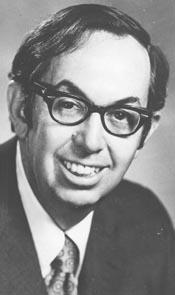
Historical · U.S. House · Virginia · District 6
Manley Butler
Former U.S. Representative · Virginia District 6 · 1971–1983 · Republican
Manley Butler represented Virginia's District 6 in the United States House of Representatives (1971–1983) for the Republican party. The page below collects sourced biographical facts, term history, committee roles, and provenance for Butler.
Bioguide ID: B001182
Key facts
- Full name
- Manley Butler
- State
- Virginia
- District
- District 6
- Party
- Republican
- House service
- 1971–1983
- First House term
- 1971
- Status
- Left office
- Current term ends
- —
- Born
- 1925
- Bioguide ID
- B001182
- Committee assignments
- —
- Dataset version
- 1.20260605
Biographical narrative
976 words · sourced from the Wikipedia REST extract
M. Caldwell Butler was a prominent American lawyer and politician who served as a U.S. Representative for Virginia's 6th congressional district from 1971 to 1983. A member of the Republican Party, Butler was known for his integrity and willingness to engage in bipartisan efforts. His political career began in the Virginia General Assembly, where he served from 1962 until 1972, before transitioning to the national stage in the U.S. House of Representatives. Throughout his tenure, Butler was recognized for his principled stances, particularly during the Watergate scandal, and for his contributions to various legislative initiatives.
Early life and career
M. Caldwell Butler was born on June 2, 1925, in Roanoke, Virginia, to William Wilson Samuel Butler and Sarah Poage Caldwell. He grew up in a family with a notable legal and political heritage, being a descendant of Chief Justice John Marshall and the great-grandson of James A. Walker, a Confederate general and Virginia lawyer. Butler's early education took place in public schools, where he demonstrated leadership qualities, eventually becoming an Eagle Scout. He graduated from Jefferson Senior High School in 1942 and subsequently enrolled in undergraduate studies in Richmond, Virginia.
During his college years, Butler joined the Reserve Officers Training Corps (ROTC), which led to his commissioning as an ensign in the United States Navy after completing training at Columbia University. He served as the commander of a rescue boat in Rhode Island until his discharge in 1946. Following his military service, Butler completed his undergraduate degree at the University of Richmond in 1948. He then pursued a legal education at the University of Virginia Law School, earning his LLB degree in 1950. His academic achievements included membership in Phi Beta Kappa, the Order of the Coif, and the Raven Society.
Butler began his legal career in Roanoke after being admitted to the Virginia bar in 1950. He established a private practice and soon ventured into politics. His first attempt at public office was a campaign for Roanoke City Council in 1958, which was unsuccessful. However, in 1961, he made history by becoming the first Republican to represent Roanoke in the Virginia House of Delegates since 1901, defeating a long-serving Democrat amid a political climate marked by significant social changes, including the desegregation of schools. Butler's tenure in the House of Delegates lasted from 1962 to 1971, during which he focused on issues such as corruption and the revitalization of a two-party system in Virginia. He served in various leadership roles, including chairman of the joint Republican caucus and minority leader.
House tenure
Butler's transition to the U.S. House of Representatives began when he won the Republican nomination to fill the vacancy left by the resignation of Representative Richard H. Poff. He successfully ran in both a special election and a regular election, marking the start of his congressional career in 1971. Butler's initial support for President Richard Nixon was challenged as the Watergate scandal unfolded, leading him to join a group of Republicans and conservative Democrats in questioning the President's conduct. His decision to support impeachment proceedings against Nixon garnered national attention and highlighted his commitment to ethical governance.
Despite the political fallout from Watergate, Butler's constituents appeared to appreciate his principled stance, as he won re-election in 1974 against a Democratic challenger. Following this election, he faced minimal opposition in subsequent elections, often running unopposed. His legislative work during this period included participation in significant hearings, such as those for Vice Presidents Gerald R. Ford and Nelson Rockefeller, and involvement in the creation of the Legal Services Corporation. Butler was also the principal author of the Bankruptcy Reform Act of 1978, which aimed to modernize the bankruptcy system in the United States.
Butler's congressional career continued until he chose not to seek re-election in 1982. After leaving office on January 3, 1983, he returned to his legal practice in Roanoke, joining the firm Woods, Rogers & Hazelgrove. His commitment to public service did not end with his congressional tenure, as he later served on the National Bankruptcy Review Commission from 1995 to 1997, contributing his expertise to the ongoing discussions about bankruptcy law.
Legislative focus and committees
Throughout his time in the U.S. House of Representatives, Butler's legislative focus encompassed a range of issues, particularly those related to legal reform and ethical governance. His role in the Bankruptcy Reform Act of 1978 was particularly significant, as it represented a comprehensive overhaul of the bankruptcy system, addressing the needs of both creditors and debtors in a more equitable manner. This legislation was a testament to his legal background and understanding of the complexities of financial law.
Butler's involvement in the Watergate hearings and his subsequent support for impeachment proceedings underscored his commitment to accountability in government. He was part of a group of lawmakers who sought to uphold the integrity of the political system, often at personal and political risk. His actions during this tumultuous period were indicative of his belief in the importance of ethical conduct among public officials.
In addition to his work on bankruptcy reform and his participation in high-profile hearings, Butler was known for his efforts to foster bipartisanship and collaboration among lawmakers. His ability to build alliances across party lines was a hallmark of his political style, which he maintained throughout his career. This approach allowed him to navigate the complexities of legislative processes effectively and to advocate for policies that benefited his constituents and the broader public.
Butler's legacy in the U.S. House of Representatives is marked by his principled leadership, his contributions to significant legislative reforms, and his commitment to ethical governance. After leaving Congress, he continued to engage in public service and remained an influential figure in Virginia's legal and political landscape. His passing on July 28, 2014, marked the end of a notable career dedicated to the principles of integrity and public service.
Notable legislation
Sponsored and co-sponsored legislation for Manley Butler is pending operator curation. The biographical narrative above carries the same provenance trail until per-bill rows are written.
Sources
- [1]https://en.wikipedia.org/wiki/M._Caldwell_ButlerWikipedia · retrieved 2026-06-05
Notable quotes
Sourced quotes for Manley Butler are pending operator curation. Narrative-scope provenance remains attached below.
Sources
- [1]https://en.wikipedia.org/wiki/M._Caldwell_ButlerWikipedia · retrieved 2026-06-05
Key positions
Curated policy positions for Manley Butler are pending operator review. The biographical narrative above carries the same provenance trail until per-topic positions are written.
Sources
- [1]https://en.wikipedia.org/wiki/M._Caldwell_ButlerWikipedia · retrieved 2026-06-05
Terms served
- 1971–1973U.S. House · Term 1 · Republican
- 1973–1975U.S. House · Term 2 · Republican
- 1975–1977U.S. House · Term 3 · Republican
- 1977–1979U.S. House · Term 4 · Republican
- 1979–1981U.S. House · Term 5 · Republican
- 1981–1983U.S. House · Term 6 · Republican
Sources & provenance
Every attributable claim above carries a per-section [N] marker that resolves to the corresponding URL below. Each entry records the upstream provider, the canonical URL, and the timestamp at which the source was retrieved by the ingest pipeline.
Key facts
- https://bioguide.congress.gov/search/bio/B001182bioguide · retrieved 2026-06-05
- https://www.govtrack.us/congress/members/402124govtrack · retrieved 2026-06-05
Biographical narrative
- https://en.wikipedia.org/wiki/M._Caldwell_Butlerwikipedia · retrieved 2026-06-05
Find your representative
Every U.S. state elects representatives by district. Browse Virginia’s delegation, the full former-representative roster, or explore the role and term length.
Related on The Candidate
- Preceded by Clarence BurtonEarlier holder of the Virginia District 6 House seat · Democratic.Open
- Succeeded by James OlinLater holder of the Virginia District 6 House seat · Democratic.Open
- Alexander WhiteFormer U.S. Representative · Virginia District 1Open
- Archibald AtkinsonFormer U.S. Representative · Virginia District 1 · DemocraticOpen
- Beverly DouglasFormer U.S. Representative · Virginia District 1 · DemocraticOpen
- Daniel MorganFormer U.S. Representative · Virginia District 1 · FederalistOpen