
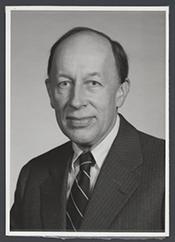
Historical · U.S. House · Virginia · District 7
Daniel Slaughter Jr.
Former U.S. Representative · Virginia District 7 · 1985–1991 · Republican
Daniel Slaughter Jr. represented Virginia's District 7 in the United States House of Representatives (1985–1991) for the Republican party. The page below collects sourced biographical facts, term history, committee roles, and provenance for Jr..
Bioguide ID: S000479
Key facts
- Full name
- Daniel Slaughter Jr.
- State
- Virginia
- District
- District 7
- Party
- Republican
- House service
- 1985–1991
- First House term
- 1985
- Status
- Left office
- Current term ends
- —
- Born
- 1925
- Bioguide ID
- S000479
- Committee assignments
- —
- Dataset version
- 1.20260605
Biographical narrative
963 words · sourced from the Wikipedia REST extract
D. French Slaughter Jr. was an American politician who served as a U.S. Representative for Virginia's 7th congressional district from 1985 until his resignation in 1991. A member of the Republican Party, Slaughter's political career spanned several decades, during which he held various positions in both state and federal government. His tenure in the House of Representatives was marked by his involvement in legislative matters pertinent to his constituents and the broader political landscape of the time.
Early life and career
D. French Slaughter Jr. was born on May 20, 1925, in Culpeper, Virginia. He received his early education in the public schools of Culpeper County, where he laid the foundation for his future academic and professional pursuits. Following high school, Slaughter attended the Virginia Military Institute, a prestigious military college, before transferring to the University of Virginia. He graduated from the University of Virginia in 1953, earning both a Bachelor of Arts and a Bachelor of Laws degree. During his time at the university, he was active in various student organizations, including the Raven Society and St. Anthony Hall, which are known for recognizing leadership and scholarship.
Slaughter's early career was marked by his service in the United States Army, where he served in combat infantry from 1943 to 1947 during World War II. His military service was distinguished, and he was awarded the Purple Heart for his bravery. After returning from military service, Slaughter was admitted to the bar and began practicing law in Culpeper, Virginia. His legal career provided him with a strong foundation in public service and governance.
In addition to his legal practice, Slaughter entered the political arena by serving in the Virginia House of Delegates from 1958 to 1978. Initially a member of the Democratic Party, he later became an independent in 1974. During his time in the Virginia legislature, he was known for his support of "massive resistance" to court-ordered school integration in the early 1960s, a stance that reflected the contentious social issues of the time. His political involvement extended beyond the state legislature; he was appointed to the board of visitors at the University of Virginia from 1978 to 1982, where he served as rector from 1980 to 1982. In the early 1980s, he worked as an aide to John Otho Marsh Jr., who was the Secretary of the Army, further expanding his experience in government and military affairs.
House tenure
D. French Slaughter Jr. was elected to the U.S. House of Representatives in 1984, representing Virginia's 7th congressional district as a Republican. His election marked a significant transition in his political career, as he shifted from state-level politics to the national stage. Slaughter won his first term with a notable majority, securing 56.5% of the vote against his opponents, which included Democrat Lewis M. Costello and Independent R.E. Frazier. His victory was indicative of the political climate in Virginia at the time, as well as his ability to connect with voters.
Following his initial election, Slaughter was re-elected three additional times, demonstrating his continued support among constituents in his district. In 1986 and 1988, he was re-elected unopposed, reflecting a strong incumbency and the absence of significant opposition during those election cycles. In 1990, he again won re-election, this time with 58.19% of the vote, defeating Democrat David M. Smith. Slaughter's electoral success can be attributed to his established presence in Virginia politics and his ability to address the concerns of his constituents effectively.
However, Slaughter's congressional career was cut short when he resigned on November 5, 1991, due to health issues stemming from a series of strokes. His resignation marked the end of a significant chapter in his political life, as he had been an active participant in legislative discussions and decisions during his time in office. Following his resignation, Slaughter's health continued to decline, and he passed away on October 2, 1998, in Charlottesville, Virginia.
Legislative focus and committees
During his tenure in the U.S. House of Representatives, D. French Slaughter Jr. was involved in various legislative initiatives and served on several committees that shaped his contributions to national policy. While specific details regarding the bills he sponsored or the committees on which he served are not provided, it is known that representatives typically engage in a range of issues that reflect the interests and needs of their constituents. Slaughter's background in law and state politics likely influenced his legislative priorities and the areas in which he sought to make an impact.
As a member of the Republican Party, Slaughter's legislative focus would have aligned with the party's platform during the late 1980s and early 1990s, which included issues such as fiscal conservatism, national defense, and limited government intervention in the economy. His military service and legal background may have also informed his positions on defense and veterans' affairs, areas that are often of significant concern to constituents in Virginia, a state with a strong military presence.
Throughout his congressional career, Slaughter's ability to navigate the complexities of federal legislation and represent the interests of his district would have been critical to his effectiveness as a legislator. His experience in the Virginia House of Delegates and as an aide to the Secretary of the Army provided him with a unique perspective on both state and federal governance, allowing him to advocate for policies that benefited his constituents while also contributing to broader national discussions.
In summary, D. French Slaughter Jr. was a prominent figure in Virginia politics, whose career spanned several decades and included significant roles at both the state and federal levels. His service in the U.S. House of Representatives was marked by electoral success and a commitment to addressing the needs of his constituents, culminating in a legacy that reflects the political dynamics of his time.
Notable legislation
Sponsored and co-sponsored legislation for Daniel Slaughter Jr. is pending operator curation. The biographical narrative above carries the same provenance trail until per-bill rows are written.
Sources
- [1]https://en.wikipedia.org/wiki/D._French_Slaughter_Jr.Wikipedia · retrieved 2026-06-05
Notable quotes
Sourced quotes for Daniel Slaughter Jr. are pending operator curation. Narrative-scope provenance remains attached below.
Sources
- [1]https://en.wikipedia.org/wiki/D._French_Slaughter_Jr.Wikipedia · retrieved 2026-06-05
Key positions
Curated policy positions for Daniel Slaughter Jr. are pending operator review. The biographical narrative above carries the same provenance trail until per-topic positions are written.
Sources
- [1]https://en.wikipedia.org/wiki/D._French_Slaughter_Jr.Wikipedia · retrieved 2026-06-05
Terms served
- 1985–1987U.S. House · Term 1 · Republican
- 1987–1989U.S. House · Term 2 · Republican
- 1989–1991U.S. House · Term 3 · Republican
- 1991–1991U.S. House · Term 4 · Republican
Sources & provenance
Every attributable claim above carries a per-section [N] marker that resolves to the corresponding URL below. Each entry records the upstream provider, the canonical URL, and the timestamp at which the source was retrieved by the ingest pipeline.
Key facts
- https://bioguide.congress.gov/search/bio/S000479bioguide · retrieved 2026-06-05
- https://www.govtrack.us/congress/members/409968govtrack · retrieved 2026-06-05
Biographical narrative
- https://en.wikipedia.org/wiki/D._French_Slaughter_Jr.wikipedia · retrieved 2026-06-05
Find your representative
Every U.S. state elects representatives by district. Browse Virginia’s delegation, the full former-representative roster, or explore the role and term length.
Related on The Candidate
- Preceded by James RobinsonEarlier holder of the Virginia District 7 House seat · Republican.Open
- Succeeded by Eric CantorLater holder of the Virginia District 7 House seat · Republican.Open
- Alexander WhiteFormer U.S. Representative · Virginia District 1Open
- Archibald AtkinsonFormer U.S. Representative · Virginia District 1 · DemocraticOpen
- Beverly DouglasFormer U.S. Representative · Virginia District 1 · DemocraticOpen
- Daniel MorganFormer U.S. Representative · Virginia District 1 · FederalistOpen