
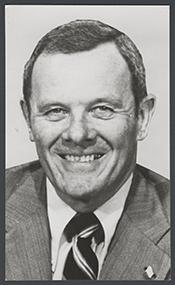
Historical · U.S. House · Virginia · District 7
James Robinson
Former U.S. Representative · Virginia District 7 · 1971–1985 · Republican
James Robinson represented Virginia's District 7 in the United States House of Representatives (1971–1985) for the Republican party. The page below collects sourced biographical facts, term history, committee roles, and provenance for Robinson.
Bioguide ID: R000337
Key facts
- Full name
- James Robinson
- State
- Virginia
- District
- District 7
- Party
- Republican
- House service
- 1971–1985
- First House term
- 1971
- Status
- Left office
- Current term ends
- —
- Born
- 1916
- Bioguide ID
- R000337
- Committee assignments
- —
- Dataset version
- 1.20260605
Biographical narrative
918 words · sourced from the Wikipedia REST extract
J. Kenneth Robinson was a prominent American politician who served as a U.S. Representative for Virginia's 7th congressional district from 1971 until 1985. A member of the Republican Party, Robinson's political career spanned over two decades, during which he became a notable figure in Virginia politics. His tenure in the U.S. House of Representatives was marked by significant electoral success and a commitment to his constituents, reflecting the changing political landscape of Virginia during the late 20th century.
Early life and career
J. Kenneth Robinson was born on May 14, 1916, in Winchester, Virginia. He attended local public schools, including Handley High School, before pursuing higher education at Virginia Polytechnic Institute in Blacksburg, Virginia, where he earned a Bachelor of Science degree in horticulture in 1937. Following his graduation, Robinson served in the United States Army during World War II from 1941 to 1945. He attained the rank of major and remained active in veteran organizations such as the American Legion after his discharge, despite adhering to Quaker beliefs.
In addition to his military service, Robinson was involved in various business ventures in the Winchester area. He owned a fruit orchard and operated a fruit packing business, which contributed to his standing in the local community. His business interests extended to real estate and other sectors, further establishing his presence in the region. Robinson was also active in civic organizations, including the Winchester Rotary Club, the Izaak Walton League, the Virginia Farm Bureau Federation, the Boy Scouts, the Winchester-Frederick County Chamber of Commerce, and the Winchester Elks Lodge. These engagements reflected his commitment to community service and local development.
Robinson's initial foray into politics occurred in 1962 when he ran for a seat in Virginia's 7th congressional district as a Republican. This district had historically been dominated by the Democratic Party, particularly by the Byrd political machine. Despite this challenging landscape, Robinson came close to defeating the Democratic nominee, John Marsh, losing by a narrow margin of 598 votes. His campaign coincided with a period of political realignment in Virginia, as conservative Democrats began to split their votes in response to national Democratic policies, particularly regarding civil rights.
After a series of political shifts, including redistricting following the Civil Rights Act of 1964, Robinson was elected to the Virginia Senate in 1965, representing a district that included parts of his future congressional constituency. He was re-elected in 1967 and served as the chairman of the Republican delegation during the 1968 and 1969 general assemblies. His experience in the state legislature laid the groundwork for his subsequent congressional campaign.
House tenure
Robinson's congressional career began in 1971 when he successfully ran for the U.S. House of Representatives, succeeding John Marsh, who opted not to seek re-election. Robinson's victory was significant, as he defeated former ambassador Murat W. Williams with a substantial majority of the vote. His initial electoral success marked a turning point for the Republican Party in a district that had not elected a Republican representative since Reconstruction.
Throughout his time in Congress, Robinson was re-elected multiple times, demonstrating a strong connection with his constituents. His electoral victories included a notable win in 1972, where he again defeated Williams, becoming the first Republican to secure a second term in the district since the post-Civil War era. Robinson's popularity in the district was evident, as he consistently garnered a significant portion of the vote in subsequent elections. His support remained robust, even during challenging political climates, such as the Watergate scandal in 1974, when he still managed to secure over half of the votes cast.
Robinson's electoral success continued through the late 1970s and early 1980s, culminating in a period where he was re-elected unopposed in 1980. His final term in the House concluded on January 3, 1985, after he chose not to seek re-election due to health concerns. Throughout his congressional career, Robinson's ability to connect with voters and navigate the political landscape contributed to his sustained electoral success.
Legislative focus and committees
During his tenure in the U.S. House of Representatives, Robinson was involved in various legislative initiatives and served on several important committees. He was particularly noted for his role as the ranking minority member on the Permanent Select Committee on Intelligence by the time he concluded his service. This position allowed him to engage with critical issues related to national security and intelligence oversight, reflecting the growing importance of these matters during the Cold War era.
Robinson's legislative focus encompassed a range of topics relevant to his constituents and the broader national interest. His background in horticulture and business likely informed his perspectives on agricultural policies and economic development initiatives. He was known for advocating for the interests of his district, which included a mix of urban and rural constituents, and he worked to address the needs of both communities.
Throughout his congressional career, Robinson maintained a commitment to his constituents, often prioritizing local concerns in his legislative efforts. His ability to navigate the complexities of federal legislation while remaining attuned to the needs of his district contributed to his reputation as a dedicated public servant.
After leaving Congress, Robinson continued to be involved in his local business ventures in the fruit growing and packing industry until his death from pancreatic cancer on April 8, 1990. His legacy as a politician and community leader remains a part of Virginia's political history, particularly in the context of the evolving dynamics of the state's electoral landscape during the latter half of the 20th century.
Notable legislation
Sponsored and co-sponsored legislation for James Robinson is pending operator curation. The biographical narrative above carries the same provenance trail until per-bill rows are written.
Sources
- [1]https://en.wikipedia.org/wiki/J._Kenneth_RobinsonWikipedia · retrieved 2026-06-05
Notable quotes
Sourced quotes for James Robinson are pending operator curation. Narrative-scope provenance remains attached below.
Sources
- [1]https://en.wikipedia.org/wiki/J._Kenneth_RobinsonWikipedia · retrieved 2026-06-05
Key positions
Curated policy positions for James Robinson are pending operator review. The biographical narrative above carries the same provenance trail until per-topic positions are written.
Sources
- [1]https://en.wikipedia.org/wiki/J._Kenneth_RobinsonWikipedia · retrieved 2026-06-05
Terms served
- 1971–1973U.S. House · Term 1 · Republican
- 1973–1975U.S. House · Term 2 · Republican
- 1975–1977U.S. House · Term 3 · Republican
- 1977–1979U.S. House · Term 4 · Republican
- 1979–1981U.S. House · Term 5 · Republican
- 1981–1983U.S. House · Term 6 · Republican
- 1983–1985U.S. House · Term 7 · Republican
Sources & provenance
Every attributable claim above carries a per-section [N] marker that resolves to the corresponding URL below. Each entry records the upstream provider, the canonical URL, and the timestamp at which the source was retrieved by the ingest pipeline.
Key facts
- https://bioguide.congress.gov/search/bio/R000337bioguide · retrieved 2026-06-05
- https://www.govtrack.us/congress/members/409308govtrack · retrieved 2026-06-05
Biographical narrative
- https://en.wikipedia.org/wiki/J._Kenneth_Robinsonwikipedia · retrieved 2026-06-05
Find your representative
Every U.S. state elects representatives by district. Browse Virginia’s delegation, the full former-representative roster, or explore the role and term length.
Related on The Candidate
- Preceded by John Marsh Jr.Earlier holder of the Virginia District 7 House seat · Democratic.Open
- Succeeded by Daniel Slaughter Jr.Later holder of the Virginia District 7 House seat · Republican.Open
- Alexander WhiteFormer U.S. Representative · Virginia District 1Open
- Archibald AtkinsonFormer U.S. Representative · Virginia District 1 · DemocraticOpen
- Beverly DouglasFormer U.S. Representative · Virginia District 1 · DemocraticOpen
- Daniel MorganFormer U.S. Representative · Virginia District 1 · FederalistOpen