
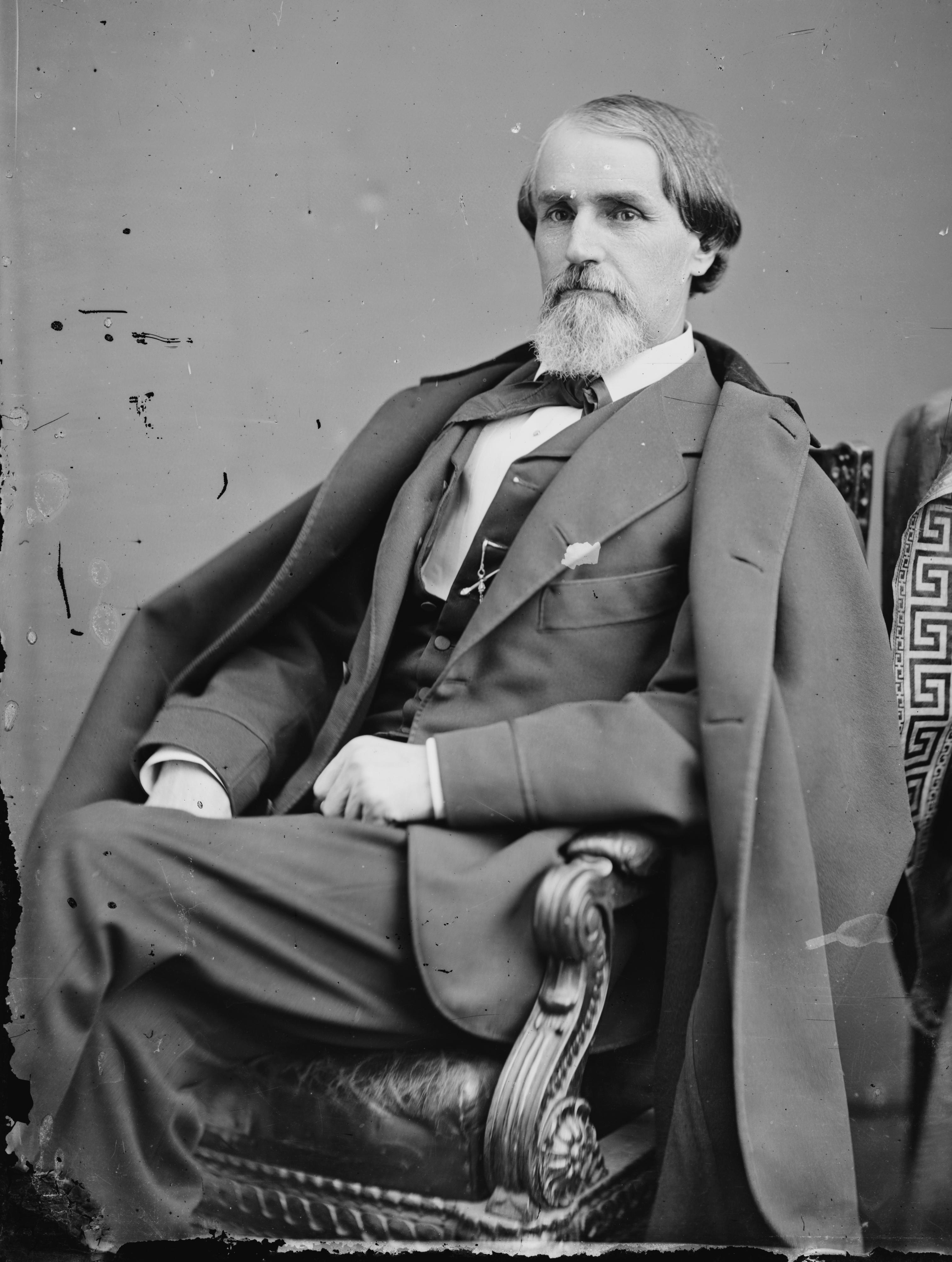
Historical · U.S. House · Virginia · District 7
Elliott Braxton
Former U.S. Representative · Virginia District 7 · 1871–1873 · Democratic
Elliott Braxton represented Virginia's District 7 in the United States House of Representatives (1871–1873) for the Democratic party. The page below collects sourced biographical facts, term history, committee roles, and provenance for Braxton.
Bioguide ID: B000777
Key facts
- Full name
- Elliott Braxton
- State
- Virginia
- District
- District 7
- Party
- Democratic
- House service
- 1871–1873
- First House term
- 1871
- Status
- Left office
- Current term ends
- —
- Born
- 1823
- Bioguide ID
- B000777
- Committee assignments
- —
- Dataset version
- 1.20260606
Biographical narrative
862 words · sourced from the Wikipedia REST extract
Elliott Braxton was a U.S. Representative from Virginia, serving in the 7th congressional district as a member of the Democratic Party. His tenure in the House of Representatives began in 1871 and concluded in 1873. A lawyer by profession, Braxton's political career was shaped by his background in Virginia's prominent planter class and his experiences during the Civil War, where he served in the Confederate Army. His life and career reflect the complexities of the antebellum and postbellum periods in American history.
Early life and career
Elliott Braxton was born on October 8, 1823, in either Mathews County or Fredericksburg, Virginia. He was the son of Carter Moore Braxton Sr. and lost his mother during his childhood. Following her death, his father remarried, and Elliott had a younger half-brother named Carter Moore Braxton. The Braxton family had deep roots in Virginia, particularly in King and Queen County, where they were known as merchants and planters. Elliott Braxton was the great-grandson of Carter Braxton, a signer of the Declaration of Independence, which further established the family's prominence in the region.
Braxton received a private education befitting his social status, although his father passed away in 1847 when Elliott was still a young man. After his father's death, Braxton studied law under his father's guidance and was admitted to the bar in 1849. He began his legal practice in Richmond County, Virginia, where his family's influence remained significant.
In 1851, Braxton was elected to the Virginia Senate, representing a district that included Richmond, Lancaster, Northumberland, and Westmoreland counties. He served in the Senate from 1852 to 1856, where he succeeded Joseph Harvey. During his time in the Senate, Braxton was involved with the Committee for Courts of Justice and the Joint Committee to Examine the First Auditor's Office. He chose not to seek re-election in 1857.
Census records from the 1850s indicate that Braxton owned enslaved individuals, a reflection of his family's historical ties to slavery. By the 1860 census, he had likely leased out some of his enslaved individuals as his legal practice faced challenges. In 1860, seeking new opportunities, Braxton relocated to Fredericksburg, Virginia, where he continued his legal career and lived with his wife and three daughters.
As the Civil War broke out, Braxton enlisted in the Confederate Army, initially serving as a private. He later raised a company in Stafford County and was elected captain on July 18, 1861. His company subsequently merged into the 30th Virginia Infantry, where he was re-elected as captain in April 1862. By August 1862, he had been promoted to major and served as brigade quartermaster on the staff of General John R. Cooke.
After the Civil War, Braxton returned to Fredericksburg and resumed his legal practice, partnering with C. Wistar Wallace, a fellow veteran of the 30th Virginia. He had his legal disabilities removed and was elected to Fredericksburg's common council in 1866, during a time when Virginia's government was undergoing reorganization due to Congressional Reconstruction.
House tenure
Elliott Braxton's congressional career began when he ran as a Conservative candidate for the U.S. House of Representatives from Virginia's 7th district. He won the election against the Republican incumbent, Lewis McKenzie, by a narrow margin. The election was contested, with McKenzie alleging voter intimidation, but the Committee on Elections ultimately upheld Braxton's victory, allowing him to take his seat in Congress.
Braxton's term in the House lasted from 1871 until 1873. During this period, he did not serve on any congressional committees. His speeches and actions in Congress primarily reflected his advocacy for states' rights and the Conservative Party's principles. He also attempted to introduce legislation aimed at compensating the Lee family for the Arlington plantation, which had been seized by the federal government during the Civil War. However, his efforts in this regard were unsuccessful.
Following his term in Congress, Braxton returned to his legal practice in Fredericksburg. His health began to decline in the 1880s due to heart disease, which affected his ability to engage in public life.
Legislative focus and committees
During his time in the House of Representatives, Elliott Braxton did not participate in any formal committees, which limited his legislative influence. His focus was primarily on advocating for the principles of states' rights, a significant issue for many Southern politicians during the Reconstruction era. Braxton's alignment with the Conservative Party reflected a broader resistance among some Southern leaders to the changes imposed by the federal government following the Civil War.
Braxton's legislative efforts included attempts to address the grievances of those affected by the Civil War, particularly regarding property rights and compensation for lost assets. His proposal to compensate the Lee family for the Arlington plantation exemplified his commitment to these issues, although it did not gain traction in Congress.
After leaving office, Braxton continued to practice law in Fredericksburg until his health declined. He remained a figure of interest in local politics and law until his death on October 2, 1891. He was interred in the Confederate Cemetery in Fredericksburg, marking the end of a life intertwined with the historical currents of 19th-century America, including the legacy of slavery, the Civil War, and the Reconstruction era.
Notable legislation
Sponsored and co-sponsored legislation for Elliott Braxton is pending operator curation. The biographical narrative above carries the same provenance trail until per-bill rows are written.
Sources
- [1]https://en.wikipedia.org/wiki/Elliott_M._BraxtonWikipedia · retrieved 2026-06-06
Notable quotes
Sourced quotes for Elliott Braxton are pending operator curation. Narrative-scope provenance remains attached below.
Sources
- [1]https://en.wikipedia.org/wiki/Elliott_M._BraxtonWikipedia · retrieved 2026-06-06
Key positions
Curated policy positions for Elliott Braxton are pending operator review. The biographical narrative above carries the same provenance trail until per-topic positions are written.
Sources
- [1]https://en.wikipedia.org/wiki/Elliott_M._BraxtonWikipedia · retrieved 2026-06-06
Terms served
- 1871–1873U.S. House · Term 1 · Democratic
Sources & provenance
Every attributable claim above carries a per-section [N] marker that resolves to the corresponding URL below. Each entry records the upstream provider, the canonical URL, and the timestamp at which the source was retrieved by the ingest pipeline.
Key facts
- https://bioguide.congress.gov/search/bio/B000777bioguide · retrieved 2026-06-06
- https://www.govtrack.us/congress/members/401736govtrack · retrieved 2026-06-06
Biographical narrative
- https://en.wikipedia.org/wiki/Elliott_M._Braxtonwikipedia · retrieved 2026-06-06
Find your representative
Every U.S. state elects representatives by district. Browse Virginia’s delegation, the full former-representative roster, or explore the role and term length.
Related on The Candidate
- Preceded by Lewis McKenzieEarlier holder of the Virginia District 7 House seat · Conservative.Open
- Succeeded by John PaulLater holder of the Virginia District 7 House seat · Readjuster.Open
- Alexander WhiteFormer U.S. Representative · Virginia District 1Open
- Archibald AtkinsonFormer U.S. Representative · Virginia District 1 · DemocraticOpen
- Beverly DouglasFormer U.S. Representative · Virginia District 1 · DemocraticOpen
- Daniel MorganFormer U.S. Representative · Virginia District 1 · FederalistOpen