
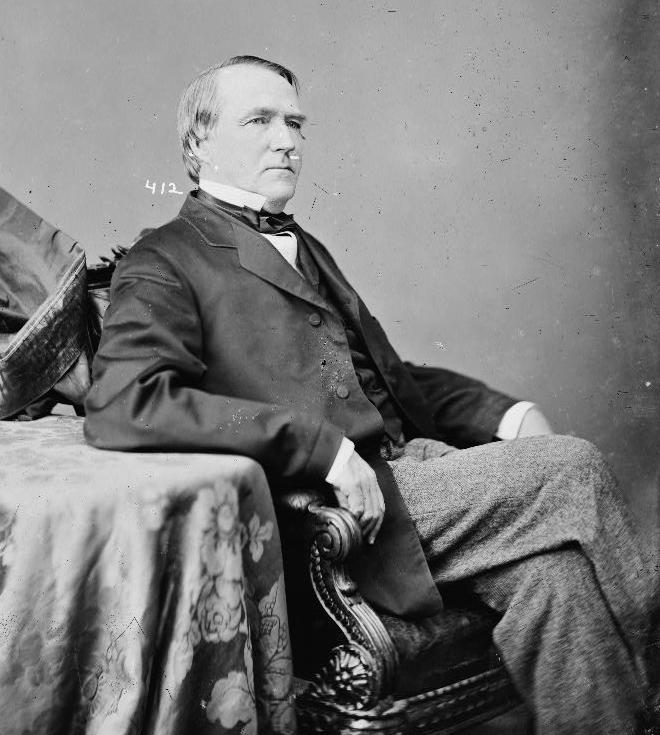
Historical · U.S. House · Virginia · District 7
Lewis McKenzie
Former U.S. Representative · Virginia District 7 · 1861–1871 · Conservative
Lewis McKenzie represented Virginia's District 7 in the United States House of Representatives (1861–1871) for the Conservative party. The page below collects sourced biographical facts, term history, committee roles, and provenance for McKenzie.
Bioguide ID: M000507
Key facts
- Full name
- Lewis McKenzie
- State
- Virginia
- District
- District 7
- Party
- Conservative
- House service
- 1861–1871
- First House term
- 1861
- Status
- Left office
- Current term ends
- —
- Born
- 1810
- Bioguide ID
- M000507
- Committee assignments
- —
- Dataset version
- 1.20260606
Biographical narrative
882 words · sourced from the Wikipedia REST extract
Lewis McKenzie was a prominent politician and businessman from Virginia who served as a U.S. Representative in the 19th century. Born on October 7, 1810, in Alexandria, District of Columbia, McKenzie was involved in various civic and commercial activities throughout his life. He held significant positions in both local government and the railroad industry, reflecting a diverse career that spanned several decades. His political journey began with the Whig Party, and he later served as a Conservative. McKenzie’s tenure in the U.S. House of Representatives included two non-consecutive terms, with his last term concluding in 1871.
Early life and career
Lewis McKenzie was born into a period of significant change in American society, and his early life set the stage for a career marked by civic engagement and business leadership. He pursued an academic education, which likely provided him with the skills necessary for his later endeavors in commerce and politics. McKenzie became actively involved in the shipping and mercantile sectors, establishing himself as a successful merchant in Alexandria. His business acumen led him to become the president of the Alexandria, Loudoun and Hampshire Railroad, a significant infrastructure project that contributed to the economic development of the region.
In addition to his business pursuits, McKenzie was also involved in banking, serving as president of the First National Bank. His leadership roles in both the railroad and banking sectors underscored his influence in the local economy and his commitment to the growth of Alexandria. His civic-mindedness was evident in his early political career, which began with his affiliation with the Whig Party. McKenzie served on the Alexandria County common council from 1843 to 1850, during which he played a crucial role in advocating for the retrocession of Alexandria back to Virginia in 1846, a significant political issue of the time.
McKenzie’s political career continued to evolve as he became a member of the city council of Alexandria from 1855 to 1859. His leadership capabilities were recognized when he served as the acting mayor of Alexandria from 1861 to 1863, a period that coincided with the Civil War. His involvement in local governance also included serving as the presiding justice of the magistrate court and holding the rank of Brigadier General in the town's militia, further demonstrating his commitment to public service and community leadership.
House tenure
Lewis McKenzie’s tenure in the U.S. House of Representatives began in 1863 when he was elected as a Unionist to fill a vacancy. His service in the House was brief, lasting only from February to March of that year. Following this initial term, he returned to the Alexandria city council, where he continued to serve until 1866. He made another return to the city council in 1868, remaining active in local politics until 1870.
In 1869, McKenzie was elected to the House again, this time as a Conservative, and he served from 1870 until 1871. His election in 1869 was notable as he ran unopposed, reflecting a strong local support base. During his time in Congress, McKenzie was involved in the legislative processes of the period, although specific details regarding his contributions and the bills he supported are not documented in the available records. His political career was marked by a commitment to the issues facing his constituents and the broader challenges of the nation during a tumultuous time in American history.
After his congressional service, McKenzie continued to engage in public service. In 1870, he ran as a Republican candidate but was unsuccessful in that election. He later sought a position in the state senate in 1874, which also resulted in a loss. Despite these setbacks, McKenzie remained active in local governance, being appointed as the postmaster of Alexandria in 1878. His dedication to public service culminated in his final return to the city council in 1887, where he served until 1891, further solidifying his legacy in local politics.
Legislative focus and committees
While specific details regarding Lewis McKenzie’s legislative focus and committee assignments during his time in the U.S. House of Representatives are not extensively documented, his political affiliations and the context of his service provide some insights into his likely areas of interest. As a member of the Unionist and later Conservative factions, McKenzie would have been involved in discussions and decisions related to the Reconstruction era and the reintegration of Southern states into the Union following the Civil War.
His background in commerce and banking may have influenced his perspectives on economic issues, particularly those affecting trade, infrastructure, and the financial stability of the post-war South. Additionally, given his experience in local governance and civic leadership, McKenzie likely prioritized issues pertinent to his constituents in Alexandria, advocating for policies that would benefit the community and support its recovery during a challenging period.
Throughout his political career, McKenzie demonstrated a commitment to public service and civic engagement, reflecting the values of his time. His involvement in various capacities, from local council member to U.S. Representative, illustrates a dedication to addressing the needs of his community and contributing to the broader political landscape of the United States during the 19th century. After his death on June 28, 1895, he was interred in Presbyterian Cemetery in Alexandria, leaving behind a legacy of public service and community involvement that characterized his life and career.
Notable legislation
Sponsored and co-sponsored legislation for Lewis McKenzie is pending operator curation. The biographical narrative above carries the same provenance trail until per-bill rows are written.
Sources
- [1]https://en.wikipedia.org/wiki/Lewis_McKenzieWikipedia · retrieved 2026-06-06
Notable quotes
Sourced quotes for Lewis McKenzie are pending operator curation. Narrative-scope provenance remains attached below.
Sources
- [1]https://en.wikipedia.org/wiki/Lewis_McKenzieWikipedia · retrieved 2026-06-06
Key positions
Curated policy positions for Lewis McKenzie are pending operator review. The biographical narrative above carries the same provenance trail until per-topic positions are written.
Sources
- [1]https://en.wikipedia.org/wiki/Lewis_McKenzieWikipedia · retrieved 2026-06-06
Terms served
- 1861–1863U.S. House · Term 1 · Unionist
- 1869–1871U.S. House · Term 2 · Conservative
Sources & provenance
Every attributable claim above carries a per-section [N] marker that resolves to the corresponding URL below. Each entry records the upstream provider, the canonical URL, and the timestamp at which the source was retrieved by the ingest pipeline.
Key facts
- https://bioguide.congress.gov/search/bio/M000507bioguide · retrieved 2026-06-06
- https://www.govtrack.us/congress/members/407502govtrack · retrieved 2026-06-06
Biographical narrative
- https://en.wikipedia.org/wiki/Lewis_McKenziewikipedia · retrieved 2026-06-06
Find your representative
Every U.S. state elects representatives by district. Browse Virginia’s delegation, the full former-representative roster, or explore the role and term length.
Related on The Candidate
- Preceded by William SmithEarlier holder of the Virginia District 7 House seat · Democratic.Open
- Succeeded by Elliott BraxtonLater holder of the Virginia District 7 House seat · Democratic.Open
- Alexander WhiteFormer U.S. Representative · Virginia District 1Open
- Archibald AtkinsonFormer U.S. Representative · Virginia District 1 · DemocraticOpen
- Beverly DouglasFormer U.S. Representative · Virginia District 1 · DemocraticOpen
- Daniel MorganFormer U.S. Representative · Virginia District 1 · FederalistOpen