
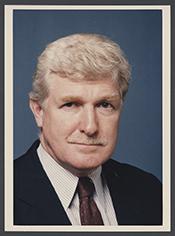
Historical · U.S. House · Virginia · District 8
Jim Moran Jr.
Former U.S. Representative · Virginia District 8 · 1991–2015 · Democratic
Jim Moran Jr. represented Virginia's District 8 in the United States House of Representatives (1991–2015) for the Democratic party. The page below collects sourced biographical facts, term history, committee roles, and provenance for Jr..
Bioguide ID: M000933
Key facts
- Full name
- Jim Moran Jr.
- State
- Virginia
- District
- District 8
- Party
- Democratic
- House service
- 1991–2015
- First House term
- 1991
- Status
- Left office
- Current term ends
- —
- Born
- 1945
- Bioguide ID
- M000933
- Committee assignments
- —
- Dataset version
- 1.20260605
Biographical narrative
1,055 words · sourced from the Wikipedia REST extract
James P. Moran is a former American politician who served as the U.S. Representative for Virginia's 8th congressional district from 1991 until 2015. A member of the Democratic Party, Moran held a significant position in Congress, where he was known for his leadership roles and legislative initiatives. His political career was preceded by his tenure as the mayor of Alexandria, Virginia, and he is recognized for his contributions to local and national politics over more than two decades.
Early life and career
James Patrick Moran Jr. was born on May 16, 1945, in Buffalo, New York, as the eldest of seven children in a Roman Catholic family of Irish descent. He was raised in Natick, Massachusetts, a suburb of Boston, where he was influenced by his parents, Dorothy and James Moran Sr. His father was a professional football player for the Boston Redskins during the mid-1930s and later worked as a probation officer. Both parents were active supporters of the Democratic Party and the New Deal, instilling in Moran a sense of civic duty and political engagement from an early age.
Moran attended Marian High School in Framingham, Massachusetts, where he began to develop his leadership skills. He later received an athletic scholarship to play college football at the College of the Holy Cross, an institution where his father had previously excelled in sports. Moran graduated with a Bachelor of Arts in economics in 1967. He furthered his education by attending Baruch College of the City University of New York and later earned a Master of Public Administration from the University of Pittsburgh in 1970.
Following his academic pursuits, Moran briefly pursued a career as an amateur boxer before transitioning into the financial sector as a stockbroker. He then moved to Washington, D.C., where he worked for five years at the Department of Health, Education, and Welfare as a budget officer. His career in public service continued as he served as a senior specialist for budgetary and fiscal policy at the Library of Congress. From 1976 to 1979, he was a staff member on the U.S. Senate Committee on Appropriations, where he gained valuable experience in legislative processes.
Moran's political career began in earnest when he was elected to the City Council of Alexandria, Virginia, in 1979. He served as deputy mayor from 1982 to 1984, but his tenure was marred by a misdemeanor conflict of interest charge that led to a brief resignation. The charge was related to the use of political action committee funds for personal expenses, which were later deemed to fit the definition of constituent services and were dismissed. Despite this setback, Moran was elected mayor of Alexandria in 1985 and successfully reelected in 1988. He resigned from the mayoral position after winning a seat in Congress in November 1990.
House tenure
Moran's election to the United States House of Representatives in 1990 marked the beginning of a lengthy congressional career. He defeated five-term Republican incumbent Stan Parris in a campaign that highlighted key issues such as the Gulf War and abortion rights. Moran's campaign was characterized by vigorous debate and personal attacks, culminating in his victory by a margin of 7.1 percent. He was sworn into office in January 1991.
Throughout his twelve terms in Congress, Moran faced various electoral challenges. In the 1992 election, he encountered Republican Kyle McSlarrow, with whom he engaged in a contentious campaign that included accusations of dishonesty from both sides. Moran emerged victorious with 56 percent of the vote, aided by redistricting that favored Democratic candidates. His subsequent reelections in 1994, 1998, 2000, and beyond were marked by a mix of competitive and less contentious races, with Moran consistently securing a significant share of the vote.
Moran's electoral success continued into the 2000s, where he faced both primary and general election challengers. Notably, in 2004, he encountered a Democratic opponent for the first time since his initial election, winning the primary with a substantial majority. His general election victories during this period often showcased his ability to connect with constituents and navigate the political landscape effectively.
Moran's tenure in the House concluded on January 3, 2015, after he decided not to seek reelection. Over the years, he established himself as a prominent figure in Virginia politics and a well-known member of the Democratic Party.
Legislative focus and committees
During his time in the U.S. House of Representatives, Moran was known for his involvement in various legislative initiatives and his leadership within the Democratic Party. He chaired the New Democrat Coalition from 1997 to 2001, a group that aimed to promote centrist and progressive policies within the party. His leadership role in this coalition allowed him to influence key legislative discussions and advocate for a range of issues.
Moran's legislative focus included areas such as health care, education, and fiscal policy. He was active in advocating for policies that aligned with the interests of his constituents in Virginia's 8th district, which encompasses cities like Falls Church and Alexandria, as well as parts of Arlington County and Fairfax County. His work often emphasized the importance of federal support for local initiatives and programs that benefited the community.
Throughout his congressional career, Moran served on several committees that shaped national policy. His experience on the House Appropriations Committee, among others, allowed him to play a critical role in budgetary decisions and funding allocations for various programs. His background in budgetary and fiscal policy contributed to his effectiveness in these roles, as he was able to navigate complex financial issues and advocate for responsible government spending.
Moran's legislative contributions were marked by a commitment to addressing the needs of his constituents while also engaging in broader national discussions. His ability to build coalitions and work across party lines on certain issues reflected his pragmatic approach to governance. As a member of Congress, he was involved in numerous debates and initiatives that sought to advance the Democratic Party's agenda while also responding to the concerns of the public.
In summary, James P. Moran's career as a U.S. Representative was characterized by a focus on community-oriented policies, effective leadership within the Democratic Party, and a commitment to public service that spanned over two decades. His legacy includes a notable impact on both local and national levels, shaped by his experiences and dedication to the constituents he represented.
Notable legislation
Sponsored and co-sponsored legislation for Jim Moran Jr. is pending operator curation. The biographical narrative above carries the same provenance trail until per-bill rows are written.
Sources
- [1]https://en.wikipedia.org/wiki/Jim_MoranWikipedia · retrieved 2026-06-05
Notable quotes
Sourced quotes for Jim Moran Jr. are pending operator curation. Narrative-scope provenance remains attached below.
Sources
- [1]https://en.wikipedia.org/wiki/Jim_MoranWikipedia · retrieved 2026-06-05
Key positions
Curated policy positions for Jim Moran Jr. are pending operator review. The biographical narrative above carries the same provenance trail until per-topic positions are written.
Sources
- [1]https://en.wikipedia.org/wiki/Jim_MoranWikipedia · retrieved 2026-06-05
Terms served
- 1991–1993U.S. House · Term 1 · Democratic
- 1993–1995U.S. House · Term 2 · Democratic
- 1995–1997U.S. House · Term 3 · Democratic
- 1997–1999U.S. House · Term 4 · Democratic
- 1999–2001U.S. House · Term 5 · Democratic
- 2001–2003U.S. House · Term 6 · Democratic
- 2003–2005U.S. House · Term 7 · Democratic
- 2005–2007U.S. House · Term 8 · Democratic
- 2007–2009U.S. House · Term 9 · Democratic
- 2009–2011U.S. House · Term 10 · Democratic
- 2011–2013U.S. House · Term 11 · Democratic
- 2013–2015U.S. House · Term 12 · Democratic
Sources & provenance
Every attributable claim above carries a per-section [N] marker that resolves to the corresponding URL below. Each entry records the upstream provider, the canonical URL, and the timestamp at which the source was retrieved by the ingest pipeline.
Key facts
- https://bioguide.congress.gov/search/bio/M000933bioguide · retrieved 2026-06-05
- http://moran.house.govhouse.gov · retrieved 2026-06-05
Biographical narrative
- https://en.wikipedia.org/wiki/Jim_Moranwikipedia · retrieved 2026-06-05
Find your representative
Every U.S. state elects representatives by district. Browse Virginia’s delegation, the full former-representative roster, or explore the role and term length.
Related on The Candidate
- Preceded by Stanford ParrisEarlier holder of the Virginia District 8 House seat · Republican.Open
- Alexander WhiteFormer U.S. Representative · Virginia District 1Open
- Archibald AtkinsonFormer U.S. Representative · Virginia District 1 · DemocraticOpen
- Beverly DouglasFormer U.S. Representative · Virginia District 1 · DemocraticOpen
- Daniel MorganFormer U.S. Representative · Virginia District 1 · FederalistOpen
- Democratic PartyFederal candidates and office holders on the Democratic line.Open