
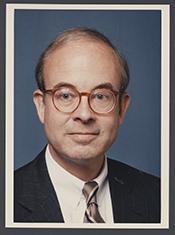
Historical · U.S. House · Virginia · District 9
Rick Boucher
Former U.S. Representative · Virginia District 9 · 1983–2011 · Democratic
Rick Boucher represented Virginia's District 9 in the United States House of Representatives (1983–2011) for the Democratic party. The page below collects sourced biographical facts, term history, committee roles, and provenance for Boucher.
Bioguide ID: B000657
Key facts
- Full name
- Rick Boucher
- State
- Virginia
- District
- District 9
- Party
- Democratic
- House service
- 1983–2011
- First House term
- 1983
- Status
- Left office
- Current term ends
- —
- Born
- 1946
- Bioguide ID
- B000657
- Committee assignments
- —
- Dataset version
- 1.20260605
Biographical narrative
942 words · sourced from the Wikipedia REST extract
Frederick Carlyle Boucher is a former American politician and attorney who served as the U.S. Representative for Virginia's 9th congressional district from 1983 until 2011. A member of the Democratic Party, Boucher's tenure in Congress spanned 14 terms, during which he became known for his work on technology and telecommunications legislation. He was defeated in his bid for re-election in 2010 by Republican Morgan Griffith, marking the end of a long career in public service.
Early life and career
Rick Boucher was born on August 1, 1946, in Abingdon, Virginia, where he continues to reside. He pursued higher education at Roanoke College, where he earned a Bachelor of Arts degree. During his time at Roanoke College, he was involved in the Kappa Alpha Order fraternity. Following his undergraduate studies, Boucher attended the University of Virginia School of Law, where he obtained his Juris Doctor degree.
Boucher began his professional career in law, initially working as an associate at Milbank Tweed in New York City. He later returned to Virginia, where he continued his legal practice. His political career commenced in 1975 when he was elected to the Virginia State Senate, defeating a long-serving Republican incumbent to secure the Democratic nomination for the seat. Boucher served in the Virginia Senate for seven years, during which he was involved in various legislative efforts and committees, including the Law and Justice Committee of the National Conference of State Legislatures. He also held positions on the Board of Directors for the First Virginia Bank of Damascus and Client Centered Legal Services of Southwest Virginia, as well as serving on the Advisory Board of Virginia Cares Inc.
House tenure
Boucher's congressional career began in 1983 when he was elected to the U.S. House of Representatives, defeating a 16-year Republican incumbent, Bill Wampler, by a narrow margin. His initial victory was followed by a closely contested re-election in 1984, where he managed to secure his seat despite the national popularity of Republican President Ronald Reagan. Boucher's subsequent elections saw him maintain a strong presence in the district, often winning by significant margins. He was unopposed in his bid for a third term in 1986 and continued to be re-elected without serious challenges for many years.
Throughout his time in office, Boucher remained popular among his constituents, even as the political landscape in Virginia shifted toward the Republican Party. The GOP gained control of many local and state seats in the Virginia General Assembly, yet Boucher consistently managed to fend off well-funded Republican challengers from 2002 to 2006. His electoral strength was evident in his victories against various opponents, including state delegates and local officials, often winning by substantial percentages of the vote.
However, in 2010, Boucher faced a formidable opponent in Morgan Griffith, who was the Majority Leader of the Virginia House of Delegates. The campaign was marked by intense scrutiny and political attacks, with Griffith portraying Boucher as aligned with the policies of President Barack Obama and House Speaker Nancy Pelosi. Despite Boucher's efforts to counter these claims, he was ultimately defeated in the election, concluding his long tenure in Congress.
Legislative focus and committees
During his time in the House of Representatives, Boucher was actively involved in various legislative initiatives, particularly in the fields of technology and telecommunications. He served on the Committee on Energy and Commerce, where he held leadership roles, including chairing the Subcommittee on Communications, Technology and the Internet and the Subcommittee on Energy and Air Quality. His work in these committees allowed him to influence significant legislation related to the Internet and telecommunications infrastructure.
Boucher is recognized for his contributions to the transition of the Internet from a government-managed research project to a commercially viable platform. He was instrumental in authoring legislation that permitted the first commercial use of the Internet and played a key role in the enactment of the Telecommunications Act of 1996, which aimed to promote competition in the cable and local telephone industries. Additionally, he co-chaired the House Internet Caucus, which he helped establish, and was involved in various legislative efforts to protect consumer rights in the digital age.
His legislative record includes a focus on fair use in digital media, leading to the introduction of the Digital Media Consumers' Rights Act and the FAIR USE Act. Boucher's efforts in this area earned him recognition from organizations such as the Association of American Libraries, which named him Politician of the Year in 2006 for his advocacy on behalf of fair use and Internet access.
Boucher's voting record reflects a pragmatic approach to various issues. He supported significant legislation such as the Auto Industry Financing and Restructuring Act and the Emergency Economic Stabilization Act of 2008, as well as the American Recovery and Reinvestment Act of 2009. He was also noted for his opposition to tax patents and introduced measures aimed at protecting taxpayers from liability related to these patents.
In environmental policy, Boucher voted in favor of the American Clean Energy and Security Act, which sought to establish a cap-and-trade system for greenhouse gas emissions. He was involved in the bill's development as chairman of the energy subcommittee in the previous Congress. However, he also took a more conservative stance on health care reform, voting against the Affordable Health Care for America Act and the Patient Protection and Affordable Care Act.
Boucher's political career concluded with his defeat in the 2010 election, marking the end of a significant chapter in Virginia's political history. His tenure in the U.S. House of Representatives was characterized by a focus on technology, telecommunications, and consumer rights, reflecting the evolving needs of his constituents in a rapidly changing digital landscape.
Notable legislation
Sponsored and co-sponsored legislation for Rick Boucher is pending operator curation. The biographical narrative above carries the same provenance trail until per-bill rows are written.
Sources
- [1]https://en.wikipedia.org/wiki/Rick_BoucherWikipedia · retrieved 2026-06-05
Notable quotes
Sourced quotes for Rick Boucher are pending operator curation. Narrative-scope provenance remains attached below.
Sources
- [1]https://en.wikipedia.org/wiki/Rick_BoucherWikipedia · retrieved 2026-06-05
Key positions
Curated policy positions for Rick Boucher are pending operator review. The biographical narrative above carries the same provenance trail until per-topic positions are written.
Sources
- [1]https://en.wikipedia.org/wiki/Rick_BoucherWikipedia · retrieved 2026-06-05
Terms served
- 1983–1985U.S. House · Term 1 · Democratic
- 1985–1987U.S. House · Term 2 · Democratic
- 1987–1989U.S. House · Term 3 · Democratic
- 1989–1991U.S. House · Term 4 · Democratic
- 1991–1993U.S. House · Term 5 · Democratic
- 1993–1995U.S. House · Term 6 · Democratic
- 1995–1997U.S. House · Term 7 · Democratic
- 1997–1999U.S. House · Term 8 · Democratic
- 1999–2001U.S. House · Term 9 · Democratic
- 2001–2003U.S. House · Term 10 · Democratic
- 2003–2005U.S. House · Term 11 · Democratic
- 2005–2007U.S. House · Term 12 · Democratic
- 2007–2009U.S. House · Term 13 · Democratic
- 2009–2011U.S. House · Term 14 · Democratic
Sources & provenance
Every attributable claim above carries a per-section [N] marker that resolves to the corresponding URL below. Each entry records the upstream provider, the canonical URL, and the timestamp at which the source was retrieved by the ingest pipeline.
Key facts
- https://bioguide.congress.gov/search/bio/B000657bioguide · retrieved 2026-06-05
- http://www.boucher.house.govhouse.gov · retrieved 2026-06-05
Biographical narrative
- https://en.wikipedia.org/wiki/Rick_Boucherwikipedia · retrieved 2026-06-05
Find your representative
Every U.S. state elects representatives by district. Browse Virginia’s delegation, the full former-representative roster, or explore the role and term length.
Related on The Candidate
- Preceded by William WamplerEarlier holder of the Virginia District 9 House seat · Republican.Open
- Alexander WhiteFormer U.S. Representative · Virginia District 1Open
- Archibald AtkinsonFormer U.S. Representative · Virginia District 1 · DemocraticOpen
- Beverly DouglasFormer U.S. Representative · Virginia District 1 · DemocraticOpen
- Daniel MorganFormer U.S. Representative · Virginia District 1 · FederalistOpen
- Democratic PartyFederal candidates and office holders on the Democratic line.Open