
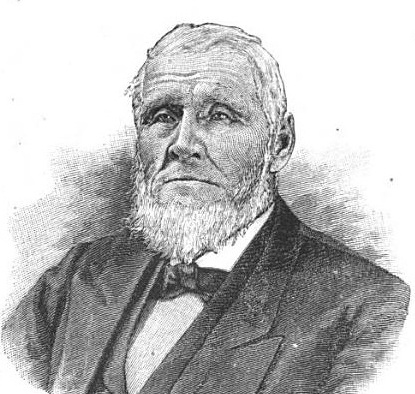
Historical · U.S. House · Vermont · District 3
Alvah Sabin
Former U.S. Representative · Vermont District 3 · 1853–1857 · Ind. Republican-Democrat
Alvah Sabin represented Vermont's District 3 in the United States House of Representatives (1853–1857) for the Ind. Republican-Democrat party. The page below collects sourced biographical facts, term history, committee roles, and provenance for Sabin.
Bioguide ID: S000002
Key facts
- Full name
- Alvah Sabin
- State
- Vermont
- District
- District 3
- Party
- Ind. Republican-Democrat
- House service
- 1853–1857
- First House term
- 1853
- Status
- Left office
- Current term ends
- —
- Born
- 1793
- Bioguide ID
- S000002
- Committee assignments
- —
- Dataset version
- 1.20260606
Biographical narrative
1,039 words · sourced from the Wikipedia REST extract
Alvah Sabin was an American politician and clergyman who served as a United States Representative for Vermont's third congressional district in the mid-19th century. A member of the Whig Party, he held office during the Thirty-third and Thirty-fourth Congresses, from 1853 to 1857. In addition to his congressional service, Sabin had a diverse career that included roles in state government, military service, and pastoral duties. His life reflected a commitment to public service and community engagement, which spanned several decades.
Early life and career
Alvah Sabin was born on October 23, 1793, in Georgia, Vermont, to Benjamin Sabin and Polly McMaster Sabin. He received his early education in the common schools of his hometown, which laid the foundation for his later academic pursuits. Sabin's formative years were marked by a sense of duty and service, as he became a member of the Vermont militia and served during the War of 1812. This military experience contributed to his understanding of civic responsibility and the importance of leadership in times of conflict.
Following the war, Sabin pursued higher education at the University of Vermont in Burlington, where he was awarded an honorary degree of Master of Arts in 1826. His academic journey continued as he studied theology in Philadelphia, culminating in his graduation from Columbian College (now known as George Washington University) in Washington, D.C., in 1821. Upon completing his theological studies, Sabin was ordained as a minister and began his pastoral career, preaching in various locations including Cambridge, Westfield, and Underhill. His ministry was characterized by a commitment to his congregations, and he served as the pastor of the Georgia Baptist Church for fifty-three years after returning to Georgia, Vermont, in 1825.
In addition to his religious duties, Sabin was active in local politics. He served multiple terms in the Vermont House of Representatives, with his tenure spanning from 1826 to 1835, and again from 1838 to 1840, 1847 to 1849, and 1851. His political involvement extended to the Vermont Senate, where he served in 1841, 1843, and 1845. Sabin's leadership capabilities were recognized when he was appointed Secretary of State of Vermont in 1841. He also held the position of Probate Judge and was involved in the Constitutional Conventions of 1843 and 1850. His judicial experience included serving as an Assistant Judge of the Franklin County Court from 1846 to 1852, further demonstrating his commitment to public service.
House tenure
Sabin's congressional career began when he was elected as a member of the Whig Party to the Thirty-third Congress. His first term in the House of Representatives commenced on March 4, 1853. During his time in Congress, Sabin was actively involved in legislative matters and served as the chairman of the Committee on Revisal and Unfinished Business during the Thirty-fourth Congress. His leadership in this role reflected his ability to navigate complex legislative processes and contribute to the functioning of the House.
Sabin was reelected for a second term, which lasted until March 3, 1857. Throughout his time in Congress, he focused on various issues pertinent to his constituents and the nation. However, he chose not to seek renomination in 1856, concluding his congressional service after two terms. His decision not to run again may have been influenced by his extensive commitments in both his ministerial and political roles, as well as his desire to return to local governance and community service.
After his time in Congress, Sabin continued to engage in public service at the local level. He served as a county commissioner for Franklin County, Vermont, in 1861 and 1862, where he was responsible for regulating the buying and selling of alcoholic beverages. This role demonstrated his ongoing commitment to addressing social issues within his community and his willingness to take on responsibilities that impacted the lives of his fellow citizens.
Legislative focus and committees
During his tenure in the House of Representatives, Alvah Sabin's legislative focus encompassed a range of issues that were significant to his constituents and the broader national landscape. As a member of the Whig Party, he aligned with the party's principles, which included support for economic development, infrastructure improvements, and a cautious approach to social issues, including the contentious topic of slavery.
Sabin's role as chairman of the Committee on Revisal and Unfinished Business allowed him to influence the legislative agenda and ensure that important matters were addressed effectively. This position required a deep understanding of parliamentary procedure and the ability to work collaboratively with other members of Congress. His leadership in this committee highlighted his commitment to facilitating the legislative process and ensuring that the House operated efficiently.
In addition to his committee work, Sabin was a delegate to the first Anti-Slavery National Convention, reflecting his engagement with the pressing moral and political issues of his time. This involvement indicated his awareness of the growing tensions surrounding slavery and his willingness to participate in discussions aimed at addressing this critical issue. His participation in the convention also aligned with the values of the Whig Party, which sought to balance economic interests with ethical considerations.
Sabin's legislative focus was further informed by his extensive experience in state politics and local governance. His previous roles in the Vermont House of Representatives and Senate, as well as his experience as Secretary of State and Probate Judge, provided him with a comprehensive understanding of the needs and concerns of his constituents. This background enabled him to advocate effectively for policies that aligned with the interests of the people he represented.
After concluding his congressional service, Sabin relocated to Sycamore, Illinois, in 1867. He continued his ministerial duties, maintaining his commitment to serving his community through religious leadership. Sabin's life and career exemplified a dedication to public service, both in the political arena and in his role as a clergyman, leaving a lasting impact on the communities he served throughout his lifetime.
Alvah Sabin passed away on January 22, 1885, in Sycamore, Illinois. He was interred at Georgia Plains Cemetery in Georgia Plains, Vermont, marking the end of a life dedicated to service in various capacities. His legacy as a politician, clergyman, and community leader remains a testament to his contributions to Vermont and the nation during a transformative period in American history.
Notable legislation
Sponsored and co-sponsored legislation for Alvah Sabin is pending operator curation. The biographical narrative above carries the same provenance trail until per-bill rows are written.
Sources
- [1]https://en.wikipedia.org/wiki/Alvah_SabinWikipedia · retrieved 2026-06-06
Notable quotes
Sourced quotes for Alvah Sabin are pending operator curation. Narrative-scope provenance remains attached below.
Sources
- [1]https://en.wikipedia.org/wiki/Alvah_SabinWikipedia · retrieved 2026-06-06
Key positions
Curated policy positions for Alvah Sabin are pending operator review. The biographical narrative above carries the same provenance trail until per-topic positions are written.
Sources
- [1]https://en.wikipedia.org/wiki/Alvah_SabinWikipedia · retrieved 2026-06-06
Terms served
- 1853–1855U.S. House · Term 1 · Whig
- 1855–1857U.S. House · Term 2 · Ind. Republican-Democrat
Sources & provenance
Every attributable claim above carries a per-section [N] marker that resolves to the corresponding URL below. Each entry records the upstream provider, the canonical URL, and the timestamp at which the source was retrieved by the ingest pipeline.
Key facts
- https://bioguide.congress.gov/search/bio/S000002bioguide · retrieved 2026-06-06
- https://www.govtrack.us/congress/members/409523govtrack · retrieved 2026-06-06
Biographical narrative
- https://en.wikipedia.org/wiki/Alvah_Sabinwikipedia · retrieved 2026-06-06
Find your representative
Every U.S. state elects representatives by district. Browse Vermont’s delegation, the full former-representative roster, or explore the role and term length.
Related on The Candidate
- Preceded by George MarshEarlier holder of the Vermont District 3 House seat · Whig.Open
- Succeeded by Homer RoyceLater holder of the Vermont District 3 House seat · Republican.Open
- Ahiman MinerFormer U.S. Representative · Vermont District 1 · WhigOpen
- Charles JoyceFormer U.S. Representative · Vermont District 1 · RepublicanOpen
- Charles WillardFormer U.S. Representative · Vermont District 1 · RepublicanOpen
- David FosterFormer U.S. Representative · Vermont District 1 · RepublicanOpen