
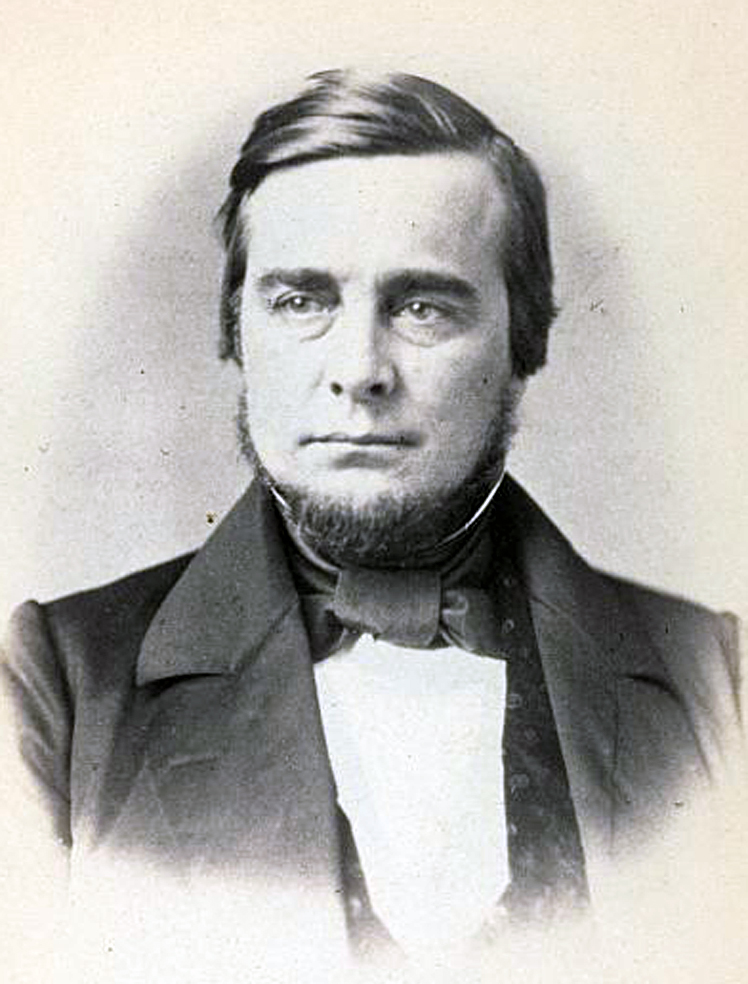
Historical · U.S. House · Vermont · District 3
Homer Royce
Former U.S. Representative · Vermont District 3 · 1857–1861 · Republican
Homer Royce represented Vermont's District 3 in the United States House of Representatives (1857–1861) for the Republican party. The page below collects sourced biographical facts, term history, committee roles, and provenance for Royce.
Bioguide ID: R000488
Key facts
- Full name
- Homer Royce
- State
- Vermont
- District
- District 3
- Party
- Republican
- House service
- 1857–1861
- First House term
- 1857
- Status
- Left office
- Current term ends
- —
- Born
- 1819
- Bioguide ID
- R000488
- Committee assignments
- —
- Dataset version
- 1.20260606
Biographical narrative
835 words · sourced from the Wikipedia REST extract
Homer Royce was an American lawyer and politician who served as a U.S. Representative for Vermont's Third Congressional District from 1857 to 1861. A member of the Republican Party, Royce was known for his involvement in legal and political affairs in Vermont, as well as his contributions to national discussions regarding foreign policy during his time in Congress. After his congressional tenure, he continued his career in law and later served as a justice on the Vermont Supreme Court, eventually becoming its chief justice.
Early life and career
Homer Elihu Royce was born on June 14, 1819, in Berkshire, Vermont, to Elihu Marvin Royce and Sophronia Parker Royce. He was raised in a family with a notable legal and political background; his uncle, Stephen Royce, served as both Chief Justice and Governor of Vermont. Royce received his early education in local district schools and furthered his studies at academies located in St. Albans and Enosburgh, Vermont. His legal education began under the mentorship of Thomas Child, and he was admitted to the bar in 1844. Following his admission, Royce practiced law in his hometown, partnering with Thomas Child, Jr. for several years.
In recognition of his academic achievements, the University of Vermont awarded Royce an honorary Master of Arts degree in 1851, followed by an honorary Doctor of Laws (LL.D.) degree in 1882. Royce married Mary T. Edmunds from Boston, Massachusetts, on January 23, 1851. The couple had three children together, establishing a family life alongside his professional pursuits.
Royce's entry into politics began with his role as the state's attorney for Franklin County in 1846 and 1847. In 1847, he also represented Berkshire in the Vermont House of Representatives. His political involvement continued as he served as a district delegate to the Whig National Convention in 1847. He was elected to the Vermont Senate multiple times, representing Franklin County in the years 1849, 1850, 1851, 1861, and 1868. These early experiences laid the groundwork for his future political career at the national level.
House tenure
Homer Royce's congressional career began when he was elected to the U.S. House of Representatives in 1856 as a member of the Republican Party, representing Vermont's Third Congressional District. He won the election by a significant majority, securing 5,960 votes. Upon taking office on March 4, 1857, Royce became the youngest member of the Vermont delegation in Congress. His first term was marked by his service on the Foreign Affairs Committee, where he engaged in discussions and decisions regarding international relations and policies.
Royce successfully ran for a second term in Congress, winning by a majority of 4,129 votes. His second term continued until March 3, 1861. During this period, he was particularly active in foreign policy debates. He contributed to the Foreign Affairs Committee's report that expressed opposition to the annexation of Cuba, a significant issue at the time. Royce's stance was aligned with that of fellow Vermont Senator Jacob Collamer, who also voiced concerns regarding the acquisition of Cuba. Royce's involvement in these discussions highlighted his engagement with pressing national issues and his commitment to his party's principles.
Despite his accomplishments in Congress, Royce chose not to seek a third term. His decision to step back from national politics marked the end of his congressional career, but it did not signify the end of his public service.
Legislative focus and committees
During his time in the U.S. House of Representatives, Homer Royce was primarily focused on issues related to foreign affairs, reflecting the interests and concerns of the nation during a turbulent period leading up to the Civil War. As a member of the Foreign Affairs Committee, he played a role in shaping discussions around U.S. foreign policy, particularly regarding Cuba, which was a contentious topic of debate at the time. His opposition to the annexation of Cuba demonstrated his engagement with international issues and his willingness to take a stand against prevailing policies that he deemed problematic.
Royce's legislative work was characterized by a commitment to the principles of the Republican Party, which was emerging as a significant political force in the United States during the late 1850s. His contributions to the Foreign Affairs Committee were part of a broader Republican agenda that sought to address the complexities of American expansionism and international relations.
After concluding his congressional service, Royce returned to his legal practice, where he continued to influence the legal landscape of Vermont. His legal expertise and experience in public service eventually led to his election as an associate justice of the Vermont Supreme Court in 1870. He later ascended to the position of chief justice in 1882, serving in that capacity until his resignation in 1890.
Homer Royce passed away on April 24, 1891, in St. Albans, Vermont. His contributions to law and politics, both in Vermont and at the national level, left a lasting impact on the state and its legal framework. He is interred in Calvary Cemetery in East Berkshire, Vermont, where his legacy continues to be remembered.
Notable legislation
Sponsored and co-sponsored legislation for Homer Royce is pending operator curation. The biographical narrative above carries the same provenance trail until per-bill rows are written.
Sources
- [1]https://en.wikipedia.org/wiki/Homer_Elihu_RoyceWikipedia · retrieved 2026-06-06
Notable quotes
Sourced quotes for Homer Royce are pending operator curation. Narrative-scope provenance remains attached below.
Sources
- [1]https://en.wikipedia.org/wiki/Homer_Elihu_RoyceWikipedia · retrieved 2026-06-06
Key positions
Curated policy positions for Homer Royce are pending operator review. The biographical narrative above carries the same provenance trail until per-topic positions are written.
Sources
- [1]https://en.wikipedia.org/wiki/Homer_Elihu_RoyceWikipedia · retrieved 2026-06-06
Terms served
- 1857–1859U.S. House · Term 1 · Republican
- 1859–1861U.S. House · Term 2 · Republican
Sources & provenance
Every attributable claim above carries a per-section [N] marker that resolves to the corresponding URL below. Each entry records the upstream provider, the canonical URL, and the timestamp at which the source was retrieved by the ingest pipeline.
Key facts
- https://bioguide.congress.gov/search/bio/R000488bioguide · retrieved 2026-06-06
- https://www.govtrack.us/congress/members/409447govtrack · retrieved 2026-06-06
Biographical narrative
- https://en.wikipedia.org/wiki/Homer_Elihu_Roycewikipedia · retrieved 2026-06-06
Find your representative
Every U.S. state elects representatives by district. Browse Vermont’s delegation, the full former-representative roster, or explore the role and term length.
Related on The Candidate
- Preceded by Alvah SabinEarlier holder of the Vermont District 3 House seat · Ind. Republican-Democrat.Open
- Succeeded by Portus BaxterLater holder of the Vermont District 3 House seat · Republican.Open
- Ahiman MinerFormer U.S. Representative · Vermont District 1 · WhigOpen
- Charles JoyceFormer U.S. Representative · Vermont District 1 · RepublicanOpen
- Charles WillardFormer U.S. Representative · Vermont District 1 · RepublicanOpen
- David FosterFormer U.S. Representative · Vermont District 1 · RepublicanOpen