
Historical · U.S. House · Vermont · At-Large
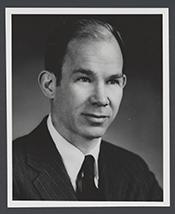
Richard Mallary
Former U.S. Representative · Vermont At-Large · 1971–1975 · Republican
Richard Mallary represented Vermont's At-Large in the United States House of Representatives (1971–1975) for the Republican party. The page below collects sourced biographical facts, term history, committee roles, and provenance for Mallary.
Bioguide ID: M000078
Key facts
- Full name
- Richard Mallary
- State
- Vermont
- District
- At-Large
- Party
- Republican
- House service
- 1971–1975
- First House term
- 1971
- Status
- Left office
- Current term ends
- —
- Born
- 1929
- Bioguide ID
- M000078
- Committee assignments
- —
- Dataset version
- 1.20260605
Biographical narrative
834 words · sourced from the Wikipedia REST extract
Richard W. Mallary was an American businessman and politician who served as a U.S. Representative for Vermont's at-large congressional district from 1971 to 1975. A member of the Republican Party, Mallary was known for his involvement in state politics prior to his congressional tenure and for his subsequent candidacy for the United States Senate in 1974. His career spanned various roles in public service and the private sector, and he was recognized for his contributions to Vermont's legislative landscape. Mallary passed away on September 27, 2011, after battling terminal prostate cancer.
Early life and career
Richard Walker Mallary was born on February 21, 1929, in Springfield, Massachusetts. He was the son of R. DeWitt Mallary, an attorney, and Gertrude Robinson Mallary. His early education took place at Bradford Academy in Bradford, Vermont, and he later attended Dartmouth College, where he earned an A.B. degree in 1949. Following his education, Mallary engaged in agricultural pursuits, operating a dairy farm in Fairlee, Vermont, from 1950 until 1970.
In addition to his farming activities, Mallary became involved in local governance, serving as the chairman of the town Board of Selectmen from 1951 to 1953. His family had a history of political involvement; his mother had served in both the Vermont House of Representatives and the Vermont Senate. This legacy inspired Mallary to enter politics himself, and he successfully ran for a seat in the Vermont House of Representatives in 1960. He served in the state House from 1961 to 1969, during which time he advanced to the position of chairman of the appropriations committee and later became the Speaker of the House from 1965 to 1969.
Mallary's legislative career in Vermont was marked by his association with a group of progressive legislators known as the "Young Turks," who sought to modernize the state's government and advocate for progressive policies. His leadership roles extended beyond the state House; he served as Trustee and Treasurer of Vermont State Colleges from 1962 to 1965, chaired the Vermont Legislative Council from 1965 to 1967, and was a delegate to the 1968 Republican National Convention. In 1969, he was appointed to the Vermont Senate, where he served until 1971. Additionally, he held the position of Vermont Secretary of Administration in the cabinet of Governor Deane C. Davis.
House tenure
Mallary's tenure in the U.S. House of Representatives began when he was elected as a Republican to the Ninety-second Congress, filling a vacancy left by Robert T. Stafford, who resigned to accept an appointment to the United States Senate. Mallary took office on January 7, 1972, and was subsequently re-elected to a full term in the Ninety-third Congress. His congressional service continued until January 3, 1975. During his time in the House, Mallary participated in various legislative activities and contributed to discussions on a range of issues pertinent to his constituents and the nation.
In 1974, Mallary sought to further his political career by running for the United States Senate. He was the Republican nominee in a closely contested race against Democratic candidate Patrick Leahy. The election was competitive, with Mallary ultimately losing by a narrow margin. His campaign reflected his ongoing commitment to public service and his desire to represent Vermont at a higher level.
Legislative focus and committees
During his time in the House of Representatives, Mallary was involved in various legislative initiatives and discussions that aligned with his background and experience in state politics. His prior roles in Vermont's government provided him with insights into the needs and concerns of his constituents, which he carried into his congressional work. Although specific details about the bills he sponsored or supported are not provided, his legislative focus likely included issues relevant to Vermont's economy, agriculture, and public administration, given his extensive background in these areas.
In addition to his legislative responsibilities, Mallary's career included significant roles in the private sector following his congressional tenure. After leaving Congress, he served as Vice President of the Farm Credit Bank in Springfield, Massachusetts, from 1975 to 1977. He returned to public service as Vermont's Secretary of Administration from 1977 to 1980 under Governor Richard A. Snelling. His career also included leadership positions in various companies, such as vice president of the Central Vermont Public Service Corporation and president of the Vermont Electric Power Company.
Mallary's later years included a return to the Vermont House of Representatives from 1999 to 2001, where he notably voted in favor of Vermont's Civil Unions law, despite representing a conservative district. His commitment to public service continued as he held local office positions, including chairman of the town planning commission and town meeting moderator.
In his final years, Mallary faced health challenges due to terminal prostate cancer. He passed away on September 27, 2011, in Brookfield, Vermont. Following his death, it was revealed that he had taken his own life as a result of his illness. Mallary's legacy includes his contributions to Vermont's political landscape and his involvement in various aspects of public service throughout his life.
Notable legislation
Sponsored and co-sponsored legislation for Richard Mallary is pending operator curation. The biographical narrative above carries the same provenance trail until per-bill rows are written.
Sources
- [1]https://en.wikipedia.org/wiki/Richard_W._MallaryWikipedia · retrieved 2026-06-05
Notable quotes
Sourced quotes for Richard Mallary are pending operator curation. Narrative-scope provenance remains attached below.
Sources
- [1]https://en.wikipedia.org/wiki/Richard_W._MallaryWikipedia · retrieved 2026-06-05
Key positions
Curated policy positions for Richard Mallary are pending operator review. The biographical narrative above carries the same provenance trail until per-topic positions are written.
Sources
- [1]https://en.wikipedia.org/wiki/Richard_W._MallaryWikipedia · retrieved 2026-06-05
Terms served
- 1971–1973U.S. House · Term 1 · Republican
- 1973–1975U.S. House · Term 2 · Republican
Sources & provenance
Every attributable claim above carries a per-section [N] marker that resolves to the corresponding URL below. Each entry records the upstream provider, the canonical URL, and the timestamp at which the source was retrieved by the ingest pipeline.
Key facts
- https://bioguide.congress.gov/search/bio/M000078bioguide · retrieved 2026-06-05
- https://www.govtrack.us/congress/members/407106govtrack · retrieved 2026-06-05
Biographical narrative
- https://en.wikipedia.org/wiki/Richard_W._Mallarywikipedia · retrieved 2026-06-05
Find your representative
Every U.S. state elects representatives by district. Browse Vermont’s delegation, the full former-representative roster, or explore the role and term length.
Related on The Candidate
- Preceded by William MeyerEarlier holder of the Vermont At-Large House seat · Democratic.Open
- Succeeded by Peter SmithLater holder of the Vermont At-Large House seat · Republican.Open
- Ahiman MinerFormer U.S. Representative · Vermont District 1 · WhigOpen
- Charles JoyceFormer U.S. Representative · Vermont District 1 · RepublicanOpen
- Charles WillardFormer U.S. Representative · Vermont District 1 · RepublicanOpen
- David FosterFormer U.S. Representative · Vermont District 1 · RepublicanOpen