
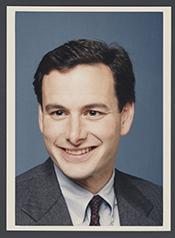
Historical · U.S. House · Washington · District 1
Rick White
Former U.S. Representative · Washington District 1 · 1995–1999 · Republican
Rick White represented Washington's District 1 in the United States House of Representatives (1995–1999) for the Republican party. The page below collects sourced biographical facts, term history, committee roles, and provenance for White.
Bioguide ID: W000391
Key facts
- Full name
- Rick White
- State
- Washington
- District
- District 1
- Party
- Republican
- House service
- 1995–1999
- First House term
- 1995
- Status
- Left office
- Current term ends
- —
- Born
- 1953
- Bioguide ID
- W000391
- Committee assignments
- —
- Dataset version
- 1.20260605
Biographical narrative
885 words · sourced from the Wikipedia REST extract
Richard Alan White is a former American politician and lawyer who served as a U.S. Representative for Washington's 1st congressional district from 1995 to 1999. A member of the Republican Party, White's congressional tenure was marked by his involvement in issues related to technology and the Internet. He is recognized for founding the Congressional Internet Caucus and contributing to the Telecommunications Act of 1996. Following his time in Congress, he returned to the legal profession and took on leadership roles in various organizations related to technology and business.
Early life and career
Rick White was born on November 6, 1953, in Bloomington, Indiana. His upbringing included periods spent in Geneva, Switzerland, and Indianapolis, Indiana, due to his father's employment with Marathon Oil. He graduated from North Central High School in Indianapolis. White pursued higher education at Dartmouth College, where he studied before spending time abroad at the University of Paris.
In 1980, White earned his Juris Doctor (J.D.) degree from Georgetown University. Following his graduation, he began his legal career as a law clerk for Judge Charles Clark. He subsequently worked as an attorney and spent 11 years at the law firm Perkins Coie, where he gained significant experience in legal matters.
White's initial foray into politics occurred in 1986 when he was elected to a term on the Queen Anne community council in Seattle. His engagement in local governance marked the beginning of his political career. In addition to his legal and political pursuits, White was actively involved in community service. He founded and directed a literacy program called Books for Kids and participated in the YMCA's Indian Guides program. He also served as a law explorers advisor for the Boy Scouts of America and was a member of Leadership Tomorrow, a non-profit organization aimed at developing community leaders. Furthermore, he led the Republican Party Farm Team, an initiative designed to encourage young professionals to engage with the Republican Party.
House tenure
Rick White's political career advanced significantly when he successfully ran for the U.S. House of Representatives in 1994. He defeated Democratic candidate Maria Cantwell to secure his seat, marking the beginning of his first term in Congress. During his time in the House, White served on the Committee on Energy and Commerce, where he focused on a range of issues, particularly those related to technology and telecommunications.
One of White's notable contributions during his congressional tenure was the founding of the Congressional Internet Caucus, which aimed to promote understanding and discussion of Internet-related issues among lawmakers. He played a key role in the development of the Telecommunications Act of 1996, a significant piece of legislation that aimed to modernize telecommunications regulations and foster competition in the industry.
White was re-elected for a second term in 1996, continuing his work on technology-related issues. However, his political fortunes changed in 1998 when he faced Democratic challenger Jay Inslee. In that election, White's campaign was complicated by the presence of a third-party candidate, Bruce Craswell, who ran on an anti-abortion platform. Craswell's candidacy drew votes away from White, ultimately contributing to his defeat. While White had previously garnered over 50% of the vote in both 1994 and 1996, the dynamics of the 1998 election resulted in him receiving less than 45% of the vote.
Legislative focus and committees
Throughout his time in the House of Representatives, Rick White's legislative focus was primarily centered on issues related to technology, telecommunications, and the Internet. His role in founding the Congressional Internet Caucus underscored his commitment to addressing the challenges and opportunities presented by the rapidly evolving digital landscape. This caucus served as a platform for lawmakers to engage with experts and stakeholders in the technology sector, fostering informed discussions on policy matters.
White's involvement in the Telecommunications Act of 1996 was another significant aspect of his legislative work. This landmark legislation aimed to promote competition in the telecommunications industry, facilitating advancements in technology and improving access to communication services for consumers. His participation in shaping this legislation reflected his belief in the importance of a competitive marketplace and the need for regulatory frameworks that adapt to technological innovations.
In addition to his work on technology issues, White's tenure on the Committee on Energy and Commerce allowed him to engage with a broader range of topics, including energy policy and consumer protection. His experience in the legal field likely informed his approach to legislative matters, as he navigated complex regulatory environments and sought to balance the interests of various stakeholders.
After concluding his congressional service in January 1999, White returned to the Perkins Coie law firm, where he had previously worked. His legal career continued to evolve, and he took on leadership roles in organizations focused on technology and business. From 2001 to 2005, he served as president and CEO of TechNet, a bipartisan organization that advocates for technology companies and their interests. Additionally, he co-founded and held the position of CEO at IP Street, Inc., and became a principal at the Woodbay Group.
Rick White's career reflects a blend of legal expertise, community engagement, and a commitment to addressing the challenges posed by technological advancements in the legislative arena. His contributions to Congress and subsequent roles in the private sector underscore his ongoing involvement in shaping policy and fostering innovation within the technology landscape.
Notable legislation
Sponsored and co-sponsored legislation for Rick White is pending operator curation. The biographical narrative above carries the same provenance trail until per-bill rows are written.
Sources
- [1]https://en.wikipedia.org/wiki/Rick_White_(politician)Wikipedia · retrieved 2026-06-05
Notable quotes
Sourced quotes for Rick White are pending operator curation. Narrative-scope provenance remains attached below.
Sources
- [1]https://en.wikipedia.org/wiki/Rick_White_(politician)Wikipedia · retrieved 2026-06-05
Key positions
Curated policy positions for Rick White are pending operator review. The biographical narrative above carries the same provenance trail until per-topic positions are written.
Sources
- [1]https://en.wikipedia.org/wiki/Rick_White_(politician)Wikipedia · retrieved 2026-06-05
Terms served
- 1995–1997U.S. House · Term 1 · Republican
- 1997–1999U.S. House · Term 2 · Republican
Sources & provenance
Every attributable claim above carries a per-section [N] marker that resolves to the corresponding URL below. Each entry records the upstream provider, the canonical URL, and the timestamp at which the source was retrieved by the ingest pipeline.
Key facts
- https://bioguide.congress.gov/search/bio/W000391bioguide · retrieved 2026-06-05
- https://www.govtrack.us/congress/members/411550govtrack · retrieved 2026-06-05
Biographical narrative
- https://en.wikipedia.org/wiki/Rick_White_(politician)wikipedia · retrieved 2026-06-05
Find your representative
Every U.S. state elects representatives by district. Browse Washington’s delegation, the full former-representative roster, or explore the role and term length.
Related on The Candidate
- Preceded by John MillerEarlier holder of the Washington District 1 House seat · Republican.Open
- Emerson De LacyFormer U.S. Representative · Washington District 1 · DemocraticOpen
- Homer JonesFormer U.S. Representative · Washington District 1 · RepublicanOpen
- Jay InsleeFormer U.S. Representative · Washington District 1 · DemocraticOpen
- Joel PritchardFormer U.S. Representative · Washington District 1 · RepublicanOpen
- Republican PartyFederal candidates and office holders on the Republican line.Open