
Historical · U.S. House · Washington · District 3
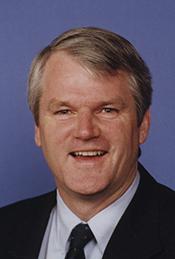
Brian Baird
Former U.S. Representative · Washington District 3 · 1999–2011 · Democratic
Brian Baird represented Washington's District 3 in the United States House of Representatives (1999–2011) for the Democratic party. The page below collects sourced biographical facts, term history, committee roles, and provenance for Baird.
Bioguide ID: B001229
Key facts
- Full name
- Brian Baird
- State
- Washington
- District
- District 3
- Party
- Democratic
- House service
- 1999–2011
- First House term
- 1999
- Status
- Left office
- Current term ends
- —
- Born
- 1956
- Bioguide ID
- B001229
- Committee assignments
- —
- Dataset version
- 1.20260605
Biographical narrative
808 words · sourced from the Wikipedia REST extract
Brian Baird is a former U.S. Representative who served Washington's 3rd congressional district from 1999 until 2011. A member of the Democratic Party, Baird is also a trained psychologist and academic, having held various positions in higher education. His tenure in Congress was marked by active participation in numerous committees and caucuses, as well as a commitment to community engagement through town hall meetings. After leaving Congress, he transitioned to academia, serving as the president of Antioch University Seattle until 2015.
Early life and career
Brian Baird was born on March 7, 1956, in Chama, New Mexico. He is the son of Edith Shaw and William Norton "Bill" Baird, who was involved in local governance as a town councilman and mayor. Baird has a younger sister, Maggie Baird, who is known for her career as an actress. His educational journey began at the University of Utah, where he earned a Bachelor of Science degree in 1977, graduating with honors as a member of the Phi Beta Kappa society. He furthered his education at the University of Wyoming, obtaining both a Master of Science degree and a PhD in clinical psychology.
Baird's professional career prior to entering politics included a significant academic role as the chairman of the Department of Psychology at Pacific Lutheran University in Tacoma, Washington. In addition to his academic responsibilities, he is a licensed clinical psychologist and has contributed to the field through the publication of several journal articles and three books. His expertise also extends to teaching professional development courses aimed at attorneys and judges, focusing on communication, ethics, and the psychology of persuasion. Baird is recognized as a member of the ReFormers Caucus of Issue One, which advocates for political reform.
House tenure
Baird's political career in the U.S. House of Representatives began when he was elected to represent Washington's 3rd congressional district in 1998, defeating Republican incumbent Linda Smith. His initial campaign was competitive, with a narrow margin of victory. Following Smith's decision to pursue a Senate seat, Baird ran again in 1998 against State Senator Don Benton, winning decisively with 54.7% of the vote. He subsequently served a total of six terms in Congress, during which he was reelected five times without facing significant electoral challenges.
Throughout his congressional tenure, Baird was known for his commitment to engaging with constituents. He frequently traveled back to his district, hosting over 300 town hall meetings, which allowed him to connect with the community and address local concerns. These meetings varied in attendance, with some drawing as many as 3,000 participants during particularly contentious discussions. His approach to constituent engagement was characterized by a strong emphasis on accessibility and communication.
Baird's decision not to seek reelection in 2010 was announced in December 2009. After concluding his service in Congress on January 3, 2011, he relocated to Edmonds, Washington, where he continued to write and engage in discussions about American politics.
Legislative focus and committees
During his time in the House of Representatives, Baird was actively involved in several committees and caucuses, reflecting his diverse legislative interests. He served on the Committee on Science and Technology, where he chaired the Subcommittee on Energy and Environment and also participated in the Subcommittee on Research and Science Education. His work on the Committee on Transportation and Infrastructure included roles on various subcommittees, such as Coast Guard and Maritime Transportation, Highways and Transit, and Water Resources and Environment.
Baird was a co-founder of multiple caucuses, including the Congressional Career and Technical Education Caucus, the Congressional Caucus to Control and Fight Methamphetamine, and the Congressional National Parks Caucus. His involvement extended to numerous other caucuses addressing a wide range of issues, such as addiction treatment, community health, mental health, and environmental concerns. He was also a member of the Democratic Caucus and the New Democrat Coalition, indicating his alignment with both traditional and progressive Democratic values.
In addition to his committee work, Baird played a role in the House Democratic leadership as a senior regional whip and was part of the Democratic Steering Committee. His leadership capabilities were recognized when he was elected president of the 1998 Democratic Freshman Class.
Baird's legislative activities included a notable visit to the Gaza Strip in February 2009, where he, along with other members of Congress, aimed to assess the humanitarian situation following the Gaza War. This visit was significant as it marked the first time a U.S. government representative had entered Gaza in over three years, and it underscored Baird's commitment to international humanitarian issues.
Overall, Brian Baird's congressional career was characterized by a focus on science, technology, infrastructure, and community engagement, alongside a commitment to addressing pressing social issues through his participation in various caucuses and committees. His post-congressional career has continued to reflect his interests in education and public discourse, particularly in the realm of American politics.
Notable legislation
Sponsored and co-sponsored legislation for Brian Baird is pending operator curation. The biographical narrative above carries the same provenance trail until per-bill rows are written.
Sources
- [1]https://en.wikipedia.org/wiki/Brian_BairdWikipedia · retrieved 2026-06-05
Notable quotes
Sourced quotes for Brian Baird are pending operator curation. Narrative-scope provenance remains attached below.
Sources
- [1]https://en.wikipedia.org/wiki/Brian_BairdWikipedia · retrieved 2026-06-05
Key positions
Curated policy positions for Brian Baird are pending operator review. The biographical narrative above carries the same provenance trail until per-topic positions are written.
Sources
- [1]https://en.wikipedia.org/wiki/Brian_BairdWikipedia · retrieved 2026-06-05
Terms served
- 1999–2001U.S. House · Term 1 · Democratic
- 2001–2003U.S. House · Term 2 · Democratic
- 2003–2005U.S. House · Term 3 · Democratic
- 2005–2007U.S. House · Term 4 · Democratic
- 2007–2009U.S. House · Term 5 · Democratic
- 2009–2011U.S. House · Term 6 · Democratic
Sources & provenance
Every attributable claim above carries a per-section [N] marker that resolves to the corresponding URL below. Each entry records the upstream provider, the canonical URL, and the timestamp at which the source was retrieved by the ingest pipeline.
Key facts
- https://bioguide.congress.gov/search/bio/B001229bioguide · retrieved 2026-06-05
- http://www.baird.house.govhouse.gov · retrieved 2026-06-05
Biographical narrative
- https://en.wikipedia.org/wiki/Brian_Bairdwikipedia · retrieved 2026-06-05
Find your representative
Every U.S. state elects representatives by district. Browse Washington’s delegation, the full former-representative roster, or explore the role and term length.
Related on The Candidate
- Preceded by Linda SmithEarlier holder of the Washington District 3 House seat · Republican.Open
- Succeeded by Jaime Herrera BeutlerLater holder of the Washington District 3 House seat · Republican.Open
- Emerson De LacyFormer U.S. Representative · Washington District 1 · DemocraticOpen
- Homer JonesFormer U.S. Representative · Washington District 1 · RepublicanOpen
- Jay InsleeFormer U.S. Representative · Washington District 1 · DemocraticOpen
- Joel PritchardFormer U.S. Representative · Washington District 1 · RepublicanOpen