
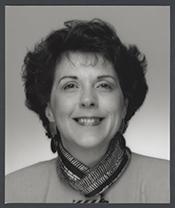
Historical · U.S. House · Washington · District 3
Linda Smith
Former U.S. Representative · Washington District 3 · 1995–1999 · Republican
Linda Smith represented Washington's District 3 in the United States House of Representatives (1995–1999) for the Republican party. The page below collects sourced biographical facts, term history, committee roles, and provenance for Smith.
Bioguide ID: S000587
Key facts
- Full name
- Linda Smith
- State
- Washington
- District
- District 3
- Party
- Republican
- House service
- 1995–1999
- First House term
- 1995
- Status
- Left office
- Current term ends
- —
- Born
- 1950
- Bioguide ID
- S000587
- Committee assignments
- —
- Dataset version
- 1.20260605
Biographical narrative
930 words · sourced from the Wikipedia REST extract
Linda Smith is a former U.S. Representative who served Washington's 3rd congressional district from 1995 to 1999 as a member of the Republican Party. Known for her commitment to various social issues, Smith's political career was marked by her strong pro-life stance and advocacy for campaign finance reform. After leaving Congress, she founded Shared Hope International, a nonprofit organization dedicated to combating sex trafficking and supporting victims. Smith's work has extended globally, focusing on prevention, restoration, and justice for those affected by trafficking.
Early life and career
Linda Ann Smith was born on July 16, 1950. She grew up in a working-class family, experiencing significant challenges during her formative years. Her father abandoned the family when she was young, and her mother later remarried a mechanic. In 1966, the family relocated to Vancouver, Washington. Smith has an older sister, two younger sisters, and two younger brothers. Her early life was characterized by a series of part-time jobs, including roles as a fruit picker and a day-care aide, which she undertook while attending high school. Smith has remarked on the breadth of her experiences by the age of 17, suggesting that she felt she had lived through more than many of her peers.
At the age of 24, Smith faced a personal tragedy when her mother passed away from cancer, leaving her to care for her two younger brothers. In 1968, she married Vern Smith, a locomotive engineer, and together they raised two children. Smith's professional life included managing several independent tax offices in Southern Washington. As of the latest available information, she continues to reside in Vancouver, Washington, and is a grandmother to six grandchildren.
House tenure
Smith's political career began in earnest in 1983 when she won a special election to the Washington House of Representatives, defeating a Democratic incumbent. Her political ascent continued in 1987 when she moved to the Washington State Senate, where she played a significant role in giving the Republican Party control of that chamber. Her supporters initiated a write-in campaign in September 1994, leading to her nomination for Washington's 3rd congressional district after the Republican candidate Tim Moyer withdrew from the race. This grassroots effort culminated in her victory over the primary candidate listed on the ballot.
In the general election, Smith faced off against incumbent Democrat Jolene Unsoeld, securing a win that marked her entry into the U.S. House of Representatives. She was re-elected in 1996, narrowly defeating Democrat Brian Baird by a small margin. Throughout her time in Congress, Smith was recognized for her strong pro-life views and her support for campaign finance reform. Notably, she was one of a small group of House Republicans who voted against the confirmation of House Speaker Newt Gingrich in early 1997.
During her tenure, Smith was involved in significant legislative actions, including co-sponsoring a resolution in November 1997 that sought to initiate an impeachment inquiry against President Bill Clinton. This resolution was an early step in the impeachment process, which gained traction following the Clinton–Lewinsky scandal. Smith voted in favor of opening an impeachment inquiry in October 1998 and supported all four articles of impeachment proposed against Clinton in December of that year.
In 1998, Smith chose to leave her House seat to run for Washington's Class 3 U.S. Senate seat. She won the Republican primary against former King County Prosecuting Attorney Chris Bayley but ultimately lost in the general election to incumbent Democrat Patty Murray. This election was notable as it marked one of the few Senate races in U.S. history between two women.
Legislative focus and committees
During her time in the U.S. House of Representatives, Smith's legislative focus was characterized by her advocacy for social issues, particularly those related to family and children. Her pro-life stance was a cornerstone of her political identity, influencing her voting record and public statements. Additionally, she was an advocate for campaign finance reform, reflecting a commitment to transparency and integrity in political processes.
Smith's involvement in the impeachment inquiry against President Clinton highlighted her willingness to engage in contentious political issues, aligning herself with a faction of the Republican Party that sought accountability from the executive branch. Her actions in this regard were part of a broader movement within Congress during the late 1990s, which sought to address perceived misconduct by the President.
After leaving Congress, Smith redirected her efforts toward addressing the issue of sex trafficking. She founded Shared Hope International, a nonprofit organization aimed at eradicating sex trafficking and providing support for victims. This organization has developed a comprehensive approach to restoration, focusing on shelter, education, and job skills training for survivors. Smith's work through Shared Hope has included international travel to raise awareness and develop strategies for combating trafficking.
In addition to Shared Hope International, Smith established the War Against Trafficking Alliance in 2001, which coordinates efforts to combat sex trafficking on both regional and international levels. This initiative has involved collaborations with various stakeholders, including government agencies and non-governmental organizations, to enhance the effectiveness of anti-trafficking strategies.
Smith's commitment to researching and addressing domestic minor sex trafficking has led to partnerships with Anti-Trafficking Task Forces in multiple U.S. cities. Her work has been instrumental in shedding light on the complexities of trafficking and the need for comprehensive solutions to protect vulnerable populations.
Overall, Linda Smith's career reflects a trajectory from local and state politics to national representation, followed by a dedicated focus on humanitarian issues, particularly in the realm of sex trafficking. Her contributions to both legislative processes and nonprofit initiatives underscore her commitment to advocacy and social justice.
Notable legislation
Sponsored and co-sponsored legislation for Linda Smith is pending operator curation. The biographical narrative above carries the same provenance trail until per-bill rows are written.
Sources
- [1]https://en.wikipedia.org/wiki/Linda_Smith_(American_politician)Wikipedia · retrieved 2026-06-05
Notable quotes
Sourced quotes for Linda Smith are pending operator curation. Narrative-scope provenance remains attached below.
Sources
- [1]https://en.wikipedia.org/wiki/Linda_Smith_(American_politician)Wikipedia · retrieved 2026-06-05
Key positions
Curated policy positions for Linda Smith are pending operator review. The biographical narrative above carries the same provenance trail until per-topic positions are written.
Sources
- [1]https://en.wikipedia.org/wiki/Linda_Smith_(American_politician)Wikipedia · retrieved 2026-06-05
Terms served
- 1995–1997U.S. House · Term 1 · Republican
- 1997–1999U.S. House · Term 2 · Republican
Sources & provenance
Every attributable claim above carries a per-section [N] marker that resolves to the corresponding URL below. Each entry records the upstream provider, the canonical URL, and the timestamp at which the source was retrieved by the ingest pipeline.
Key facts
- https://bioguide.congress.gov/search/bio/S000587bioguide · retrieved 2026-06-05
- https://www.govtrack.us/congress/members/410067govtrack · retrieved 2026-06-05
Biographical narrative
- https://en.wikipedia.org/wiki/Linda_Smith_(American_politician)wikipedia · retrieved 2026-06-05
Find your representative
Every U.S. state elects representatives by district. Browse Washington’s delegation, the full former-representative roster, or explore the role and term length.
Related on The Candidate
- Preceded by Jolene UnsoeldEarlier holder of the Washington District 3 House seat · Democratic.Open
- Succeeded by Brian BairdLater holder of the Washington District 3 House seat · Democratic.Open
- Emerson De LacyFormer U.S. Representative · Washington District 1 · DemocraticOpen
- Homer JonesFormer U.S. Representative · Washington District 1 · RepublicanOpen
- Jay InsleeFormer U.S. Representative · Washington District 1 · DemocraticOpen
- Joel PritchardFormer U.S. Representative · Washington District 1 · RepublicanOpen