
Historical · U.S. House · Washington · District 8
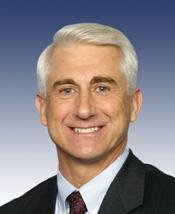
David Reichert
Former U.S. Representative · Washington District 8 · 2005–2019 · Republican
David Reichert represented Washington's District 8 in the United States House of Representatives (2005–2019) for the Republican party. The page below collects sourced biographical facts, term history, committee roles, and provenance for Reichert.
Bioguide ID: R000578
Key facts
- Full name
- David Reichert
- State
- Washington
- District
- District 8
- Party
- Republican
- House service
- 2005–2019
- First House term
- 2005
- Status
- Left office
- Current term ends
- —
- Born
- 1950
- Bioguide ID
- R000578
- Committee assignments
- —
- Dataset version
- 1.20260605
Biographical narrative
1,032 words · sourced from the Wikipedia REST extract
David G. Reichert is a retired American politician and former law enforcement officer who served as the U.S. Representative for Washington's 8th congressional district from 2005 until 2019. A member of the Republican Party, Reichert is known for his moderate stance within the party and his previous role as the sheriff of King County, Washington. His tenure in Congress included multiple re-elections, and he was involved in various legislative committees and caucuses. Following his congressional career, he attempted to run for governor in 2024 but was unsuccessful.
Early life and career
David G. Reichert was born on August 29, 1950, in Detroit Lakes, Minnesota, to Marlys Ann Troeger and George F. Reichert. He is the eldest of seven siblings and has familial ties to law enforcement, being the grandson of the town marshal. In 1951, his family relocated to Washington state, initially settling in Renton before moving to Kent. Reichert completed his high school education at Kent Meridian High School, graduating in 1968. He then attended Concordia Lutheran College in Portland, Oregon, where he received a partial football scholarship and earned an Associate of Arts degree in social work in 1970.
Reichert's military career began in 1971 when he joined the Air Force Reserves, specifically the 939th Military Airlift Group. He served on active duty for six months and continued his service in the reserves until 1976. This experience laid a foundation for his later work in law enforcement.
Reichert's law enforcement career commenced in 1972 when he joined the King County Sheriff's Office (KCSO). His work included participation in the Green River Task Force, which was established to apprehend the notorious "Green River killer." In 1984, he collaborated with fellow detective Robert Keppel to interview serial killer Ted Bundy in an effort to develop a psychological profile of the Green River killer. This investigation ultimately led to the identification of Gary Leon Ridgway as the perpetrator in 2001, following the use of DNA evidence. In 2004, Reichert published a memoir detailing his experiences in this high-profile case, titled "Chasing the Devil: My Twenty-Year Quest to Capture the Green River Killer."
Throughout his law enforcement career, Reichert faced significant challenges, including a life-threatening incident in which he sustained severe injuries while responding to a domestic violence call. During this encounter, he was attacked by a knife-wielding suspect, resulting in a serious throat injury that required extensive medical treatment. For his bravery in this incident, he received one of his two Medals of Valor. In 1997, he was appointed sheriff of King County by the county executive and later ran unopposed for a second term in 2001. His leadership in law enforcement was recognized through various accolades, including the National Sheriffs' Association's Sheriff of the Year award in 2004.
House tenure
Reichert's political career in the U.S. House of Representatives began in 2005 when he was elected to represent Washington's 8th congressional district. He succeeded retiring Republican Congresswoman Jennifer Dunn. In the 2004 election, Reichert faced Democratic candidate Dave Ross and won with a narrow margin, receiving 52% of the vote compared to Ross's 47%. Notably, this election occurred in a district that also supported the Democratic presidential nominee, Senator John Kerry, indicating a complex political landscape.
Reichert's re-election campaigns were marked by a series of competitive races. In 2006, he faced Democratic challenger Darcy Burner and was re-elected with 51% of the vote. The following election in 2008 saw a repeat matchup with Burner, where Reichert secured victory with 53% of the vote. His subsequent elections in 2010, 2012, 2014, and 2016 featured various Democratic challengers, including Suzan DelBene, Karen Porterfield, Jason Ritchie, and Tony Ventrella, respectively. Reichert consistently won these elections, often with a significant majority of the votes.
During his time in Congress, Reichert served on the Committee on Ways and Means, where he held a leadership role as chair of the Subcommittee on Select Revenue Measures. His involvement in this committee underscored his focus on fiscal policy and economic issues. Additionally, he was a member of several caucuses, including the House Baltic Caucus, the Congressional Arts Caucus, the Congressional NextGen 9-1-1 Caucus, the Climate Solutions Caucus, and the U.S.-Japan Caucus. These affiliations reflected his engagement with a range of issues, from international relations to environmental concerns.
Reichert announced his retirement from Congress in September 2017, concluding his seventh term in office on January 3, 2019. His decision to step down came after a lengthy career in public service, during which he established himself as a prominent figure in Washington politics.
Legislative focus and committees
Throughout his congressional tenure, Reichert's legislative focus encompassed various issues, particularly those related to fiscal policy, civil rights, and social issues. He was recognized for his moderate stance within the Republican Party and was ranked as one of the more bipartisan members of the House during the 114th Congress. His voting record included support for key Republican initiatives, such as the Cut, Cap, and Balance Act and the Budget Control Act of 2011, both of which aimed to enforce fiscal discipline in government spending.
Reichert's position on social issues, particularly abortion, was characterized by his opposition to the procedure. He consistently voted for legislation aimed at restricting abortions after 20 weeks. However, during his 2024 gubernatorial campaign, he sought to moderate his stance on this issue, indicating a willingness to uphold existing abortion laws.
In terms of civil rights, Reichert demonstrated a degree of bipartisanship by voting in favor of repealing "Don't Ask, Don't Tell," the policy that barred openly gay individuals from serving in the military. His support for this measure highlighted his willingness to engage with issues of equality and civil rights, even as he maintained a conservative stance on other social matters.
Reichert's legislative career was marked by a commitment to public service, reflected in his various committee assignments and caucus memberships. His experience as a law enforcement officer informed his approach to public safety and crime-related legislation, while his background in social work contributed to his understanding of community issues. Following his departure from Congress, Reichert's political career continued with an attempt to run for governor in 2024, although he ultimately lost the election to his Democratic opponent.
Notable legislation
Sponsored and co-sponsored legislation for David Reichert is pending operator curation. The biographical narrative above carries the same provenance trail until per-bill rows are written.
Sources
- [1]https://en.wikipedia.org/wiki/Dave_ReichertWikipedia · retrieved 2026-06-05
Notable quotes
Sourced quotes for David Reichert are pending operator curation. Narrative-scope provenance remains attached below.
Sources
- [1]https://en.wikipedia.org/wiki/Dave_ReichertWikipedia · retrieved 2026-06-05
Key positions
Curated policy positions for David Reichert are pending operator review. The biographical narrative above carries the same provenance trail until per-topic positions are written.
Sources
- [1]https://en.wikipedia.org/wiki/Dave_ReichertWikipedia · retrieved 2026-06-05
Terms served
- 2005–2007U.S. House · Term 1 · Republican
- 2007–2009U.S. House · Term 2 · Republican
- 2009–2011U.S. House · Term 3 · Republican
- 2011–2013U.S. House · Term 4 · Republican
- 2013–2015U.S. House · Term 5 · Republican
- 2015–2017U.S. House · Term 6 · Republican
- 2017–2019U.S. House · Term 7 · Republican
Sources & provenance
Every attributable claim above carries a per-section [N] marker that resolves to the corresponding URL below. Each entry records the upstream provider, the canonical URL, and the timestamp at which the source was retrieved by the ingest pipeline.
Key facts
- https://bioguide.congress.gov/search/bio/R000578bioguide · retrieved 2026-06-05
- https://reichert.house.govhouse.gov · retrieved 2026-06-05
Biographical narrative
- https://en.wikipedia.org/wiki/Dave_Reichertwikipedia · retrieved 2026-06-05
Find your representative
Every U.S. state elects representatives by district. Browse Washington’s delegation, the full former-representative roster, or explore the role and term length.
Related on The Candidate
- Preceded by Jennifer DunnEarlier holder of the Washington District 8 House seat · Republican.Open
- Emerson De LacyFormer U.S. Representative · Washington District 1 · DemocraticOpen
- Homer JonesFormer U.S. Representative · Washington District 1 · RepublicanOpen
- Jay InsleeFormer U.S. Representative · Washington District 1 · DemocraticOpen
- Joel PritchardFormer U.S. Representative · Washington District 1 · RepublicanOpen
- Republican PartyFederal candidates and office holders on the Republican line.Open