
Historical · U.S. House · Wisconsin · District 3
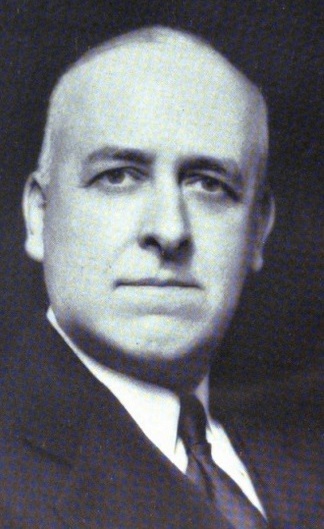
Harry Griswold
Former U.S. Representative · Wisconsin District 3 · 1939–1941 · Republican
Harry Griswold represented Wisconsin's District 3 in the United States House of Representatives (1939–1941) for the Republican party. The page below collects sourced biographical facts, term history, committee roles, and provenance for Griswold.
Bioguide ID: G000484
Key facts
- Full name
- Harry Griswold
- State
- Wisconsin
- District
- District 3
- Party
- Republican
- House service
- 1939–1941
- First House term
- 1939
- Status
- Left office
- Current term ends
- —
- Born
- 1886
- Bioguide ID
- G000484
- Committee assignments
- —
- Dataset version
- 1.20260605
Biographical narrative
975 words · sourced from the Wikipedia REST extract
Harry Griswold was an American farmer and politician who served as a Republican U.S. Representative for Wisconsin's 3rd congressional district. His tenure in the House of Representatives was marked by a brief but impactful period of service, as he was elected to the 76th Congress but passed away just six months into his term. Prior to his time in Congress, Griswold had a notable career in state politics, having served in the Wisconsin Senate. His life was characterized by a commitment to agriculture and public service, reflecting the values of his rural Wisconsin constituency.
Early life and career
Harry Griswold was born on May 19, 1886, on a farm near West Salem, Wisconsin. Growing up in a farming community, he was immersed in agricultural life from an early age. He received his education in the local public school system, completing his studies at the high school level in West Salem. Following high school, Griswold pursued further education at the University of Wisconsin–Madison, where he attended the College of Agricultural and Life Sciences. This educational background laid the foundation for his future endeavors in agriculture and public service.
Griswold's professional life was primarily centered around agriculture, where he specialized in breeding cattle. His expertise in this area led him to take on significant roles within agricultural organizations. He served as president, secretary, and director of the Wisconsin Guernsey Cattle Breeders Association, contributing to the promotion and development of cattle breeding practices in the state. His involvement in agriculture not only reflected his personal interests but also demonstrated his commitment to improving the agricultural sector in Wisconsin.
In addition to his agricultural pursuits, Griswold was actively engaged in local governance. He was a member of the West Salem school board from 1912 to 1929, where he played a role in shaping educational policies and initiatives in his community. His dedication to education extended to his appointment to the Wisconsin Board of Vocational Education, where he served from 1930 to 1936. These positions allowed him to influence both educational and vocational training programs, emphasizing the importance of education in rural areas.
Griswold's political career began to take shape when he was elected to the Wisconsin Senate, representing the 32nd legislative district from 1932 to 1936. During his time in the Senate, he was involved in various legislative activities and served on important committees, including the Committee on Contingent Expenditures and the Joint Committee on Finance. His experience in the state legislature provided him with valuable insights into the legislative process and prepared him for his future role in the U.S. Congress.
House tenure
Harry Griswold was elected to the U.S. House of Representatives as a Republican, representing Wisconsin's 3rd congressional district during the 76th Congress. His term began on January 3, 1939. Griswold's election to Congress was a culmination of his previous political experience and his commitment to serving his constituents at a national level. His tenure in the House was characterized by active participation, as he missed only one of the 72 roll call votes conducted between January and June of 1939. This level of engagement indicated his dedication to fulfilling his responsibilities as a member of Congress.
Despite the brevity of his time in office, Griswold's presence in the House was significant. He was part of a pivotal period in American history, as the nation was navigating the complexities of the late 1930s, including the economic challenges of the Great Depression and the looming threat of global conflict. His role as a representative allowed him to advocate for the interests of his constituents and contribute to the legislative discussions of the time.
Tragically, Griswold's congressional career was cut short when he passed away on July 4, 1939, due to a heart attack while driving in Washington, D.C., with his wife and one of his daughters. His sudden death left a void in the representation of Wisconsin's 3rd congressional district and marked the end of a promising political career. He was interred in Hamilton Cemetery in West Salem, Wisconsin, where he is remembered for his contributions to both agriculture and public service.
Legislative focus and committees
During his brief tenure in the U.S. House of Representatives, Harry Griswold was involved in various legislative activities that reflected his interests and the needs of his constituents. Although specific details regarding the bills he sponsored or supported are not extensively documented, his background in agriculture likely influenced his legislative focus. As a farmer and a member of the agricultural community, it is reasonable to assume that he would have been concerned with issues related to farming, rural development, and agricultural policy.
Griswold's previous experience in the Wisconsin Senate also provided him with a strong foundation for understanding the complexities of state and national governance. His service on the Committee on Contingent Expenditures and the Joint Committee on Finance during his time in the state legislature would have equipped him with insights into budgetary matters and fiscal responsibility. These experiences may have informed his approach to legislative issues during his time in Congress.
As a member of the House, Griswold was part of a larger legislative body that was addressing significant national concerns, including economic recovery efforts and social welfare programs. His participation in roll call votes indicates that he was actively engaged in the legislative process, contributing to discussions and decisions that would impact the lives of his constituents.
In summary, Harry Griswold's legislative focus was likely shaped by his agricultural background and his commitment to serving the interests of rural Wisconsin. His involvement in various committees and active participation in votes reflect a dedication to his role as a U.S. Representative, despite the limited time he had to make an impact. His legacy is remembered within the context of his contributions to both state and national politics, as well as his commitment to the agricultural community.
Notable legislation
Sponsored and co-sponsored legislation for Harry Griswold is pending operator curation. The biographical narrative above carries the same provenance trail until per-bill rows are written.
Sources
- [1]https://en.wikipedia.org/wiki/Harry_W._GriswoldWikipedia · retrieved 2026-06-05
Notable quotes
Sourced quotes for Harry Griswold are pending operator curation. Narrative-scope provenance remains attached below.
Sources
- [1]https://en.wikipedia.org/wiki/Harry_W._GriswoldWikipedia · retrieved 2026-06-05
Key positions
Curated policy positions for Harry Griswold are pending operator review. The biographical narrative above carries the same provenance trail until per-topic positions are written.
Sources
- [1]https://en.wikipedia.org/wiki/Harry_W._GriswoldWikipedia · retrieved 2026-06-05
Terms served
- 1939–1941U.S. House · Term 1 · Republican
Sources & provenance
Every attributable claim above carries a per-section [N] marker that resolves to the corresponding URL below. Each entry records the upstream provider, the canonical URL, and the timestamp at which the source was retrieved by the ingest pipeline.
Key facts
- https://bioguide.congress.gov/search/bio/G000484bioguide · retrieved 2026-06-05
- https://www.govtrack.us/congress/members/404829govtrack · retrieved 2026-06-05
Biographical narrative
- https://en.wikipedia.org/wiki/Harry_W._Griswoldwikipedia · retrieved 2026-06-05
Find your representative
Every U.S. state elects representatives by district. Browse Wisconsin’s delegation, the full former-representative roster, or explore the role and term length.
Related on The Candidate
- Preceded by John NelsonEarlier holder of the Wisconsin District 3 House seat · Republican.Open
- Succeeded by William StevensonLater holder of the Wisconsin District 3 House seat · Republican.Open
- Charles WilliamsFormer U.S. Representative · Wisconsin District 1 · RepublicanOpen
- Clifford RandallFormer U.S. Representative · Wisconsin District 1 · RepublicanOpen
- Clinton BabbittFormer U.S. Representative · Wisconsin District 1 · DemocraticOpen
- Daniel Wells Jr.Former U.S. Representative · Wisconsin District 1 · DemocraticOpen