
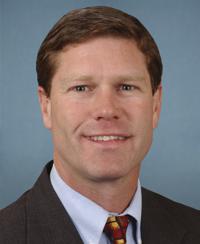
Historical · U.S. House · Wisconsin · District 3
Ron Kind
Former U.S. Representative · Wisconsin District 3 · 1997–2023 · Democratic
Ron Kind represented Wisconsin's District 3 in the United States House of Representatives (1997–2023) for the Democratic party. The page below collects sourced biographical facts, term history, committee roles, and provenance for Kind.
Bioguide ID: K000188
Key facts
- Full name
- Ron Kind
- State
- Wisconsin
- District
- District 3
- Party
- Democratic
- House service
- 1997–2023
- First House term
- 1997
- Status
- Left office
- Current term ends
- —
- Born
- 1963
- Bioguide ID
- K000188
- Committee assignments
- —
- Dataset version
- 1.20260603
Biographical narrative
914 words · sourced from the Wikipedia REST extract
Ron Kind is a former American politician and lawyer who served as the U.S. Representative for Wisconsin's 3rd congressional district from 1997 until 2023. A member of the Democratic Party, Kind represented a district that includes key areas in western Wisconsin, such as La Crosse, Eau Claire, and Wisconsin Rapids. Over his 13 terms in office, he became a prominent figure in Wisconsin politics, ultimately serving as the dean of the state's congressional delegation before opting not to seek re-election in 2022.
Early life and career
Ron Kind was born on March 16, 1963, in La Crosse, Wisconsin, where he was raised as the third of five children in a family with deep local roots. His parents, Greta and Elroy Kind, were active in their community; his mother worked as the assistant director of personnel in the La Crosse School District, while his father had a lengthy career as a telephone repairman and union leader at the La Crosse Telephone Company. This background instilled in Kind a sense of community service and public engagement.
Kind attended local schools in La Crosse and was an accomplished student-athlete at Logan High School, where he participated in both football and basketball. His academic and athletic prowess earned him a scholarship to Harvard College, where he graduated with honors in 1985. At Harvard, Kind played quarterback on the football team and gained valuable experience working for Wisconsin Senator William Proxmire during the summer. This role involved participating in investigations that highlighted government waste, contributing to the Senator's Golden Fleece Awards.
After completing his undergraduate studies, Kind pursued further education, earning a master's degree from the London School of Economics and a Juris Doctor degree from the University of Minnesota Law School. He began his professional career practicing law at the Milwaukee law firm Quarles and Brady for two years. Following this, he returned to La Crosse to serve as an assistant district attorney, later taking on the role of a special prosecutor in several counties in western Wisconsin. This legal experience laid the groundwork for his subsequent political career.
House tenure
Ron Kind's political career in the U.S. House of Representatives began in 1997 when he won a competitive election to represent Wisconsin's 3rd congressional district. His entry into Congress was marked by a strategic campaign that capitalized on the retirement of Republican Representative Steve Gunderson. Kind announced his candidacy in September 1995 and successfully navigated a five-way Democratic primary in 1996, securing 46% of the vote. In the general election, he faced Republican James Harsdorf, a former state senator. Kind's campaign effectively linked Harsdorf to unpopular national Republican policies, ultimately leading to his victory with 52% of the vote.
Throughout his tenure, Kind faced various electoral challenges, including a notable primary contest in 2006 against La Crosse activist Charles "Chip" DeNure, who criticized Kind's stance on the Iraq War. Kind won that primary decisively, receiving 83% of the vote, and subsequently defeated his Republican opponent in the general election with 65% of the vote.
In 2010, Kind confronted one of his toughest re-election campaigns amid the contentious political climate surrounding the Affordable Care Act and the rise of the Tea Party movement. Despite these challenges and a national Republican wave, he managed to secure re-election with just over 50% of the vote against state senator Dan Kapanke.
In subsequent elections, Kind continued to demonstrate electoral resilience. He chose not to run for the U.S. Senate in 2012, opting instead to seek re-election to his congressional seat, where he won with 64% of the vote against retired U.S. Army Colonel Ray Boland. In 2016, he faced a primary challenge from Myron Buchholz, a teacher and supporter of U.S. Senator Bernie Sanders, but successfully retained his seat.
After serving for over two decades, Kind announced that he would not seek re-election in 2022, concluding his congressional career on January 3, 2023. His decision marked the end of a significant chapter in Wisconsin's political landscape, as he had become a well-known figure in the state and a key member of the Democratic Party.
Legislative focus and committees
During his time in the House, Ron Kind was involved in a range of legislative issues, reflecting the interests and needs of his constituents in Wisconsin's 3rd congressional district. His legislative focus included health care reform, economic development, and environmental issues, among other topics. Kind was particularly noted for his efforts in advocating for affordable and accessible health care, a priority he emphasized during his campaigns and throughout his congressional tenure.
Kind served on several committees, which allowed him to influence legislation in various areas. His participation in these committees enabled him to address issues pertinent to his district, such as agriculture, education, and infrastructure. By engaging with local stakeholders and constituents, Kind was able to advocate for policies that aligned with the interests of the communities he represented.
Throughout his career, Kind maintained a commitment to bipartisanship and collaboration, often working across party lines to achieve legislative goals. His long tenure in Congress and his role as dean of Wisconsin's delegation positioned him as a seasoned legislator who could navigate the complexities of federal policymaking.
In summary, Ron Kind's career in the U.S. House of Representatives was characterized by a focus on health care, economic development, and community engagement. His legal background and deep ties to his home state informed his approach to governance and legislative priorities, making him a significant figure in Wisconsin politics for over two decades.
Notable legislation
Sponsored and co-sponsored legislation for Ron Kind is pending operator curation. The biographical narrative above carries the same provenance trail until per-bill rows are written.
Sources
- [1]https://en.wikipedia.org/wiki/Ron_KindWikipedia · retrieved 2026-06-03
Notable quotes
Sourced quotes for Ron Kind are pending operator curation. Narrative-scope provenance remains attached below.
Sources
- [1]https://en.wikipedia.org/wiki/Ron_KindWikipedia · retrieved 2026-06-03
Key positions
Curated policy positions for Ron Kind are pending operator review. The biographical narrative above carries the same provenance trail until per-topic positions are written.
Sources
- [1]https://en.wikipedia.org/wiki/Ron_KindWikipedia · retrieved 2026-06-03
Terms served
- 1997–1999U.S. House · Term 1 · Democratic
- 1999–2001U.S. House · Term 2 · Democratic
- 2001–2003U.S. House · Term 3 · Democratic
- 2003–2005U.S. House · Term 4 · Democratic
- 2005–2007U.S. House · Term 5 · Democratic
- 2007–2009U.S. House · Term 6 · Democratic
- 2009–2011U.S. House · Term 7 · Democratic
- 2011–2013U.S. House · Term 8 · Democratic
- 2013–2015U.S. House · Term 9 · Democratic
- 2015–2017U.S. House · Term 10 · Democratic
- 2017–2019U.S. House · Term 11 · Democratic
- 2019–2021U.S. House · Term 12 · Democratic
- 2021–2023U.S. House · Term 13 · Democratic
Sources & provenance
Every attributable claim above carries a per-section [N] marker that resolves to the corresponding URL below. Each entry records the upstream provider, the canonical URL, and the timestamp at which the source was retrieved by the ingest pipeline.
Key facts
- https://bioguide.congress.gov/search/bio/K000188bioguide · retrieved 2026-06-03
- https://kind.house.govhouse.gov · retrieved 2026-06-03
Biographical narrative
- https://en.wikipedia.org/wiki/Ron_Kindwikipedia · retrieved 2026-06-03
Find your representative
Every U.S. state elects representatives by district. Browse Wisconsin’s delegation, the full former-representative roster, or explore the role and term length.
Related on The Candidate
- Preceded by Steven GundersonEarlier holder of the Wisconsin District 3 House seat · Republican.Open
- Charles WilliamsFormer U.S. Representative · Wisconsin District 1 · RepublicanOpen
- Clifford RandallFormer U.S. Representative · Wisconsin District 1 · RepublicanOpen
- Clinton BabbittFormer U.S. Representative · Wisconsin District 1 · DemocraticOpen
- Daniel Wells Jr.Former U.S. Representative · Wisconsin District 1 · DemocraticOpen
- Democratic PartyFederal candidates and office holders on the Democratic line.Open