
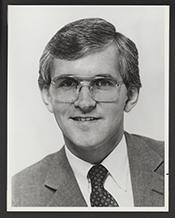
Historical · U.S. House · Wisconsin · District 3
Steven Gunderson
Former U.S. Representative · Wisconsin District 3 · 1981–1997 · Republican
Steven Gunderson represented Wisconsin's District 3 in the United States House of Representatives (1981–1997) for the Republican party. The page below collects sourced biographical facts, term history, committee roles, and provenance for Gunderson.
Bioguide ID: G000524
Key facts
- Full name
- Steven Gunderson
- State
- Wisconsin
- District
- District 3
- Party
- Republican
- House service
- 1981–1997
- First House term
- 1981
- Status
- Left office
- Current term ends
- —
- Born
- 1951
- Bioguide ID
- G000524
- Committee assignments
- —
- Dataset version
- 1.20260605
Biographical narrative
879 words · sourced from the Wikipedia REST extract
Steven Craig Gunderson is a former American politician who served as a Republican U.S. Representative for Wisconsin's 3rd congressional district from 1981 until 1997. During his tenure, he was known for his advocacy on various issues, including immigration rights for the Hmong community. After leaving Congress, Gunderson transitioned into leadership roles in nonprofit organizations, including the Council on Foundations and Career Education Colleges and Universities.
Early life and career
Steve Gunderson was born on May 10, 1951, in Wisconsin, where he grew up near the town of Whitehall. His early life in this rural community shaped his understanding of the challenges faced by constituents in similar areas. Gunderson pursued higher education at the University of Wisconsin–Madison, where he developed a foundation in political science and public affairs. He furthered his education by attending the Brown School of Broadcasting in Minneapolis, which equipped him with skills in communication and media.
Gunderson's political career began in the Wisconsin State Assembly, where he served from 1975 to 1979. This experience provided him with a platform to engage with local issues and constituents, laying the groundwork for his future endeavors in national politics. His time in the state assembly was marked by a commitment to public service and community engagement, which would continue throughout his career.
In 1980, Gunderson successfully ran for the U.S. House of Representatives, representing Wisconsin's 3rd congressional district. His election to the 97th Congress marked the beginning of an eight-term tenure in the House, during which he focused on a variety of legislative issues and developed a reputation as a dedicated public servant.
House tenure
Gunderson's congressional career began with his election in 1980, and he served in the House until January 3, 1997. Over the course of his eight terms, he participated in numerous legislative initiatives and was involved in various committees that shaped national policy. His tenure was characterized by a commitment to his constituents and a focus on issues pertinent to Wisconsin and the broader national landscape.
Throughout his time in Congress, Gunderson was particularly noted for his advocacy on behalf of the Hmong community. He worked to expedite immigration rights for the Hmong people, who had faced persecution in Laos following the Vietnam War. His efforts included raising awareness about their plight and advocating for policies that would allow them to seek refuge in the United States. This advocacy was significant, as it not only highlighted the challenges faced by the Hmong but also demonstrated Gunderson's commitment to human rights and justice.
In addition to his work on immigration issues, Gunderson's legislative focus included various domestic policies that impacted his constituents. He was known for his ability to navigate complex political landscapes and build coalitions to support his initiatives. His service in Congress coincided with significant political changes in the United States, and he adapted to these shifts while maintaining his core principles.
Gunderson chose not to seek re-election for the 105th Congress in 1996, concluding his time in the House after a lengthy and impactful career. His decision to step away from electoral politics marked the end of an era for his constituents, who had come to rely on his leadership and advocacy.
Legislative focus and committees
During his time in the U.S. House of Representatives, Gunderson was involved in a range of legislative activities and served on several committees that were crucial to his work. His committee assignments allowed him to influence policy in areas such as education, labor, and social services, reflecting his commitment to improving the lives of his constituents.
One of Gunderson's notable legislative focuses was on immigration policy, particularly regarding the Hmong community. His advocacy efforts were instrumental in changing the Clinton administration's policy on the forced repatriation of Hmong individuals to Laos, which ultimately led to thousands being granted U.S. immigration rights. This achievement underscored his dedication to human rights and his ability to effect change through legislative means.
In addition to immigration, Gunderson's work encompassed various social issues, including education and public welfare. He was known for his willingness to engage in difficult conversations and address contentious topics, often seeking bipartisan support for his initiatives. His approach to governance was characterized by a focus on collaboration and dialogue, which helped him navigate the complexities of congressional politics.
Gunderson's legacy in the House is also marked by his status as one of the first openly gay Republican members of Congress. His openness about his sexual orientation was significant during a time when LGBTQ+ representation in politics was limited. He became a vocal advocate for gay rights, and his actions contributed to a broader conversation about equality and representation in the political sphere.
After leaving Congress, Gunderson continued to influence public policy and advocacy through his leadership roles in various organizations. He served as the president and CEO of the Council on Foundations, where he focused on philanthropy and community development, and later led Career Education Colleges and Universities, further demonstrating his commitment to education and workforce development.
In summary, Steve Gunderson's career in the U.S. House of Representatives was marked by significant legislative achievements and a commitment to advocacy on behalf of marginalized communities. His work on immigration rights, education, and social issues left a lasting impact on his constituents and the broader political landscape.
Notable legislation
Sponsored and co-sponsored legislation for Steven Gunderson is pending operator curation. The biographical narrative above carries the same provenance trail until per-bill rows are written.
Sources
- [1]https://en.wikipedia.org/wiki/Steve_GundersonWikipedia · retrieved 2026-06-05
Notable quotes
Sourced quotes for Steven Gunderson are pending operator curation. Narrative-scope provenance remains attached below.
Sources
- [1]https://en.wikipedia.org/wiki/Steve_GundersonWikipedia · retrieved 2026-06-05
Key positions
Curated policy positions for Steven Gunderson are pending operator review. The biographical narrative above carries the same provenance trail until per-topic positions are written.
Sources
- [1]https://en.wikipedia.org/wiki/Steve_GundersonWikipedia · retrieved 2026-06-05
Terms served
- 1981–1983U.S. House · Term 1 · Republican
- 1983–1985U.S. House · Term 2 · Republican
- 1985–1987U.S. House · Term 3 · Republican
- 1987–1989U.S. House · Term 4 · Republican
- 1989–1991U.S. House · Term 5 · Republican
- 1991–1993U.S. House · Term 6 · Republican
- 1993–1995U.S. House · Term 7 · Republican
- 1995–1997U.S. House · Term 8 · Republican
Sources & provenance
Every attributable claim above carries a per-section [N] marker that resolves to the corresponding URL below. Each entry records the upstream provider, the canonical URL, and the timestamp at which the source was retrieved by the ingest pipeline.
Key facts
- https://bioguide.congress.gov/search/bio/G000524bioguide · retrieved 2026-06-05
- https://www.govtrack.us/congress/members/404869govtrack · retrieved 2026-06-05
Biographical narrative
- https://en.wikipedia.org/wiki/Steve_Gundersonwikipedia · retrieved 2026-06-05
Find your representative
Every U.S. state elects representatives by district. Browse Wisconsin’s delegation, the full former-representative roster, or explore the role and term length.
Related on The Candidate
- Preceded by Alvin BaldusEarlier holder of the Wisconsin District 3 House seat · Democratic.Open
- Succeeded by Ron KindLater holder of the Wisconsin District 3 House seat · Democratic.Open
- Charles WilliamsFormer U.S. Representative · Wisconsin District 1 · RepublicanOpen
- Clifford RandallFormer U.S. Representative · Wisconsin District 1 · RepublicanOpen
- Clinton BabbittFormer U.S. Representative · Wisconsin District 1 · DemocraticOpen
- Daniel Wells Jr.Former U.S. Representative · Wisconsin District 1 · DemocraticOpen