
Historical · U.S. House · Wisconsin · District 5
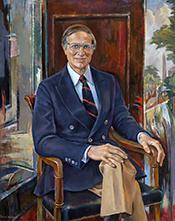
Henry Reuss
Former U.S. Representative · Wisconsin District 5 · 1955–1983 · Democratic
Henry Reuss represented Wisconsin's District 5 in the United States House of Representatives (1955–1983) for the Democratic party. The page below collects sourced biographical facts, term history, committee roles, and provenance for Reuss.
Bioguide ID: R000165
Key facts
- Full name
- Henry Reuss
- State
- Wisconsin
- District
- District 5
- Party
- Democratic
- House service
- 1955–1983
- First House term
- 1955
- Status
- Left office
- Current term ends
- —
- Born
- 1912
- Bioguide ID
- R000165
- Committee assignments
- —
- Dataset version
- 1.20260605
Biographical narrative
961 words · sourced from the Wikipedia REST extract
Henry S. Reuss was a prominent Democratic U.S. Representative from Wisconsin, serving the 5th congressional district from 1955 until 1983. His lengthy tenure in the House of Representatives spanned 14 terms, during which he became known for his leadership roles on several key committees and his advocacy for progressive policies. Born in Milwaukee in 1912, Reuss's early life and career laid the foundation for his future in politics, where he would engage in significant legislative efforts and contribute to various national discussions.
Early life and career
Henry Schoellkopf Reuss was born on February 22, 1912, in Milwaukee, Wisconsin. He was the son of Gustav A. Reuss and Paula Schoellkopf, and he came from a family with a notable background in finance and public service. His grandfather was a bank president who emigrated from Germany in 1848, and his family had deep roots in the Milwaukee area. Reuss grew up in the city's German community, which influenced his early experiences and perspectives.
Reuss pursued higher education at Cornell University, where he earned his Bachelor of Arts degree in 1933. He was an active member of the Sphinx Head Society, an honor society at the university. Following his undergraduate studies, he attended Harvard Law School, obtaining his Bachelor of Laws in 1936. After completing his education, Reuss began his career as a lawyer in private practice and took on various roles in public service. He served as assistant corporation counsel for Milwaukee County from 1939 to 1940 and worked for the United States Office of Price Administration during World War II.
His military service began in 1943 when he joined the United States Army, where he served until 1945, achieving the rank of major. Reuss was awarded the Bronze Star for his contributions during the war, particularly for his role as chief of price control in the Office of Military Government for Germany in 1945. Following the war, he continued his public service as deputy general counsel for the Marshall Plan in Paris and later returned to Milwaukee as a special prosecutor in 1950.
House tenure
Reuss's political career began in earnest when he switched from the Republican Party to the Democratic Party in 1950, largely due to his opposition to Senator Joseph McCarthy's tactics. His first significant electoral campaign was an unsuccessful bid for the Senate in 1952, where he sought to challenge McCarthy directly. He also ran for mayor of Milwaukee in 1948 and 1960 but did not succeed in those attempts.
In 1954, Reuss was elected to the U.S. House of Representatives, representing Wisconsin's 5th congressional district. His first term began on January 3, 1955, and he would go on to serve in the House for nearly three decades, concluding his tenure on January 3, 1983. Throughout his time in Congress, Reuss was known for his commitment to various issues, including banking, housing, and urban affairs. He served as chairman of the Committee on Banking, Currency, and Housing during the Ninety-fourth Congress and later chaired the Committee on Banking, Finance, and Urban Affairs in the Ninety-fifth and Ninety-sixth Congresses. Additionally, he held the position of chairman of the Joint Economic Committee during the Ninety-seventh Congress.
Reuss was a prominent figure in the Democratic Party and was frequently consulted by party leadership on matters concerning the Nixon and Ford administrations. His chairmanship of the House Government Operations Subcommittee on Conservation and the Environment positioned him as a key advocate for environmental issues, gaining him recognition among liberal and progressive circles. After the Democratic victories in the 1974 post-Watergate elections, he was elected as chairman of the House Banking Committee, defeating the more senior Wright Patman of Texas.
Throughout his congressional career, Reuss was involved in various legislative initiatives and was known for his opposition to the Vietnam War. He supported Senator Eugene J. McCarthy's campaign for the Democratic presidential nomination in 1968 and served as an at-large delegate at the Democratic National Convention that year.
Legislative focus and committees
Reuss's legislative focus was characterized by his commitment to banking, finance, urban affairs, and environmental conservation. As a member of the House, he played a crucial role in shaping policies related to these areas, particularly during his time as chairman of several important committees. His leadership on the Committee on Banking, Currency, and Housing allowed him to influence legislation that addressed housing issues, banking regulations, and urban development.
In addition to his work on banking and finance, Reuss was also deeply engaged in discussions surrounding economic policy. His chairmanship of the Joint Economic Committee provided him with a platform to analyze and propose solutions to economic challenges facing the nation. He was known for his analytical approach and his ability to articulate the needs of his constituents and the broader public.
Reuss's advocacy for environmental issues was particularly notable during his tenure. He utilized his position to promote conservation efforts and address the environmental challenges of the time. His work on the House Government Operations Subcommittee on Conservation and the Environment highlighted his commitment to preserving natural resources and promoting sustainable practices.
Reuss's contributions to Congress extended beyond his committee work. He was a respected voice within the Democratic Party and was often sought after for his insights on various policies and legislative matters. His ability to navigate complex political landscapes and engage in meaningful dialogue with colleagues across the aisle underscored his effectiveness as a legislator.
After retiring from Congress in 1983, Reuss continued to be active in political circles, supporting Democratic candidates and causes. His legacy includes a commitment to public service and a dedication to addressing the needs of his constituents and the nation as a whole. Reuss passed away on January 12, 2002, leaving behind a significant impact on Wisconsin politics and American legislative history.
Notable legislation
Sponsored and co-sponsored legislation for Henry Reuss is pending operator curation. The biographical narrative above carries the same provenance trail until per-bill rows are written.
Sources
- [1]https://en.wikipedia.org/wiki/Henry_S._ReussWikipedia · retrieved 2026-06-05
Notable quotes
Sourced quotes for Henry Reuss are pending operator curation. Narrative-scope provenance remains attached below.
Sources
- [1]https://en.wikipedia.org/wiki/Henry_S._ReussWikipedia · retrieved 2026-06-05
Key positions
Curated policy positions for Henry Reuss are pending operator review. The biographical narrative above carries the same provenance trail until per-topic positions are written.
Sources
- [1]https://en.wikipedia.org/wiki/Henry_S._ReussWikipedia · retrieved 2026-06-05
Terms served
- 1955–1957U.S. House · Term 1 · Democratic
- 1957–1959U.S. House · Term 2 · Democratic
- 1959–1961U.S. House · Term 3 · Democratic
- 1961–1963U.S. House · Term 4 · Democratic
- 1963–1965U.S. House · Term 5 · Democratic
- 1965–1967U.S. House · Term 6 · Democratic
- 1967–1969U.S. House · Term 7 · Democratic
- 1969–1971U.S. House · Term 8 · Democratic
- 1971–1973U.S. House · Term 9 · Democratic
- 1973–1975U.S. House · Term 10 · Democratic
- 1975–1977U.S. House · Term 11 · Democratic
- 1977–1979U.S. House · Term 12 · Democratic
- 1979–1981U.S. House · Term 13 · Democratic
- 1981–1983U.S. House · Term 14 · Democratic
Sources & provenance
Every attributable claim above carries a per-section [N] marker that resolves to the corresponding URL below. Each entry records the upstream provider, the canonical URL, and the timestamp at which the source was retrieved by the ingest pipeline.
Key facts
- https://bioguide.congress.gov/search/bio/R000165bioguide · retrieved 2026-06-05
- https://www.govtrack.us/congress/members/409142govtrack · retrieved 2026-06-05
Biographical narrative
- https://en.wikipedia.org/wiki/Henry_S._Reusswikipedia · retrieved 2026-06-05
Find your representative
Every U.S. state elects representatives by district. Browse Wisconsin’s delegation, the full former-representative roster, or explore the role and term length.
Related on The Candidate
- Preceded by Charles KerstenEarlier holder of the Wisconsin District 5 House seat · Republican.Open
- Succeeded by Jim MoodyLater holder of the Wisconsin District 5 House seat · Democratic.Open
- Charles WilliamsFormer U.S. Representative · Wisconsin District 1 · RepublicanOpen
- Clifford RandallFormer U.S. Representative · Wisconsin District 1 · RepublicanOpen
- Clinton BabbittFormer U.S. Representative · Wisconsin District 1 · DemocraticOpen
- Daniel Wells Jr.Former U.S. Representative · Wisconsin District 1 · DemocraticOpen