
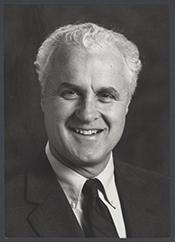
Historical · U.S. House · Wisconsin · District 5
Jim Moody
Former U.S. Representative · Wisconsin District 5 · 1983–1993 · Democratic
Jim Moody represented Wisconsin's District 5 in the United States House of Representatives (1983–1993) for the Democratic party. The page below collects sourced biographical facts, term history, committee roles, and provenance for Moody.
Bioguide ID: M000881
Key facts
- Full name
- Jim Moody
- State
- Wisconsin
- District
- District 5
- Party
- Democratic
- House service
- 1983–1993
- First House term
- 1983
- Status
- Left office
- Current term ends
- —
- Born
- 1935
- Bioguide ID
- M000881
- Committee assignments
- —
- Dataset version
- 1.20260605
Biographical narrative
930 words · sourced from the Wikipedia REST extract
James Powers Moody was a prominent American economist and politician who served as a U.S. Representative for Wisconsin's 5th congressional district from 1983 until 1993. A member of the Democratic Party, Moody was known for his contributions to various legislative initiatives and his active role in state and national politics. His career spanned several decades, during which he held significant positions both in the U.S. Congress and in various international organizations. Moody's background in economics and public policy informed his legislative priorities and advocacy throughout his political career.
Early life and career
Jim Moody was born on September 2, 1935, in Richlands, Virginia. He completed his secondary education at Anglo American High School in Athens, Greece, graduating in 1953. Following high school, he pursued higher education at Haverford College, where he earned a bachelor's degree in 1957. After graduating, Moody began his professional career in finance, working on Wall Street for two years. His early experiences in finance were complemented by a commitment to humanitarian work, as he became a representative for the organization CARE in Yugoslavia. During his time there, he oversaw various relief efforts, including a special feeding program for hospitals and schools in Iran, as well as earthquake relief initiatives.
Moody's dedication to public service extended to the Peace Corps, where he played a pivotal role in establishing the agency's first programs in Pakistan and Bangladesh. His responsibilities included negotiating agreements between the Peace Corps and these countries, as well as matching volunteers with their assignments. After his tenure with the Peace Corps, he returned to Washington, D.C., where he served as a desk officer for Pakistan and later as a loan officer for the USAID capital development program for Southeast Asia. Moody's academic pursuits continued as he earned a Master of Public Administration (MPA) from Harvard University's John F. Kennedy School of Government. He subsequently obtained a Ph.D. in economics from the University of California, Berkeley, which led to his role as an Assistant Professor of Economics at the University of Wisconsin–Milwaukee. He also taught courses at the University of Wisconsin–Madison.
House tenure
Moody's political career began in earnest when he was elected to the Wisconsin State Assembly in 1976. He later served in the Wisconsin State Senate, where he was elected in 1978. During his time in the state legislature, he was instrumental in passing significant legislation, including bills that deregulated monopoly truck hauling and halted plans for a major freeway through Milwaukee's lakefront park. He also played a key role in the passage of no-fault divorce legislation and the decriminalization of homosexual activities.
In 1982, Moody transitioned to national politics by winning election to the United States Congress, representing Wisconsin's 5th congressional district. His congressional tenure lasted for five terms, concluding in 1993. Throughout his time in the House of Representatives, Moody was recognized by his peers and appointed to the influential House Ways and Means Committee, where he served on the International Trade and Health/Medicare subcommittees. His legislative efforts included sponsoring and co-sponsoring a range of bills aimed at promoting universal health care, wilderness preservation, and pro-competition policies in the trucking industry. He also advocated for legislation designed to prevent federal employment incentives from being misused for strike-breaking purposes.
In addition to his legislative work, Moody was a co-founder of the organization that evolved into the National Security Archive Project, which promotes transparency in government actions, particularly in foreign affairs. Drawing on his experiences in Bangladesh, he also co-founded a coalition in Congress focused on international family planning, an issue that faced significant opposition during the Reagan administration. In 1992, Moody sought a seat in the U.S. Senate, but he was not successful in that election.
Legislative focus and committees
During his time in Congress, Moody's legislative focus was characterized by a commitment to social justice, economic equity, and transparency in government. His work on the House Ways and Means Committee allowed him to influence key areas of policy, particularly in health care and international trade. He was a proponent of single-payer universal health care, reflecting his belief in accessible health services for all citizens. His advocacy for wilderness preservation indicated a concern for environmental issues, while his support for pro-competition policies in the trucking industry demonstrated his interest in economic fairness and consumer rights.
Moody's involvement in the National Security Archive Project highlighted his dedication to government accountability, particularly regarding actions taken by the federal government abroad. His co-founding of the Congressional support coalition for International Family Planning illustrated his commitment to addressing global health issues, particularly in the context of family planning and reproductive rights.
After leaving Congress, Moody continued to engage in public service and policy work. He served as the deputy director for the team preparing President-elect Bill Clinton's first federal budget and later taught health care economics at the Medical College of Wisconsin. His career also included leadership roles in international organizations, such as the International Fund for Agricultural Development, where he managed significant financial resources aimed at improving agricultural productivity in developing countries.
Moody's diverse experiences in academia, government, and international organizations shaped his perspective on public policy and governance. His fluency in multiple languages, including Greek, Spanish, Serbo-Croatian, Persian, and French, further underscored his global outlook and ability to engage with diverse communities.
Jim Moody passed away on March 22, 2019, at the age of 83, leaving behind a legacy of public service and a commitment to social and economic justice. His contributions to both state and national politics reflect a career dedicated to improving the lives of others through policy and advocacy.
Notable legislation
Sponsored and co-sponsored legislation for Jim Moody is pending operator curation. The biographical narrative above carries the same provenance trail until per-bill rows are written.
Sources
- [1]https://en.wikipedia.org/wiki/Jim_MoodyWikipedia · retrieved 2026-06-05
Notable quotes
Sourced quotes for Jim Moody are pending operator curation. Narrative-scope provenance remains attached below.
Sources
- [1]https://en.wikipedia.org/wiki/Jim_MoodyWikipedia · retrieved 2026-06-05
Key positions
Curated policy positions for Jim Moody are pending operator review. The biographical narrative above carries the same provenance trail until per-topic positions are written.
Sources
- [1]https://en.wikipedia.org/wiki/Jim_MoodyWikipedia · retrieved 2026-06-05
Terms served
- 1983–1985U.S. House · Term 1 · Democratic
- 1985–1987U.S. House · Term 2 · Democratic
- 1987–1989U.S. House · Term 3 · Democratic
- 1989–1991U.S. House · Term 4 · Democratic
- 1991–1993U.S. House · Term 5 · Democratic
Sources & provenance
Every attributable claim above carries a per-section [N] marker that resolves to the corresponding URL below. Each entry records the upstream provider, the canonical URL, and the timestamp at which the source was retrieved by the ingest pipeline.
Key facts
- https://bioguide.congress.gov/search/bio/M000881bioguide · retrieved 2026-06-05
- https://www.govtrack.us/congress/members/407853govtrack · retrieved 2026-06-05
Biographical narrative
- https://en.wikipedia.org/wiki/Jim_Moodywikipedia · retrieved 2026-06-05
Find your representative
Every U.S. state elects representatives by district. Browse Wisconsin’s delegation, the full former-representative roster, or explore the role and term length.
Related on The Candidate
- Preceded by Henry ReussEarlier holder of the Wisconsin District 5 House seat · Democratic.Open
- Succeeded by Thomas BarrettLater holder of the Wisconsin District 5 House seat · Democratic.Open
- Charles WilliamsFormer U.S. Representative · Wisconsin District 1 · RepublicanOpen
- Clifford RandallFormer U.S. Representative · Wisconsin District 1 · RepublicanOpen
- Clinton BabbittFormer U.S. Representative · Wisconsin District 1 · DemocraticOpen
- Daniel Wells Jr.Former U.S. Representative · Wisconsin District 1 · DemocraticOpen