
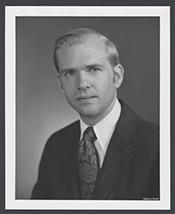
Historical · U.S. House · Wisconsin · District 6
William Steiger
Former U.S. Representative · Wisconsin District 6 · 1967–1979 · Republican
William Steiger represented Wisconsin's District 6 in the United States House of Representatives (1967–1979) for the Republican party. The page below collects sourced biographical facts, term history, committee roles, and provenance for Steiger.
Bioguide ID: S000847
Key facts
- Full name
- William Steiger
- State
- Wisconsin
- District
- District 6
- Party
- Republican
- House service
- 1967–1979
- First House term
- 1967
- Status
- Left office
- Current term ends
- —
- Born
- 1938
- Bioguide ID
- S000847
- Committee assignments
- —
- Dataset version
- 1.20260605
Biographical narrative
923 words · sourced from the Wikipedia REST extract
William A. Steiger was a prominent American politician who served as a U.S. Representative for Wisconsin's 6th congressional district from 1967 until his death in 1978. A member of the Republican Party, Steiger was known for his advocacy of tax cuts and his commitment to environmental protection and occupational safety. His legislative efforts included significant contributions to the establishment of the Occupational Safety and Health Administration (OSHA) and the protection of the Great Lakes. Steiger's tenure in Congress was marked by his active engagement in various social and economic issues, reflecting the priorities of his constituents and the broader national landscape during his time in office.
Early life and career
William Albert Steiger was born on May 15, 1938, in Oshkosh, Wisconsin. His early involvement in civic activities began in 1955 when he participated in the Badger Boys State program, a youth government and leadership initiative. During this program, he was elected Governor, an experience that likely influenced his future political aspirations. Following high school, Steiger pursued higher education at the University of Wisconsin–Madison, where he graduated in 1960.
After completing his degree, Steiger entered the business sector, becoming a part owner of the Oshkosh Motor Lodge. His entrepreneurial spirit led him to later assume the role of president at Steiger-Ratke Development. In 1960, he ventured into politics for the first time, successfully running for a seat in the Wisconsin State Assembly. He served in this capacity from 1961 to 1965, gaining valuable experience in legislative processes and constituent relations.
In his personal life, Steiger married Janet Dempsey on August 10, 1963. Together, they navigated the challenges of public life, with Steiger's political career beginning to take shape during their marriage.
House tenure
Steiger's political career advanced significantly when he was elected to the U.S. House of Representatives in 1966, representing Wisconsin's 6th congressional district. He took office on January 3, 1967, and was re-elected to serve a total of six consecutive terms. His time in Congress was characterized by a commitment to his constituents and a focus on key issues affecting both Wisconsin and the nation.
Throughout his tenure, Steiger was recognized for his strong advocacy for tax cuts, which he believed were essential for stimulating economic growth. He sponsored various pieces of legislation aimed at reducing the capital gains tax, reflecting his belief in the importance of economic incentives for individuals and businesses. His legislative efforts included the Williams-Steiger Bill, which established the Occupational Safety and Health Administration in 1970, a significant milestone in American labor law aimed at ensuring safe working conditions.
Steiger's commitment to environmental issues was also evident in his work to secure protections for the Great Lakes. He sponsored the Clear Lakes Bill, which aimed to address environmental concerns and promote the health of these vital water resources. His legislative focus extended to social issues as well, including his support for the Older Americans Act of 1965 and the Elementary and Secondary School Act, both of which aimed to improve the quality of life and education for various demographics.
In addition to his legislative accomplishments, Steiger's office was notable for employing future Vice President Dick Cheney as an intern in 1969. This early connection to Cheney reflects the broader network of political relationships that often develop within congressional offices.
Steiger's congressional career came to an abrupt end when he died from a heart attack on December 4, 1978, while still in office. His unexpected passing left a vacancy in the House, which was subsequently filled by a special election resulting in the election of Tom Petri.
Legislative focus and committees
During his time in the House of Representatives, Steiger was a member of several committees that allowed him to influence a range of legislative issues. His focus on economic policy was evident in his support for tax legislation, particularly those aimed at reducing the capital gains tax. He believed that such measures were crucial for fostering economic growth and encouraging investment.
Steiger's commitment to occupational safety was underscored by his role in the establishment of OSHA, which aimed to protect workers from unsafe working conditions. The Williams-Steiger Bill, which he sponsored, was a landmark piece of legislation that addressed workplace safety standards and established federal oversight in this area.
In addition to his work on economic and safety issues, Steiger was also involved in environmental legislation. His sponsorship of the Clear Lakes Bill demonstrated his dedication to preserving the Great Lakes, a vital natural resource for Wisconsin and the surrounding region. This legislation aimed to protect the water quality and ecosystem of the lakes, reflecting a growing awareness of environmental issues during the 1970s.
Steiger's legislative efforts were not limited to these areas; he also supported various social programs aimed at improving education and services for older Americans. His involvement in the Older Americans Act and the Elementary and Secondary School Act highlighted his commitment to addressing the needs of vulnerable populations.
In summary, William A. Steiger's tenure as a U.S. Representative was marked by significant legislative contributions that addressed economic, environmental, and social issues. His work in Congress reflected a dedication to public service and a commitment to the well-being of his constituents in Wisconsin. The legacy of his efforts continues to be recognized, particularly through initiatives such as the William Steiger Memorial Award, which honors contributions to occupational safety and health. Additionally, his hometown of Oshkosh pays tribute to his memory with the naming of William A. Steiger Park, ensuring that his contributions to the community and the nation are not forgotten.
Notable legislation
Sponsored and co-sponsored legislation for William Steiger is pending operator curation. The biographical narrative above carries the same provenance trail until per-bill rows are written.
Sources
- [1]https://en.wikipedia.org/wiki/William_A._SteigerWikipedia · retrieved 2026-06-05
Notable quotes
Sourced quotes for William Steiger are pending operator curation. Narrative-scope provenance remains attached below.
Sources
- [1]https://en.wikipedia.org/wiki/William_A._SteigerWikipedia · retrieved 2026-06-05
Key positions
Curated policy positions for William Steiger are pending operator review. The biographical narrative above carries the same provenance trail until per-topic positions are written.
Sources
- [1]https://en.wikipedia.org/wiki/William_A._SteigerWikipedia · retrieved 2026-06-05
Terms served
- 1967–1969U.S. House · Term 1 · Republican
- 1969–1971U.S. House · Term 2 · Republican
- 1971–1973U.S. House · Term 3 · Republican
- 1973–1975U.S. House · Term 4 · Republican
- 1975–1977U.S. House · Term 5 · Republican
- 1977–1979U.S. House · Term 6 · Republican
Sources & provenance
Every attributable claim above carries a per-section [N] marker that resolves to the corresponding URL below. Each entry records the upstream provider, the canonical URL, and the timestamp at which the source was retrieved by the ingest pipeline.
Key facts
- https://bioguide.congress.gov/search/bio/S000847bioguide · retrieved 2026-06-05
- https://www.govtrack.us/congress/members/410311govtrack · retrieved 2026-06-05
Biographical narrative
- https://en.wikipedia.org/wiki/William_A._Steigerwikipedia · retrieved 2026-06-05
Find your representative
Every U.S. state elects representatives by district. Browse Wisconsin’s delegation, the full former-representative roster, or explore the role and term length.
Related on The Candidate
- Preceded by John RaceEarlier holder of the Wisconsin District 6 House seat · Democratic.Open
- Succeeded by Tom PetriLater holder of the Wisconsin District 6 House seat · Republican.Open
- Charles WilliamsFormer U.S. Representative · Wisconsin District 1 · RepublicanOpen
- Clifford RandallFormer U.S. Representative · Wisconsin District 1 · RepublicanOpen
- Clinton BabbittFormer U.S. Representative · Wisconsin District 1 · DemocraticOpen
- Daniel Wells Jr.Former U.S. Representative · Wisconsin District 1 · DemocraticOpen