
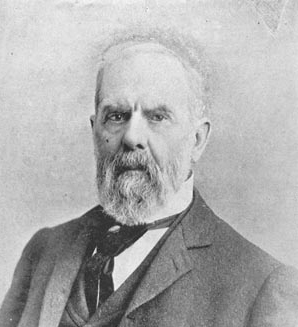
Historical · U.S. House · West Virginia · District 1
Jacob Blair
Former U.S. Representative · West Virginia District 1 · 1861–1865 · Unconditional Unionist
Jacob Blair represented West Virginia's District 1 in the United States House of Representatives (1861–1865) for the Unconditional Unionist party. The page below collects sourced biographical facts, term history, committee roles, and provenance for Blair.
Bioguide ID: B000525
Key facts
- Full name
- Jacob Blair
- State
- West Virginia
- District
- District 1
- Party
- Unconditional Unionist
- House service
- 1861–1865
- First House term
- 1861
- Status
- Left office
- Current term ends
- —
- Born
- 1821
- Bioguide ID
- B000525
- Committee assignments
- —
- Dataset version
- 1.20260606
Biographical narrative
960 words · sourced from the Wikipedia REST extract
Jacob Blair was a notable figure in American politics during the mid-19th century, serving as a U.S. Representative from West Virginia. A member of the Unconditional Unionist Party, he played a role in the legislative landscape during a tumultuous period in U.S. history, marked by the Civil War and the subsequent reconstruction of the nation. His political career spanned two terms in the House of Representatives, and he later held significant judicial positions, including serving as an associate justice on the Wyoming Supreme Court. Blair's contributions to both legislative and judicial branches reflect the evolving nature of governance during a critical era in American history.
Early life and career
Jacob Blair was born on April 11, 1821, in Parkersburg, Virginia, which is now part of West Virginia. His early life in this region, which was characterized by its rich natural resources and strategic location, likely influenced his future career in law and politics. Blair pursued legal studies and was admitted to the bar in 1844, marking the beginning of his professional journey as a lawyer. He engaged in private legal practice, which provided him with valuable experience in the legal system and an understanding of the issues facing his community.
In addition to his work in private practice, Blair served as the prosecuting attorney for Ritchie County, Virginia. This role allowed him to gain firsthand experience in the workings of the legal system and the challenges of public service. His legal background and involvement in local governance laid the groundwork for his entry into national politics. As the nation approached the Civil War, Blair's political inclinations aligned with the Unconditional Unionist Party, which advocated for the preservation of the Union and opposed secession.
House tenure
Blair's political career in the U.S. House of Representatives began when he was elected to fill a vacancy caused by the resignation of John S. Carlile. He was elected as a Unionist from Virginia to the Thirty-seventh Congress, serving from December 2, 1861, until March 3, 1863. His election during such a critical time in American history placed him at the forefront of legislative discussions surrounding the Civil War. Blair's tenure in the House coincided with significant national challenges, including debates over military funding, civil rights, and the future of the Union.
Following his first term, Blair was elected to the Thirty-eighth Congress, representing West Virginia, where he served from December 7, 1863, to March 3, 1865. This period was marked by the ongoing conflict of the Civil War and the subsequent efforts to rebuild the nation. As a representative from West Virginia, Blair was involved in discussions that would shape the future of the state and its role in the Union. His legislative work during these two terms contributed to the broader efforts to address the issues arising from the war and the need for reconstruction.
Blair's time in Congress concluded in 1865, after which he transitioned to a diplomatic role. His experience in the House provided him with a foundation for understanding the complexities of governance, which he would carry into his subsequent positions in public service.
Legislative focus and committees
During his time in the House of Representatives, Jacob Blair's legislative focus was shaped by the pressing issues of his era. As a member of the Unconditional Unionist Party, he was committed to the preservation of the Union and the principles of democracy. While specific details regarding the bills he supported or committees he served on are not available, it can be inferred that his legislative priorities would have aligned with the Unionist agenda, which included support for military funding, civil rights for formerly enslaved individuals, and measures aimed at rebuilding the nation after the war.
The context of the Civil War and its aftermath would have influenced Blair's approach to legislation. Issues such as the treatment of returning soldiers, the integration of newly freed individuals into society, and the economic challenges faced by the nation were likely central to his work in Congress. The need for unity and reconciliation during this period would have been paramount, and Blair's contributions would have reflected the urgency of addressing these matters.
After leaving Congress, Blair continued to serve the public in various capacities. He was appointed as the United States Minister to Costa Rica from 1868 to 1873, where he engaged in diplomatic efforts that furthered U.S. interests in Central America. His experience in international relations would have broadened his understanding of governance and diplomacy, skills that would later serve him well in his judicial roles.
Blair's judicial career began when he was appointed as an associate justice of the Supreme Court of Wyoming, serving from 1876 to 1888. This position allowed him to apply his legal expertise in a different context, contributing to the development of the legal framework in a growing territory. His work on the bench would have involved addressing a range of legal issues, from land disputes to civil rights, reflecting the evolving nature of law in the American West.
In addition to his role on the Wyoming Supreme Court, Blair served as a probate judge for Salt Lake County, Utah, from 1892 to 1895, and later as the surveyor general of Utah from 1897 to 1901. These positions further exemplified his commitment to public service and his adaptability in various legal and administrative roles.
Jacob Blair passed away on February 12, 1901, in Salt Lake City, Utah. His contributions to American governance, both as a legislator and a jurist, left a lasting impact on the regions he served and the broader political landscape of the United States during a pivotal time in its history. He was interred in Mount Olivet Cemetery in Salt Lake City, where his legacy as a public servant continues to be remembered.
Notable legislation
Sponsored and co-sponsored legislation for Jacob Blair is pending operator curation. The biographical narrative above carries the same provenance trail until per-bill rows are written.
Sources
- [1]https://en.wikipedia.org/wiki/Jacob_B._BlairWikipedia · retrieved 2026-06-06
Notable quotes
Sourced quotes for Jacob Blair are pending operator curation. Narrative-scope provenance remains attached below.
Sources
- [1]https://en.wikipedia.org/wiki/Jacob_B._BlairWikipedia · retrieved 2026-06-06
Key positions
Curated policy positions for Jacob Blair are pending operator review. The biographical narrative above carries the same provenance trail until per-topic positions are written.
Sources
- [1]https://en.wikipedia.org/wiki/Jacob_B._BlairWikipedia · retrieved 2026-06-06
Terms served
- 1861–1863U.S. House · Term 1 · Unionist
- 1863–1865U.S. House · Term 2 · Unconditional Unionist
Sources & provenance
Every attributable claim above carries a per-section [N] marker that resolves to the corresponding URL below. Each entry records the upstream provider, the canonical URL, and the timestamp at which the source was retrieved by the ingest pipeline.
Key facts
- https://bioguide.congress.gov/search/bio/B000525bioguide · retrieved 2026-06-06
- https://www.govtrack.us/congress/members/401501govtrack · retrieved 2026-06-06
Biographical narrative
- https://en.wikipedia.org/wiki/Jacob_B._Blairwikipedia · retrieved 2026-06-06
Find your representative
Every U.S. state elects representatives by district. Browse West Virginia’s delegation, the full former-representative roster, or explore the role and term length.
Related on The Candidate
- Succeeded by Chester HubbardLater holder of the West Virginia District 1 House seat · Republican.Open
- Alan MollohanFormer U.S. Representative · West Virginia District 1 · DemocraticOpen
- Andrew SchifflerFormer U.S. Representative · West Virginia District 1 · RepublicanOpen
- Arch Moore Jr.Former U.S. Representative · West Virginia District 1 · RepublicanOpen
- Benjamin RosenbloomFormer U.S. Representative · West Virginia District 1 · RepublicanOpen
- Representatives from West VirginiaEvery former U.S. Representative who has represented West Virginia.Open