
Historical · U.S. House · West Virginia · District 1
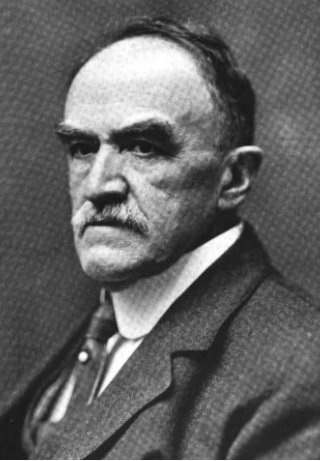
William Hubbard
Former U.S. Representative · West Virginia District 1 · 1907–1911 · Republican
William Hubbard represented West Virginia's District 1 in the United States House of Representatives (1907–1911) for the Republican party. The page below collects sourced biographical facts, term history, committee roles, and provenance for Hubbard.
Bioguide ID: H000891
Key facts
- Full name
- William Hubbard
- State
- West Virginia
- District
- District 1
- Party
- Republican
- House service
- 1907–1911
- First House term
- 1907
- Status
- Left office
- Current term ends
- —
- Born
- 1843
- Bioguide ID
- H000891
- Committee assignments
- —
- Dataset version
- 1.20260606
Biographical narrative
965 words · sourced from the Wikipedia REST extract
William Hubbard was an American politician and lawyer who served as a U.S. Representative for West Virginia's 1st congressional district. A member of the Republican Party, he was elected to the Sixtieth and Sixty-first Congresses, serving from 1907 until 1911. Born on December 24, 1843, in Wheeling, West Virginia, Hubbard had a diverse career that included military service, legal practice, and various roles in state politics. He was the son of Chester D. Hubbard, a former Congressman, which likely influenced his political aspirations. After his congressional tenure, he returned to his law practice in Wheeling, where he continued to reside until his death on December 5, 1921.
Early life and career
William Hubbard was born into a politically active family, with his father, Chester D. Hubbard, serving as a Congressman. This familial connection to politics may have shaped his early ambitions. Hubbard received his education in public schools and attended Linsly School in Wheeling, a preparatory institution known for its rigorous academic standards. He furthered his education at Wesleyan University in Middletown, Connecticut, graduating in 1863. His academic achievements laid a strong foundation for his future endeavors in law and politics.
After completing his undergraduate studies, Hubbard pursued a legal career. He studied law and was admitted to the bar in 1864, allowing him to practice law in West Virginia. His legal career began shortly after, as he returned to Wheeling to establish his law practice in 1866. In addition to his legal work, Hubbard also engaged in public service. He served as a clerk for the West Virginia House of Delegates from 1866 to 1870, a role that likely provided him with valuable insights into legislative processes and governance.
Hubbard's commitment to public service continued as he was elected to the House of Delegates in West Virginia in 1881 and 1882. His involvement in state politics was further highlighted by his participation as a delegate to the Republican National Convention in 1888 and again in 1912. During the 1912 convention, he was a prominent supporter of Theodore Roosevelt, who was seeking to regain the presidency. This involvement in national politics underscored Hubbard's dedication to the Republican Party and his interest in shaping the direction of the party at a national level.
In addition to his political activities, Hubbard also served his country during the Civil War. He enlisted in the Union Army in 1865 as a private in the 3rd West Virginia Cavalry. His military service was marked by a rapid rise in rank, as he eventually attained the position of first lieutenant before being honorably discharged. This experience not only contributed to his personal development but also enhanced his standing in the community, as military service was highly regarded during that era.
Hubbard's early career was characterized by a blend of legal practice, military service, and political involvement, which would serve as a foundation for his later achievements in Congress.
House tenure
William Hubbard's congressional career began when he was elected to represent West Virginia's 1st congressional district in the Sixtieth Congress, which commenced on March 4, 1907. He served in this capacity until March 3, 1911, completing two full terms in the U.S. House of Representatives. His election to Congress came after several previous attempts to secure a congressional seat, including an unsuccessful run for the Fifty-second Congress in 1890. This persistence in seeking public office reflects his commitment to serving his constituents and contributing to the legislative process.
During his time in the House, Hubbard was part of a legislative body that was navigating the complexities of early 20th-century America, a period marked by significant social, economic, and political changes. His tenure coincided with various national issues, including labor rights, economic reforms, and the growing influence of the Progressive movement. While specific details regarding his legislative initiatives and voting record are not provided, it is likely that Hubbard engaged with the pressing issues of his time, contributing to debates and discussions that shaped the future of the nation.
Hubbard chose not to seek re-nomination in 1910, marking the end of his congressional career. After leaving Congress, he returned to Wheeling, where he resumed his law practice. His decision to step back from the political arena suggests a desire to focus on his legal career and perhaps a reflection of the political landscape at the time.
Legislative focus and committees
While specific details regarding the committees on which William Hubbard served during his congressional tenure are not available, it is common for members of Congress to participate in committees that align with their interests and the needs of their constituents. Given his background in law and his experience in state politics, it is plausible that he may have been involved in committees related to legal affairs, taxation, or local governance.
Hubbard's legislative focus likely reflected the priorities of his constituents in West Virginia's 1st congressional district. The early 20th century was a time of significant change, with issues such as industrialization, labor rights, and economic reform coming to the forefront of national discourse. As a Republican representative, he would have been expected to align with party principles while also addressing the specific needs and concerns of his district.
His participation in the Republican National Conventions, particularly his support for Theodore Roosevelt in 1912, indicates that he was engaged with the broader political movements of his time. This involvement may have influenced his legislative priorities and the issues he championed during his time in office.
After concluding his congressional service, Hubbard returned to his legal practice in Wheeling, where he continued to contribute to his community until his death in 1921. His life and career reflect a commitment to public service, law, and the political process, underscoring the multifaceted nature of his contributions to West Virginia and the United States.
Notable legislation
Sponsored and co-sponsored legislation for William Hubbard is pending operator curation. The biographical narrative above carries the same provenance trail until per-bill rows are written.
Sources
- [1]https://en.wikipedia.org/wiki/William_Pallister_HubbardWikipedia · retrieved 2026-06-06
Notable quotes
Sourced quotes for William Hubbard are pending operator curation. Narrative-scope provenance remains attached below.
Sources
- [1]https://en.wikipedia.org/wiki/William_Pallister_HubbardWikipedia · retrieved 2026-06-06
Key positions
Curated policy positions for William Hubbard are pending operator review. The biographical narrative above carries the same provenance trail until per-topic positions are written.
Sources
- [1]https://en.wikipedia.org/wiki/William_Pallister_HubbardWikipedia · retrieved 2026-06-06
Terms served
- 1907–1909U.S. House · Term 1 · Republican
- 1909–1911U.S. House · Term 2 · Republican
Sources & provenance
Every attributable claim above carries a per-section [N] marker that resolves to the corresponding URL below. Each entry records the upstream provider, the canonical URL, and the timestamp at which the source was retrieved by the ingest pipeline.
Key facts
- https://bioguide.congress.gov/search/bio/H000891bioguide · retrieved 2026-06-06
- https://www.govtrack.us/congress/members/405737govtrack · retrieved 2026-06-06
Biographical narrative
- https://en.wikipedia.org/wiki/William_Pallister_Hubbardwikipedia · retrieved 2026-06-06
Find your representative
Every U.S. state elects representatives by district. Browse West Virginia’s delegation, the full former-representative roster, or explore the role and term length.
Related on The Candidate
- Preceded by Blackburn DovenerEarlier holder of the West Virginia District 1 House seat · Republican.Open
- Succeeded by John DavisLater holder of the West Virginia District 1 House seat · Democratic.Open
- Alan MollohanFormer U.S. Representative · West Virginia District 1 · DemocraticOpen
- Andrew SchifflerFormer U.S. Representative · West Virginia District 1 · RepublicanOpen
- Arch Moore Jr.Former U.S. Representative · West Virginia District 1 · RepublicanOpen
- Benjamin RosenbloomFormer U.S. Representative · West Virginia District 1 · RepublicanOpen