
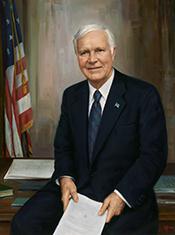
Historical · U.S. House · West Virginia · District 2
Harley Staggers
Former U.S. Representative · West Virginia District 2 · 1949–1981 · Democratic
Harley Staggers represented West Virginia's District 2 in the United States House of Representatives (1949–1981) for the Democratic party. The page below collects sourced biographical facts, term history, committee roles, and provenance for Staggers.
Bioguide ID: S000778
Key facts
- Full name
- Harley Staggers
- State
- West Virginia
- District
- District 2
- Party
- Democratic
- House service
- 1949–1981
- First House term
- 1949
- Status
- Left office
- Current term ends
- —
- Born
- 1907
- Bioguide ID
- S000778
- Committee assignments
- —
- Dataset version
- 1.20260605
Biographical narrative
861 words · sourced from the Wikipedia REST extract
Harley O. Staggers was a prominent American politician who served as a U.S. Representative for West Virginia's 2nd congressional district from 1949 until 1981. A member of the Democratic Party, Staggers was known for his long tenure in Congress, where he held significant influence, particularly as the chairman of the House Committee on Interstate and Foreign Commerce from 1966 until his retirement. His legislative efforts included notable contributions to the railroad industry, most famously through the Staggers Rail Act, which aimed to deregulate the industry and enhance its operational efficiency.
Early life and career
Harley Orrin Staggers was born on August 3, 1907, in Keyser, West Virginia, located in Mineral County. He pursued higher education at Emory and Henry College, where he earned a Bachelor of Arts degree in 1931. Following his undergraduate studies, he continued his education with graduate work at Duke University. Staggers began his professional career in education, teaching science and coaching at a high school in Virginia. He later took on the role of football coach at Potomac State College.
Staggers's early career also included public service as he was elected sheriff of Mineral County, serving from 1937 to 1941. His commitment to public service extended to military service during World War II, when he enlisted in the U.S. Navy on October 7, 1942. He served as a navigator in the Naval Air Corps and was discharged on January 22, 1946, after the war concluded.
In 1948, Staggers transitioned into politics, successfully running for a seat in the U.S. House of Representatives, representing West Virginia's 2nd Congressional District. His election marked the beginning of a lengthy political career, as he would go on to serve a total of 16 consecutive terms in Congress.
House tenure
Staggers's congressional career began in 1949 and spanned over three decades, concluding with his retirement in 1981. Throughout his time in office, he was reelected to 15 additional terms, showcasing a strong electoral support base in his district. His tenure was marked by significant legislative achievements and a commitment to various issues affecting his constituents and the nation.
From 1966 until his retirement, Staggers chaired the House Committee on Interstate and Foreign Commerce, a position that granted him considerable influence over legislation related to commerce, transportation, and telecommunications. His leadership in this role was notable, as he held the chairmanship for an uninterrupted period, setting a record for the longest tenure in the committee's history. Under his guidance, the committee addressed a range of critical issues, including the regulation of the railroad industry, which would become a hallmark of his legislative legacy.
Staggers was also active in broader Democratic Party activities, serving as a delegate to the Democratic National Convention in 1960. His voting record in Congress reflected a largely liberal stance, as he supported various civil rights initiatives and legislation aimed at promoting social justice. Notably, he did not endorse the 1956 Southern Manifesto and voted in favor of several key civil rights acts, including those enacted in 1957, 1960, 1964, and 1968, as well as the Voting Rights Act of 1965.
Legislative focus and committees
Throughout his time in Congress, Staggers was particularly focused on issues related to the railroad industry, which culminated in the passage of the Staggers Rail Act in 1980. This landmark legislation aimed to deregulate the railroad industry, allowing rail companies greater flexibility in setting prices and entering contracts with shippers without requiring approval from the Interstate Commerce Commission. The act was significant in that it sought to revitalize the railroad sector, which had been facing economic challenges due to outdated regulations. The Staggers Rail Act is often credited with strengthening the American railroad industry and improving safety standards.
In addition to his work on the railroad industry, Staggers's committee also investigated issues related to illegal drug use in sports. In 1973, under his leadership, the House Committee on Interstate and Foreign Commerce released findings that highlighted the prevalence of illegal drug use across various levels of sports, including the use of steroids and amphetamines. This investigation underscored the committee's commitment to addressing public health and safety concerns.
Staggers's tenure was not without controversy. He was involved in notable incidents, such as his attempt to compel CBS News to provide unedited footage related to a documentary on the Vietnam War. This effort was met with resistance from CBS, leading to a public dispute that ultimately ended without compliance from the network.
Staggers's contributions to legislation and his role in shaping policy were recognized during his lifetime, and his legacy continued to influence the political landscape in West Virginia and beyond. His family remained active in public service and politics, with several of his children pursuing careers in law and public office.
Harley O. Staggers passed away on August 20, 1991, in Cumberland, Maryland. His impact on the U.S. House of Representatives and the legislative process, particularly regarding the railroad industry, remains a significant part of his legacy. In recognition of his contributions, various institutions and locations in West Virginia have been named in his honor, including a Federal Court and Post Office building in Morgantown and a portion of Water Street in Keyser.
Notable legislation
Sponsored and co-sponsored legislation for Harley Staggers is pending operator curation. The biographical narrative above carries the same provenance trail until per-bill rows are written.
Sources
- [1]https://en.wikipedia.org/wiki/Harley_Orrin_StaggersWikipedia · retrieved 2026-06-05
Notable quotes
Sourced quotes for Harley Staggers are pending operator curation. Narrative-scope provenance remains attached below.
Sources
- [1]https://en.wikipedia.org/wiki/Harley_Orrin_StaggersWikipedia · retrieved 2026-06-05
Key positions
Curated policy positions for Harley Staggers are pending operator review. The biographical narrative above carries the same provenance trail until per-topic positions are written.
Sources
- [1]https://en.wikipedia.org/wiki/Harley_Orrin_StaggersWikipedia · retrieved 2026-06-05
Terms served
- 1949–1951U.S. House · Term 1 · Democratic
- 1951–1953U.S. House · Term 2 · Democratic
- 1953–1955U.S. House · Term 3 · Democratic
- 1955–1957U.S. House · Term 4 · Democratic
- 1957–1959U.S. House · Term 5 · Democratic
- 1959–1961U.S. House · Term 6 · Democratic
- 1961–1963U.S. House · Term 7 · Democratic
- 1963–1965U.S. House · Term 8 · Democratic
- 1965–1967U.S. House · Term 9 · Democratic
- 1967–1969U.S. House · Term 10 · Democratic
- 1969–1971U.S. House · Term 11 · Democratic
- 1971–1973U.S. House · Term 12 · Democratic
- 1973–1975U.S. House · Term 13 · Democratic
- 1975–1977U.S. House · Term 14 · Democratic
- 1977–1979U.S. House · Term 15 · Democratic
- 1979–1981U.S. House · Term 16 · Democratic
Sources & provenance
Every attributable claim above carries a per-section [N] marker that resolves to the corresponding URL below. Each entry records the upstream provider, the canonical URL, and the timestamp at which the source was retrieved by the ingest pipeline.
Key facts
- https://bioguide.congress.gov/search/bio/S000778bioguide · retrieved 2026-06-05
- https://www.govtrack.us/congress/members/410244govtrack · retrieved 2026-06-05
Biographical narrative
- https://en.wikipedia.org/wiki/Harley_Orrin_Staggerswikipedia · retrieved 2026-06-05
Find your representative
Every U.S. state elects representatives by district. Browse West Virginia’s delegation, the full former-representative roster, or explore the role and term length.
Related on The Candidate
- Preceded by Melvin SnyderEarlier holder of the West Virginia District 2 House seat · Republican.Open
- Succeeded by Cleveland BenedictLater holder of the West Virginia District 2 House seat · Republican.Open
- Alan MollohanFormer U.S. Representative · West Virginia District 1 · DemocraticOpen
- Andrew SchifflerFormer U.S. Representative · West Virginia District 1 · RepublicanOpen
- Arch Moore Jr.Former U.S. Representative · West Virginia District 1 · RepublicanOpen
- Benjamin RosenbloomFormer U.S. Representative · West Virginia District 1 · RepublicanOpen