
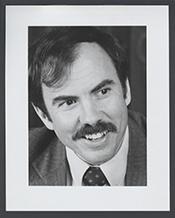
Historical · U.S. House · West Virginia · District 2
Robert Wise Jr.
Former U.S. Representative · West Virginia District 2 · 1983–2001 · Democratic
Robert Wise Jr. represented West Virginia's District 2 in the United States House of Representatives (1983–2001) for the Democratic party. The page below collects sourced biographical facts, term history, committee roles, and provenance for Jr..
Bioguide ID: W000654
Key facts
- Full name
- Robert Wise Jr.
- State
- West Virginia
- District
- District 2
- Party
- Democratic
- House service
- 1983–2001
- First House term
- 1983
- Status
- Left office
- Current term ends
- —
- Born
- 1948
- Bioguide ID
- W000654
- Committee assignments
- —
- Dataset version
- 1.20260605
Biographical narrative
996 words · sourced from the Wikipedia REST extract
Robert E. Wise Jr. is a former American politician who served as a U.S. Representative for West Virginia's 2nd congressional district from 1983 until 2001. A member of the Democratic Party, Wise's political career spanned nearly two decades in the House of Representatives, where he was known for his active engagement in various legislative initiatives. Following his tenure in Congress, he served as the 33rd governor of West Virginia from 2001 to 2005. After leaving the governorship, Wise became involved in educational reform, taking on a leadership role at a nonprofit organization focused on improving high school education across the nation.
Early life and career
Robert Ellsworth Wise Jr. was born on January 6, 1948, in West Virginia, where he was raised in the Kanawha Valley alongside his two sisters. He attended George Washington High School in Charleston, where he was an active student, participating in track and field events and serving as the vice president of the student body. His father worked for thirty years in the insurance industry, which provided a stable background for Wise's upbringing. His early involvement in student leadership and athletics foreshadowed his future career in public service.
Wise enrolled at Duke University in 1966, where he pursued a Bachelor of Arts degree in Political Science, graduating in 1970. Following his undergraduate education, he worked as an aide in a California mental health facility while applying to law schools. He was eventually accepted at the University of Houston but later transferred to Tulane University School of Law, where he earned his Juris Doctor in 1975. After completing his legal education, Wise returned to West Virginia and established his first law practice in Charleston.
In the early years of his legal career, Wise was actively involved in advocacy work. He played a significant role in founding West Virginians for a Fair and Equitable Assessment of Taxes (FEAT), a group focused on property tax reform. Additionally, he provided legal assistance to coal miners seeking workers' compensation and supported community renewal efforts for victims of the 1972 Buffalo Creek disaster. His commitment to public service was further demonstrated when he assisted with redevelopment initiatives for those affected by the Mingo County Floods in 1978.
Wise's political journey began in 1980 when he successfully ran for a seat in the West Virginia State Senate. He defeated the incumbent Senate President William Brotherton in a primary election, bolstered by endorsements from the West Virginia Education Association and other labor organizations. His lively campaign style and ability to connect with voters earned him recognition as a prominent figure in West Virginia politics.
House tenure
In 1982, Wise transitioned to national politics by running for the United States House of Representatives. He emerged victorious from a competitive Democratic primary and subsequently defeated the incumbent Republican congressman Mick Staton in the general election, securing 58 percent of the vote. This victory marked the beginning of Wise's long tenure in Congress, where he would serve for a total of nine consecutive terms until 2001.
During his time in the House, Wise represented West Virginia's 2nd congressional district, which spans from Harpers Ferry to the Ohio River. This district is notable for being one of the largest east of the Mississippi River. Throughout his 18 years in office, Wise enjoyed significant electoral support, running unopposed in 1990 and achieving majorities as high as 74 percent in 1988 against Republican Paul Hart and 64 percent in 1994 against Republican Samuel Cravotta.
In Congress, Wise held various leadership positions, including regional whip, at-large whip, and parliamentarian. His involvement in the Transportation and Infrastructure Committee allowed him to advocate for federal funding for road projects in West Virginia, which was crucial for the state's development. Additionally, he served on the House Committee on Education and Labor, where he worked on legislation that addressed critical issues in education and labor rights.
Among Wise's notable legislative achievements were the Chemical Right to Know legislation, the Wise Amendment to the Clean Air Act, and the Federal Mental Health Parity legislation. His dedication to his constituents and tireless work ethic earned him respect among his peers, including fellow West Virginian Robert C. Byrd, who praised Wise's commitment to public service.
Legislative focus and committees
Throughout his congressional career, Wise focused on a range of issues that were pertinent to his constituents and the broader national landscape. His work on the Transportation and Infrastructure Committee was particularly significant, as it allowed him to secure essential funding for infrastructure projects in West Virginia. This focus on infrastructure was critical for the state's economy and connectivity, especially given the geographical challenges faced by many rural areas.
In addition to infrastructure, Wise's tenure on the House Committee on Education and Labor highlighted his commitment to improving educational opportunities and labor rights. His involvement in education-related legislation was particularly impactful, as he sought to address the needs of students and educators in West Virginia. Wise's legislative efforts in this area contributed to the development of policies aimed at enhancing educational access and quality.
Wise's legislative accomplishments also included his advocacy for environmental issues, as demonstrated by his work on the Clean Air Act. The Wise Amendment, which he championed, aimed to strengthen air quality standards and promote public health. His commitment to environmental protection reflected a broader concern for the well-being of his constituents and the preservation of natural resources.
Overall, Robert E. Wise Jr.'s legislative focus encompassed a wide array of issues, including infrastructure, education, labor rights, and environmental protection. His active participation in various committees and his ability to navigate the complexities of congressional politics allowed him to make significant contributions to both his state and the nation during his nearly two-decade tenure in the U.S. House of Representatives. After leaving Congress in 2001, Wise continued his public service through his role as governor and later as a leader in educational reform, demonstrating his ongoing commitment to improving the lives of West Virginians and the broader American populace.
Notable legislation
Sponsored and co-sponsored legislation for Robert Wise Jr. is pending operator curation. The biographical narrative above carries the same provenance trail until per-bill rows are written.
Sources
- [1]https://en.wikipedia.org/wiki/Bob_WiseWikipedia · retrieved 2026-06-05
Notable quotes
Sourced quotes for Robert Wise Jr. are pending operator curation. Narrative-scope provenance remains attached below.
Sources
- [1]https://en.wikipedia.org/wiki/Bob_WiseWikipedia · retrieved 2026-06-05
Key positions
Curated policy positions for Robert Wise Jr. are pending operator review. The biographical narrative above carries the same provenance trail until per-topic positions are written.
Sources
- [1]https://en.wikipedia.org/wiki/Bob_WiseWikipedia · retrieved 2026-06-05
Terms served
- 1983–1985U.S. House · Term 1 · Democratic
- 1985–1987U.S. House · Term 2 · Democratic
- 1987–1989U.S. House · Term 3 · Democratic
- 1989–1991U.S. House · Term 4 · Democratic
- 1991–1993U.S. House · Term 5 · Democratic
- 1993–1995U.S. House · Term 6 · Democratic
- 1995–1997U.S. House · Term 7 · Democratic
- 1997–1999U.S. House · Term 8 · Democratic
- 1999–2001U.S. House · Term 9 · Democratic
Sources & provenance
Every attributable claim above carries a per-section [N] marker that resolves to the corresponding URL below. Each entry records the upstream provider, the canonical URL, and the timestamp at which the source was retrieved by the ingest pipeline.
Key facts
- https://bioguide.congress.gov/search/bio/W000654bioguide · retrieved 2026-06-05
- https://www.govtrack.us/congress/members/400614govtrack · retrieved 2026-06-05
Biographical narrative
- https://en.wikipedia.org/wiki/Bob_Wisewikipedia · retrieved 2026-06-05
Find your representative
Every U.S. state elects representatives by district. Browse West Virginia’s delegation, the full former-representative roster, or explore the role and term length.
Related on The Candidate
- Preceded by Cleveland BenedictEarlier holder of the West Virginia District 2 House seat · Republican.Open
- Succeeded by Alexander MooneyLater holder of the West Virginia District 2 House seat · Republican.Open
- Alan MollohanFormer U.S. Representative · West Virginia District 1 · DemocraticOpen
- Andrew SchifflerFormer U.S. Representative · West Virginia District 1 · RepublicanOpen
- Arch Moore Jr.Former U.S. Representative · West Virginia District 1 · RepublicanOpen
- Benjamin RosenbloomFormer U.S. Representative · West Virginia District 1 · RepublicanOpen