
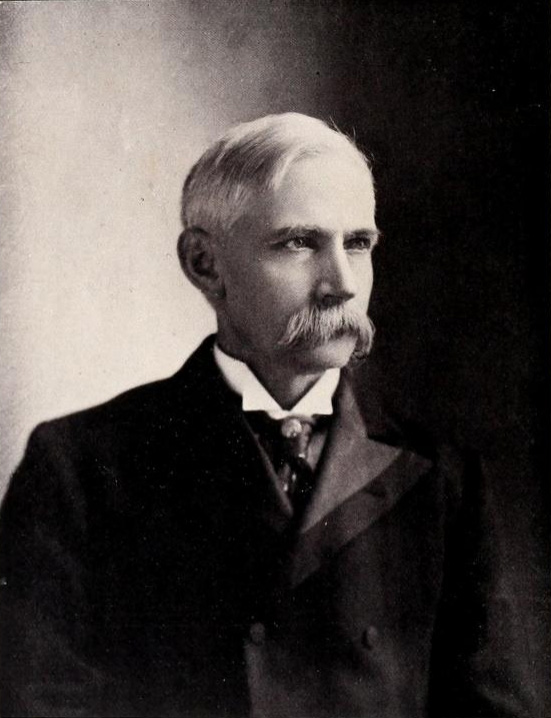
Historical · U.S. House · West Virginia · District 2
William Wilson
Former U.S. Representative · West Virginia District 2 · 1883–1895 · Democratic
William Wilson represented West Virginia's District 2 in the United States House of Representatives (1883–1895) for the Democratic party. The page below collects sourced biographical facts, term history, committee roles, and provenance for Wilson.
Bioguide ID: W000623
Key facts
- Full name
- William Wilson
- State
- West Virginia
- District
- District 2
- Party
- Democratic
- House service
- 1883–1895
- First House term
- 1883
- Status
- Left office
- Current term ends
- —
- Born
- 1843
- Bioguide ID
- W000623
- Committee assignments
- —
- Dataset version
- 1.20260606
Biographical narrative
858 words · sourced from the Wikipedia REST extract
William Wilson was a prominent American politician and lawyer from West Virginia, who served as a U.S. Representative from 1883 to 1895. A member of the Democratic Party, he was known for his role in tariff reform and his leadership within the House of Representatives. After his congressional tenure, he was appointed Postmaster General of the United States under President Grover Cleveland and later became the president of Washington and Lee University.
Early life and career
William Lyne Wilson was born on May 3, 1843, in Charles Town, Virginia, which is now part of West Virginia. He received his early education at the Charles Town Academy before pursuing higher education at Columbian College, now known as George Washington University, where he graduated in 1860. Wilson furthered his studies at the University of Virginia, which laid a strong foundation for his future endeavors.
During the American Civil War, Wilson enlisted in the Confederate Army, serving as a private in the 12th Virginia Cavalry. His military service during this tumultuous period shaped his early adulthood and influenced his later political views. After the war, he transitioned from military service to education, teaching at Columbian College while simultaneously studying law. He graduated from law school and was admitted to the bar in 1869, subsequently establishing a private law practice in Charles Town.
In addition to his legal career, Wilson was appointed as the president of West Virginia University, assuming office on September 4, 1882. His leadership at the university marked a significant chapter in his early career, showcasing his commitment to education and public service. Wilson's marriage to the daughter of Rev. A.J. Huntington, a professor at Columbian University, further connected him to the academic community.
House tenure
Wilson's political career began to take shape when he was elected as a delegate to the Democratic National Convention in 1880. Shortly thereafter, he successfully ran for the United States House of Representatives as a Democrat, beginning his first term in 1883. Over the course of his political career, Wilson was re-elected five times, serving a total of six terms in the House until 1895.
During his tenure, Wilson held the position of chairman of the Committee on Ways and Means from 1893 to 1895. This role was significant, as the committee is responsible for overseeing taxation and revenue-related legislation. One of his notable contributions during this period was his involvement in the co-authorship of the Wilson–Gorman Tariff Act, which aimed to reduce tariff rates that had been established by the McKinley Tariff of 1890. This legislation reflected Wilson's commitment to tariff reform and his alignment with the Bourbon Democrats, who advocated for lower tariffs and limited government intervention in the economy.
Wilson's time in Congress was marked by his active participation in debates and discussions surrounding economic policy, particularly in relation to tariffs and taxation. His legislative efforts were indicative of the broader Democratic Party's goals during the late 19th century, as they sought to address the economic challenges facing the nation.
Legislative focus and committees
Throughout his congressional career, Wilson's legislative focus revolved primarily around economic issues, particularly tariffs and taxation. As a member of the Committee on Ways and Means, he played a crucial role in shaping policies that impacted the nation's economy. His work on the Wilson–Gorman Tariff Act exemplified his commitment to reforming tariff rates, which he believed should be adjusted to better reflect the needs of the American public and the evolving economic landscape.
In addition to his work on tariffs, Wilson was involved in various legislative discussions and initiatives that aimed to address the economic concerns of his constituents and the nation at large. His speeches and writings during this period often reflected his views on taxation, government spending, and the role of the federal government in regulating the economy. He contributed to several publications and delivered speeches that articulated his positions on these critical issues, further establishing his reputation as a knowledgeable and engaged legislator.
After leaving Congress in 1895, Wilson continued to influence public policy when he was appointed Postmaster General by President Grover Cleveland. In this role, he oversaw the United States Postal Service from 1895 to 1897, further expanding his experience in government service. His tenure as Postmaster General was marked by efforts to improve postal services and address the challenges faced by the postal system during a time of significant change in communication and transportation.
Following his service in the federal government, Wilson transitioned to academia, becoming the president of Washington and Lee University in Lexington, Virginia. His leadership in this capacity allowed him to continue contributing to the field of education and to influence future generations of students.
William Wilson passed away on October 17, 1900, in Lexington, Virginia. He was interred in Edgehill Cemetery in Charles Town, West Virginia. In recognition of his contributions, a portion of U.S. Route 340, which runs between Harpers Ferry and Charles Town, has been designated the William L. Wilson Freeway, honoring his legacy in the region. Wilson's career reflects the complexities of American politics during the late 19th century, as well as the interplay between education, law, and public service.
Notable legislation
Sponsored and co-sponsored legislation for William Wilson is pending operator curation. The biographical narrative above carries the same provenance trail until per-bill rows are written.
Sources
- [1]https://en.wikipedia.org/wiki/William_Lyne_WilsonWikipedia · retrieved 2026-06-06
Notable quotes
Sourced quotes for William Wilson are pending operator curation. Narrative-scope provenance remains attached below.
Sources
- [1]https://en.wikipedia.org/wiki/William_Lyne_WilsonWikipedia · retrieved 2026-06-06
Key positions
Curated policy positions for William Wilson are pending operator review. The biographical narrative above carries the same provenance trail until per-topic positions are written.
Sources
- [1]https://en.wikipedia.org/wiki/William_Lyne_WilsonWikipedia · retrieved 2026-06-06
Terms served
- 1883–1885U.S. House · Term 1 · Democratic
- 1885–1887U.S. House · Term 2 · Democratic
- 1887–1889U.S. House · Term 3 · Democratic
- 1889–1891U.S. House · Term 4 · Democratic
- 1891–1893U.S. House · Term 5 · Democratic
- 1893–1895U.S. House · Term 6 · Democratic
Sources & provenance
Every attributable claim above carries a per-section [N] marker that resolves to the corresponding URL below. Each entry records the upstream provider, the canonical URL, and the timestamp at which the source was retrieved by the ingest pipeline.
Key facts
- https://bioguide.congress.gov/search/bio/W000623bioguide · retrieved 2026-06-06
- https://www.govtrack.us/congress/members/411777govtrack · retrieved 2026-06-06
Biographical narrative
- https://en.wikipedia.org/wiki/William_Lyne_Wilsonwikipedia · retrieved 2026-06-06
Find your representative
Every U.S. state elects representatives by district. Browse West Virginia’s delegation, the full former-representative roster, or explore the role and term length.
Related on The Candidate
- Preceded by John HogeEarlier holder of the West Virginia District 2 House seat · Democratic.Open
- Succeeded by Alston DaytonLater holder of the West Virginia District 2 House seat · Republican.Open
- Alan MollohanFormer U.S. Representative · West Virginia District 1 · DemocraticOpen
- Andrew SchifflerFormer U.S. Representative · West Virginia District 1 · RepublicanOpen
- Arch Moore Jr.Former U.S. Representative · West Virginia District 1 · RepublicanOpen
- Benjamin RosenbloomFormer U.S. Representative · West Virginia District 1 · RepublicanOpen