
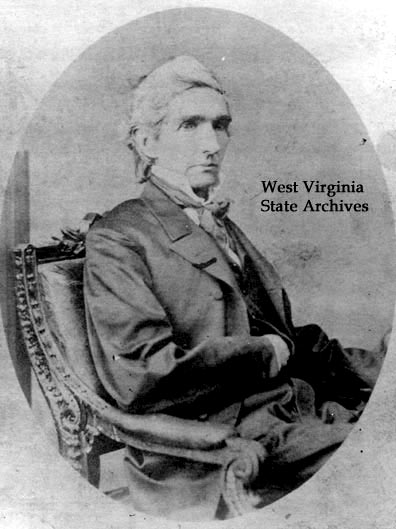
Historical · U.S. House · West Virginia · District 3
Daniel Polsley
Former U.S. Representative · West Virginia District 3 · 1867–1869 · Republican
Daniel Polsley represented West Virginia's District 3 in the United States House of Representatives (1867–1869) for the Republican party. The page below collects sourced biographical facts, term history, committee roles, and provenance for Polsley.
Bioguide ID: P000418
Key facts
- Full name
- Daniel Polsley
- State
- West Virginia
- District
- District 3
- Party
- Republican
- House service
- 1867–1869
- First House term
- 1867
- Status
- Left office
- Current term ends
- —
- Born
- 1803
- Bioguide ID
- P000418
- Committee assignments
- —
- Dataset version
- 1.20260606
Biographical narrative
869 words · sourced from the Wikipedia REST extract
Daniel Polsley was a prominent figure in 19th-century American politics, serving as a U.S. Representative for West Virginia's 3rd congressional district. A member of the Republican Party, Polsley held office during a transformative period in American history, particularly in the context of the Civil War and the subsequent establishment of West Virginia as a state. His career encompassed various roles, including lawyer, judge, and editor, reflecting a diverse professional background that contributed to his political endeavors.
Early life and career
Daniel Polsley was born on November 28, 1803, in Palatine, Virginia, which is now part of West Virginia. He was the son of Jacob Polsley and Margaret Haymond, both of whom had deep roots in the region. His maternal grandfather, William Haymond, was a notable figure who had moved to the Appalachian area and participated in military actions against Native Americans. He had also commanded a fort during the American Revolution. Polsley's family background included a mix of military service and political involvement, as his uncle William C. Haymond served in the Virginia General Assembly.
Polsley had one elder brother, John Haymond Polsley, who also pursued a life in public service, moving to Indiana and later Iowa. Daniel Polsley was part of a larger family, having three elder sisters and two younger sisters who married and continued the family lineage. His early education took place in local country schools, where he laid the groundwork for his future legal career. After completing his preparatory studies, he read law and was admitted to the bar in 1827.
Following his admission to the bar, Polsley began practicing law in Wellsburg, Virginia, which was the county seat of Brooke County. In addition to his legal work, he became involved in journalism, serving as the editor of the Western Transcript from 1833 to 1845. His career took him to Mason County, Virginia, in 1845, where he continued to practice law while also engaging in farming. During this time, census records indicate that he owned enslaved individuals, a reflection of the social and economic practices of the era.
Polsley's political career began to take shape during the Civil War. He represented Mason County at the Wheeling Convention in May 1861, a gathering that played a critical role in the formation of West Virginia. His leadership was recognized when he was elected president of the state senate during several sessions of the General Assembly held in Wheeling. He later served as the Lieutenant Governor of the Restored Government of Virginia, a position that underscored his influence in the region during a tumultuous time.
Despite his political involvement, Polsley expressed reservations about the creation of a new state from the western counties of Virginia, particularly at a time when many residents were unable to vote. His concerns were rooted in the belief that a hasty division of the state would undermine democratic principles. His family was also involved in the conflict; two of his sons volunteered for Union service during the Civil War, with one achieving the rank of lieutenant colonel.
House tenure
Polsley's congressional career began after he resigned from his judicial position in June 1863 to pursue a seat in the U.S. House of Representatives. He was elected in the 1866 elections as a Republican to represent West Virginia's 3rd congressional district. His term in the House commenced in 1867 and concluded in 1869. During his time in Congress, Polsley engaged in the legislative processes of a nation grappling with the aftermath of the Civil War and the integration of West Virginia into the Union.
After completing his term, Polsley did not seek re-election. His congressional seat was subsequently filled by fellow Republican John Witcher, who served for one term before a Democrat took over the position. Following his departure from Congress, Polsley returned to his legal practice in Point Pleasant, West Virginia, where he continued to contribute to the community through his professional work.
Legislative focus and committees
While specific details regarding Polsley's legislative focus and committee assignments during his time in the House are not extensively documented, it can be inferred that his background as a lawyer and judge likely influenced his approach to legislation. Given the historical context of his tenure, it is reasonable to assume that he was involved in discussions and decisions related to the Reconstruction era, statehood issues, and the integration of West Virginia into the broader political landscape of the United States.
Polsley's legal expertise and experience in state governance would have positioned him to contribute meaningfully to legislative debates and initiatives aimed at addressing the challenges faced by a nation recovering from civil strife. His role in the formation of West Virginia and his subsequent service in Congress highlight his commitment to public service and the development of his home state.
After his congressional career, Polsley continued to reside in West Virginia until his death on October 14, 1877. He was interred in Lone Oak Cemetery in Mason County, where his legacy as a lawyer, judge, and politician remains a part of West Virginia's historical narrative. His contributions to the establishment of the state and his brief tenure in the U.S. House of Representatives reflect the complexities of American politics during a pivotal era.
Notable legislation
Sponsored and co-sponsored legislation for Daniel Polsley is pending operator curation. The biographical narrative above carries the same provenance trail until per-bill rows are written.
Sources
- [1]https://en.wikipedia.org/wiki/Daniel_PolsleyWikipedia · retrieved 2026-06-06
Notable quotes
Sourced quotes for Daniel Polsley are pending operator curation. Narrative-scope provenance remains attached below.
Sources
- [1]https://en.wikipedia.org/wiki/Daniel_PolsleyWikipedia · retrieved 2026-06-06
Key positions
Curated policy positions for Daniel Polsley are pending operator review. The biographical narrative above carries the same provenance trail until per-topic positions are written.
Sources
- [1]https://en.wikipedia.org/wiki/Daniel_PolsleyWikipedia · retrieved 2026-06-06
Terms served
- 1867–1869U.S. House · Term 1 · Republican
Sources & provenance
Every attributable claim above carries a per-section [N] marker that resolves to the corresponding URL below. Each entry records the upstream provider, the canonical URL, and the timestamp at which the source was retrieved by the ingest pipeline.
Key facts
- https://bioguide.congress.gov/search/bio/P000418bioguide · retrieved 2026-06-06
- https://www.govtrack.us/congress/members/408811govtrack · retrieved 2026-06-06
Biographical narrative
- https://en.wikipedia.org/wiki/Daniel_Polsleywikipedia · retrieved 2026-06-06
Find your representative
Every U.S. state elects representatives by district. Browse West Virginia’s delegation, the full former-representative roster, or explore the role and term length.
Related on The Candidate
- Preceded by Kellian WhaleyEarlier holder of the West Virginia District 3 House seat · Unconditional Unionist.Open
- Succeeded by John WitcherLater holder of the West Virginia District 3 House seat · Republican.Open
- Alan MollohanFormer U.S. Representative · West Virginia District 1 · DemocraticOpen
- Andrew SchifflerFormer U.S. Representative · West Virginia District 1 · RepublicanOpen
- Arch Moore Jr.Former U.S. Representative · West Virginia District 1 · RepublicanOpen
- Benjamin RosenbloomFormer U.S. Representative · West Virginia District 1 · RepublicanOpen