
Historical · U.S. House · West Virginia · District 3
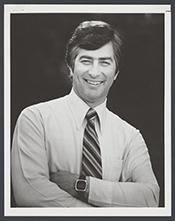
David Staton
Former U.S. Representative · West Virginia District 3 · 1981–1983 · Republican
David Staton represented West Virginia's District 3 in the United States House of Representatives (1981–1983) for the Republican party. The page below collects sourced biographical facts, term history, committee roles, and provenance for Staton.
Bioguide ID: S000818
Key facts
- Full name
- David Staton
- State
- West Virginia
- District
- District 3
- Party
- Republican
- House service
- 1981–1983
- First House term
- 1981
- Status
- Left office
- Current term ends
- —
- Born
- 1940
- Bioguide ID
- S000818
- Committee assignments
- —
- Dataset version
- 1.20260605
Biographical narrative
886 words · sourced from the Wikipedia REST extract
David Michael Staton, commonly known as Mick Staton, was an American banker and politician who served as a Republican member of the U.S. House of Representatives for West Virginia's 3rd congressional district from 1981 to 1983. Born on February 11, 1940, in Parkersburg, West Virginia, Staton had a career that combined both public service and banking, reflecting his deep roots in the state and his commitment to its political landscape. His tenure in Congress was marked by his efforts to represent the interests of his constituents, although it was relatively brief, spanning a single term.
Early life and career
Mick Staton was born in Parkersburg, a city located in Wood County, West Virginia. He attended Parkersburg High School, where he graduated in 1958. Following high school, he pursued higher education at Concord College in Athens, West Virginia, from 1961 to 1963. During this time, Staton also served in the Army National Guard from 1957 until 1965, which provided him with military experience and a sense of discipline that would later inform his political career.
After completing his education, Staton transitioned into the banking sector, where he built a career that would later complement his political aspirations. He joined Kanawha Valley Bank in Charleston, West Virginia, in 1972. Over the course of his eight years with the bank, he held various positions, including data processing manager and eventually vice president. His experience in banking not only provided him with financial acumen but also helped him establish connections within the business community, which would be beneficial in his political endeavors.
Staton was actively involved in the Republican Party in West Virginia during the late 1970s. He participated as a delegate in the state Republican conventions in both 1976 and 1980, which allowed him to engage with party leadership and grassroots activists. His involvement culminated in his role as a delegate to the 1980 Republican National Convention, where he contributed to the party's national platform and candidate selection.
House tenure
Mick Staton's political career took a significant turn when he decided to run for the U.S. House of Representatives. His initial attempt in 1978 was unsuccessful; he lost to the long-serving incumbent John M. Slack, Jr. Despite this setback, Staton remained committed to his political ambitions. In 1980, he ran again for the 3rd congressional district seat, this time against Democrat John G. Hutchinson, who had been elected in a special election following Slack's death. Staton's campaign was successful, and he won the election, marking his entry into the U.S. Congress.
Staton served in the House of Representatives from January 1981 until January 1983. During his single term, he was involved in various legislative activities and worked to address issues pertinent to his constituents in West Virginia. His tenure coincided with a period of significant political and economic changes in the country, including discussions around economic policy, energy production, and social issues that were particularly relevant to West Virginia, a state rich in natural resources.
Despite his efforts, Staton's time in Congress was relatively short-lived. In the 1982 election, he sought re-election but was defeated by Bob Wise, a Democrat who would later become the governor of West Virginia. Staton's defeat marked the end of his congressional career, but it did not signify the end of his involvement in public service and political affairs.
Legislative focus and committees
During his time in the House of Representatives, Mick Staton focused on several key issues that were important to his constituents and the broader West Virginia community. Although specific details about the legislation he sponsored or supported are not provided, it can be inferred that his background in banking and his experience in local politics likely influenced his legislative priorities. Issues such as economic development, job creation, and support for the energy sector, particularly coal, would have been significant topics of interest for a representative from West Virginia.
Staton’s involvement in committees during his tenure in Congress is not explicitly detailed, but as a member of the House, he would have had the opportunity to participate in various committees that aligned with his interests and the needs of his district. Committees play a crucial role in shaping legislation and overseeing government functions, and Staton’s participation would have allowed him to advocate for policies that benefited his constituents.
After leaving Congress, Staton continued to engage in political activities. He served as the chief political advisor to the U.S. Chamber of Commerce from 1984 until 1990, where he utilized his experience and connections to influence business-related policies at the national level. His role in the Chamber of Commerce would have involved advising on issues pertinent to the business community, furthering his commitment to economic growth and development.
In 2012, Staton was involved in the presidential election as an elector for the Republican ticket of Mitt Romney and Paul Ryan, reflecting his ongoing engagement in the political process and his loyalty to the Republican Party.
Mick Staton passed away on April 14, 2014, at Winchester Medical Center in Winchester, Virginia. At the time of his death, he resided in Inwood, West Virginia. His life and career reflect the complexities of American politics and the importance of local representation in the federal government. Staton's contributions to West Virginia, both as a banker and a politician, remain part of the state's political history.
Notable legislation
Sponsored and co-sponsored legislation for David Staton is pending operator curation. The biographical narrative above carries the same provenance trail until per-bill rows are written.
Sources
- [1]https://en.wikipedia.org/wiki/Mick_StatonWikipedia · retrieved 2026-06-05
Notable quotes
Sourced quotes for David Staton are pending operator curation. Narrative-scope provenance remains attached below.
Sources
- [1]https://en.wikipedia.org/wiki/Mick_StatonWikipedia · retrieved 2026-06-05
Key positions
Curated policy positions for David Staton are pending operator review. The biographical narrative above carries the same provenance trail until per-topic positions are written.
Sources
- [1]https://en.wikipedia.org/wiki/Mick_StatonWikipedia · retrieved 2026-06-05
Terms served
- 1981–1983U.S. House · Term 1 · Republican
Sources & provenance
Every attributable claim above carries a per-section [N] marker that resolves to the corresponding URL below. Each entry records the upstream provider, the canonical URL, and the timestamp at which the source was retrieved by the ingest pipeline.
Key facts
- https://bioguide.congress.gov/search/bio/S000818bioguide · retrieved 2026-06-05
- https://www.govtrack.us/congress/members/410283govtrack · retrieved 2026-06-05
Biographical narrative
- https://en.wikipedia.org/wiki/Mick_Statonwikipedia · retrieved 2026-06-05
Find your representative
Every U.S. state elects representatives by district. Browse West Virginia’s delegation, the full former-representative roster, or explore the role and term length.
Related on The Candidate
- Preceded by John HutchinsonEarlier holder of the West Virginia District 3 House seat · Democratic.Open
- Succeeded by Evan JenkinsLater holder of the West Virginia District 3 House seat · Republican.Open
- Alan MollohanFormer U.S. Representative · West Virginia District 1 · DemocraticOpen
- Andrew SchifflerFormer U.S. Representative · West Virginia District 1 · RepublicanOpen
- Arch Moore Jr.Former U.S. Representative · West Virginia District 1 · RepublicanOpen
- Benjamin RosenbloomFormer U.S. Representative · West Virginia District 1 · RepublicanOpen