
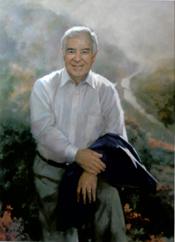
Historical · U.S. House · West Virginia · District 3
Nick Rahall II
Former U.S. Representative · West Virginia District 3 · 1977–2015 · Democratic
Nick Rahall II represented West Virginia's District 3 in the United States House of Representatives (1977–2015) for the Democratic party. The page below collects sourced biographical facts, term history, committee roles, and provenance for II.
Bioguide ID: R000011
Key facts
- Full name
- Nick Rahall II
- State
- West Virginia
- District
- District 3
- Party
- Democratic
- House service
- 1977–2015
- First House term
- 1977
- Status
- Left office
- Current term ends
- —
- Born
- 1949
- Bioguide ID
- R000011
- Committee assignments
- —
- Dataset version
- 1.20260605
Biographical narrative
965 words · sourced from the Wikipedia REST extract
Nicholas Joseph Rahall II is a former American politician who served as a member of the Democratic Party in the United States House of Representatives from 1977 until 2015. He is recognized as the longest-serving representative from West Virginia in the history of the House, having completed a total of 19 terms. Rahall represented the 3rd congressional district, which encompasses the southern part of West Virginia, including cities such as Huntington, Bluefield, and Beckley. His tenure in Congress was marked by significant involvement in various legislative committees, particularly in areas related to transportation and infrastructure.
Early life and career
Nick J. Rahall II was born on May 20, 1949, in Beckley, West Virginia. He is the son of Mary Alice and Nicholas Joseph Rahall, and his family has Lebanese Protestant roots, with his grandparents having immigrated to the United States from Lebanon. Growing up in a family that owned and operated radio stations, including WWNR, which his father established with his uncles, Rahall was exposed to the media and public service from an early age.
Rahall pursued higher education at Duke University, where he graduated in 1971. He later attended graduate school at George Washington University but did not complete his degree. Following his time in academia, he worked as a sales representative for his family's radio station before taking on leadership roles in the local broadcasting industry, including serving as president of the Mountaineer Tour and Travel Agency and later as president of West Virginia Broadcasting.
In the early 1970s, Rahall began his political career by working in the cloakroom of the U.S. Senate. He served as a staff assistant to U.S. Senator Robert Byrd from 1971 to 1974, a position that helped him gain valuable experience and insight into the workings of Congress. Rahall's involvement in politics continued as he participated as a delegate to the Democratic National Conventions in both 1972 and 1976, further solidifying his commitment to public service.
House tenure
Rahall's congressional career began when he was elected to represent West Virginia's 4th congressional district in 1976, succeeding Ken Hechler, who had decided to run for governor. In the primary election, Rahall secured a plurality of the votes, winning with approximately 38%. He subsequently won the general election with 46% of the vote, marking the beginning of a long and influential career in the House of Representatives.
Throughout the late 1970s and into the 1990s, Rahall faced various electoral challenges but consistently emerged victorious. In 1978, he successfully defended his seat against a primary challenge from Hechler, winning with 56% of the vote. The 1990 redistricting process resulted in the creation of the 3rd congressional district, which Rahall continued to represent after previously serving in the 4th district. He faced a competitive election in 1990, defeating Republican candidate Marianne Brewster with 52% of the vote, which was one of his narrowest margins of victory.
In subsequent elections, Rahall maintained a strong presence in West Virginia politics. In 2010, he faced former State Supreme Court Justice Spike Maynard and won with 56% of the vote, although this represented his lowest percentage since 1990. The 2012 election saw him defeat Republican candidate Rick Snuffer with 53.5% of the vote, marking another close contest.
The 2014 election was particularly challenging for Rahall, as he faced a primary challenge from fellow Democrat Richard Ojeda, which he won with 66.4% of the vote. In the general election, he was pitted against Republican State Senator Evan Jenkins, who had previously served as a Democrat before switching parties. The race was highly competitive, with significant financial backing for both candidates. Ultimately, Rahall was defeated, receiving 44.7% of the vote compared to Jenkins' 55.3%. This loss marked the end of his nearly four-decade-long tenure in Congress.
Legislative focus and committees
During his time in the House of Representatives, Rahall was known for his involvement in various legislative issues, particularly those affecting his constituents in West Virginia. He was a member of the Blue Dog Coalition, a group of moderate and conservative Democrats, which influenced his legislative priorities and approach to governance.
One of Rahall's significant areas of focus was mining, a critical industry in West Virginia. In 2010, he introduced legislation aimed at improving mine safety, reflecting his commitment to the welfare of miners and their families. However, his stance on mountaintop removal mining, a controversial practice in the region, drew criticism from environmental advocates. While he opposed efforts to ban this mining technique, he faced scrutiny regarding its environmental impacts, particularly concerning flooding and the use of explosives.
Rahall's environmental positions were complex. He acknowledged the reality of anthropogenic climate change and criticized those who dismissed the scientific consensus on the issue. Despite this acknowledgment, he expressed opposition to certain environmental regulations, including a greenhouse gas rule proposed by the Obama administration, which he labeled as "disastrous." His legislative actions included efforts to block the president's climate agenda, while he also engaged with the Environmental Protection Agency on various occasions, highlighting a nuanced relationship with environmental policy.
In Congress, Rahall served as the Ranking Member of the House Committee on Transportation and Infrastructure, where he played a key role in shaping legislation related to transportation systems, infrastructure development, and related issues. His committee assignments included participation in subcommittees focused on aviation, highways and transit, and railroads, pipelines, and hazardous materials, underscoring his commitment to improving the infrastructure of his home state and the nation at large.
Throughout his lengthy congressional career, Rahall's legislative focus and committee involvement reflected his dedication to addressing the needs of his constituents while navigating the complexities of national policy. His tenure left a lasting impact on West Virginia politics, and as of 2026, he remains the last Democrat to have represented the state in the U.S. House of Representatives.
Notable legislation
Sponsored and co-sponsored legislation for Nick Rahall II is pending operator curation. The biographical narrative above carries the same provenance trail until per-bill rows are written.
Sources
- [1]https://en.wikipedia.org/wiki/Nick_RahallWikipedia · retrieved 2026-06-05
Notable quotes
Sourced quotes for Nick Rahall II are pending operator curation. Narrative-scope provenance remains attached below.
Sources
- [1]https://en.wikipedia.org/wiki/Nick_RahallWikipedia · retrieved 2026-06-05
Key positions
Curated policy positions for Nick Rahall II are pending operator review. The biographical narrative above carries the same provenance trail until per-topic positions are written.
Sources
- [1]https://en.wikipedia.org/wiki/Nick_RahallWikipedia · retrieved 2026-06-05
Terms served
- 1977–1979U.S. House · Term 1 · Democratic
- 1979–1981U.S. House · Term 2 · Democratic
- 1981–1983U.S. House · Term 3 · Democratic
- 1983–1985U.S. House · Term 4 · Democratic
- 1985–1987U.S. House · Term 5 · Democratic
- 1987–1989U.S. House · Term 6 · Democratic
- 1989–1991U.S. House · Term 7 · Democratic
- 1991–1993U.S. House · Term 8 · Democratic
- 1993–1995U.S. House · Term 9 · Democratic
- 1995–1997U.S. House · Term 10 · Democratic
- 1997–1999U.S. House · Term 11 · Democratic
- 1999–2001U.S. House · Term 12 · Democratic
- 2001–2003U.S. House · Term 13 · Democratic
- 2003–2005U.S. House · Term 14 · Democratic
- 2005–2007U.S. House · Term 15 · Democratic
- 2007–2009U.S. House · Term 16 · Democratic
- 2009–2011U.S. House · Term 17 · Democratic
- 2011–2013U.S. House · Term 18 · Democratic
- 2013–2015U.S. House · Term 19 · Democratic
Sources & provenance
Every attributable claim above carries a per-section [N] marker that resolves to the corresponding URL below. Each entry records the upstream provider, the canonical URL, and the timestamp at which the source was retrieved by the ingest pipeline.
Key facts
- https://bioguide.congress.gov/search/bio/R000011bioguide · retrieved 2026-06-05
- http://rahall.house.govhouse.gov · retrieved 2026-06-05
Biographical narrative
- https://en.wikipedia.org/wiki/Nick_Rahallwikipedia · retrieved 2026-06-05
Find your representative
Every U.S. state elects representatives by district. Browse West Virginia’s delegation, the full former-representative roster, or explore the role and term length.
Related on The Candidate
- Preceded by Cleveland BaileyEarlier holder of the West Virginia District 3 House seat · Democratic.Open
- Succeeded by Evan JenkinsLater holder of the West Virginia District 3 House seat · Republican.Open
- Alan MollohanFormer U.S. Representative · West Virginia District 1 · DemocraticOpen
- Andrew SchifflerFormer U.S. Representative · West Virginia District 1 · RepublicanOpen
- Arch Moore Jr.Former U.S. Representative · West Virginia District 1 · RepublicanOpen
- Benjamin RosenbloomFormer U.S. Representative · West Virginia District 1 · RepublicanOpen