
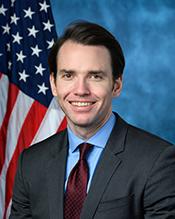
Serving · U.S. House · California · District 3
Kevin Kiley
U.S. Representative · California District 3 · 2023–present · Republican
Kevin Kiley represents California's District 3 in the United States House of Representatives (2023–present) for the Republican party. The page below collects sourced biographical facts, term history, committee roles, and provenance for Kiley.
Bioguide ID: K000401
Key facts
- Full name
- Kevin Kiley
- State
- California
- District
- District 3
- Party
- Republican
- House service
- 2023–present
- First House term
- 2023
- Status
- Currently serving
- Current term ends
- 2027
- Born
- 1985
- Bioguide ID
- K000401
- Committee assignments
- —
- Dataset version
- 1.20260604
Biographical narrative
931 words · sourced from the Wikipedia REST extract
Kevin Kiley is an American politician currently serving as the U.S. Representative for California's 3rd congressional district, a position he has held since 2023. Initially elected as a Republican, Kiley later transitioned to an independent status, citing dissatisfaction with partisanship in politics. Before his tenure in Congress, he served in the California State Assembly from 2016 to 2022 and was a candidate in the 2021 California gubernatorial recall election. Kiley's political career has been marked by his advocacy for educational reform, skepticism towards certain environmental policies, and a focus on government accountability.
Early life and career
Kevin Kiley was born on January 30, 1985, in the Sacramento area of California. He was raised in a family with a strong emphasis on education and public service; his father was a physician, while his mother worked as a special education teacher. Kiley completed his secondary education at Granite Bay High School, where he likely developed an interest in civic engagement and leadership.
Following high school, Kiley pursued higher education at Harvard University, where he earned his undergraduate degree in 2007. After graduation, he joined Teach for America, a program aimed at addressing educational inequities in underserved communities. Kiley spent two years teaching at Manual Arts High School in Los Angeles, during which he also worked towards obtaining his teaching credentials at Loyola Marymount University.
Kiley's academic journey continued at Yale Law School, where he graduated and served as an editor for the Yale Law Journal. His legal career began with a clerkship at the Federal Reserve Bank of New York, providing him with insights into economic policy and regulatory frameworks. Upon returning to California, Kiley joined the law firm Irell & Manella, where he was involved in significant legal cases, including one concerning intellectual property theft that implicated the Chinese technology company Huawei. This experience contributed to his understanding of complex legal and business issues, which would later inform his legislative priorities.
House tenure
Kiley's political career began in earnest when he was elected to the California State Assembly in 2016, representing the 6th district. His tenure in the Assembly was characterized by a focus on educational reform and government accountability. During his time in the Assembly, Kiley authored legislation aimed at facilitating student transfers between school districts, reflecting his commitment to improving educational opportunities for California's youth.
In 2021, Kiley gained broader recognition when he announced his candidacy for governor during the recall election against Gavin Newsom. Although he did not succeed in his gubernatorial bid, finishing sixth among candidates, his campaign highlighted issues such as school choice and the influence of teachers' unions. Kiley's platform resonated with certain segments of the electorate, particularly those advocating for educational reforms.
In 2022, Kiley was elected to the U.S. House of Representatives, marking the beginning of his first congressional term. His election came during a period of heightened political polarization, and he initially aligned with the Republican Party before deciding to become an independent. This shift was motivated by his frustrations with partisanship and a desire to represent his constituents without the constraints of party affiliation.
Kiley's current term in the House is set to conclude on January 3, 2027. As a member of Congress, he has continued to engage with issues pertinent to his constituents in California's 3rd congressional district, which includes a mix of urban and rural communities.
Legislative focus and committees
Throughout his political career, Kiley has maintained a focus on several key issues, including education, government accountability, and public health. His advocacy for educational reform is evident in his support for charter schools and efforts to enhance student mobility between districts. Kiley has expressed concerns about the power of teachers' unions and their impact on educational policy, positioning himself as a proponent of school choice.
Kiley's legislative record also reflects a nuanced approach to environmental issues. While he acknowledges the reality of climate change, he has opposed specific policies implemented by the California government, such as the executive orders mandating zero-emission vehicles by 2035 and banning oil drilling by 2045. His stance indicates a preference for balancing environmental concerns with economic considerations, particularly in relation to job creation and energy independence.
In addition to his focus on education and the environment, Kiley has been vocal about government transparency and accountability. He has criticized perceived privileges afforded to political elites, as evidenced by his legislative efforts to close a DMV office that catered exclusively to state legislators and staff. Kiley's advocacy for a more equitable government structure underscores his commitment to representing the interests of everyday citizens.
Kiley's approach to public health has also been a topic of discussion during his time in office. He introduced legislation aimed at banning vaccine mandates at the local and state levels, reflecting a broader debate about individual rights and government intervention in health matters. His position on this issue aligns with a segment of the electorate that prioritizes personal freedom in health-related decisions.
In Congress, Kiley has continued to serve on various committees, where he engages with legislation that aligns with his interests and the needs of his constituents. His independent status allows him to navigate the political landscape with a focus on pragmatic solutions rather than strict party lines, which may appeal to a diverse range of voters.
Overall, Kevin Kiley's career has been marked by a commitment to educational reform, government accountability, and a willingness to challenge established norms within the political landscape. As he continues to serve in the U.S. House of Representatives, Kiley's legislative focus and independent approach will likely shape his contributions to California's political discourse.
Notable legislation
Sponsored and co-sponsored legislation for Kevin Kiley is pending operator curation. The biographical narrative above carries the same provenance trail until per-bill rows are written.
Sources
- [1]https://en.wikipedia.org/wiki/Kevin_Kiley_(politician)Wikipedia · retrieved 2026-06-04
Notable quotes
Sourced quotes for Kevin Kiley are pending operator curation. Narrative-scope provenance remains attached below.
Sources
- [1]https://en.wikipedia.org/wiki/Kevin_Kiley_(politician)Wikipedia · retrieved 2026-06-04
Key positions
Curated policy positions for Kevin Kiley are pending operator review. The biographical narrative above carries the same provenance trail until per-topic positions are written.
Sources
- [1]https://en.wikipedia.org/wiki/Kevin_Kiley_(politician)Wikipedia · retrieved 2026-06-04
Terms served
- 2023–2025U.S. House · Term 1 · Republican
- 2025–2027U.S. House · Term 2 · Republican
Sources & provenance
Every attributable claim above carries a per-section [N] marker that resolves to the corresponding URL below. Each entry records the upstream provider, the canonical URL, and the timestamp at which the source was retrieved by the ingest pipeline.
Key facts
- https://bioguide.congress.gov/search/bio/K000401bioguide · retrieved 2026-06-04
- https://kiley.house.govhouse.gov · retrieved 2026-06-04
Biographical narrative
- https://en.wikipedia.org/wiki/Kevin_Kiley_(politician)wikipedia · retrieved 2026-06-04
Find your representative
Every U.S. state elects representatives by district. Browse California’s delegation, the full currently-serving-representative roster, or explore the role and term length.
Related on The Candidate
- James GallagherServing U.S. Representative · California District 1 · RepublicanOpen
- Mark DeSaulnierServing U.S. Representative · California District 10 · DemocraticOpen
- Nancy PelosiServing U.S. Representative · California District 11 · DemocraticOpen
- Lateefah SimonServing U.S. Representative · California District 12 · DemocraticOpen
- Republican PartyFederal candidates and office holders on the Republican line.Open
- Representatives from CaliforniaEvery currently-serving U.S. Representative who has represented California.Open