
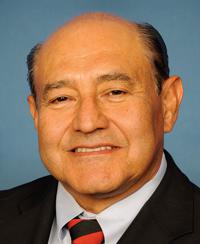
Serving · U.S. House · California · District 46
J. Correa
U.S. Representative · California District 46 · 2017–present · Democratic
J. Correa represents California's District 46 in the United States House of Representatives (2017–present) for the Democratic party. The page below collects sourced biographical facts, term history, committee roles, and provenance for Correa.
Bioguide ID: C001110
Key facts
- Full name
- J. Correa
- State
- California
- District
- District 46
- Party
- Democratic
- House service
- 2017–present
- First House term
- 2017
- Status
- Currently serving
- Current term ends
- 2027
- Born
- 1958
- Bioguide ID
- C001110
- Committee assignments
- 2
- Dataset version
- 1.20260604
Biographical narrative
891 words · sourced from the Wikipedia REST extract
J. Luis Correa is an American politician and businessman currently serving as the U.S. Representative for California's 46th congressional district, a position he has held since 2017. A member of the Democratic Party, Correa represents a district that encompasses significant portions of Orange County, including most of Anaheim, all of Santa Ana, and parts of Orange. Prior to his tenure in the U.S. House of Representatives, Correa had an extensive political career in California, including roles in the state legislature and local government.
Early life and career
J. Luis Correa was born on January 24, 1958, in East Los Angeles, California. His family background is marked by a history of migration; his paternal grandfather immigrated to the United States from Mexico in the 1910s to work for the Southern Pacific Transportation Company. After some time, his grandfather returned to Mexico during the Great Depression, taking his American-born children with him. Correa's father later moved back to California, where he started a family.
Tragedy struck early in Correa's life when his mother died in a car accident in Mexico when he was just two years old. Following this loss, Correa and his father relocated to Zacatecas, Mexico, before returning to California five years later. They settled in the Penguin City neighborhood of Anaheim, where Correa's family consisted of his father, his sister, and an aunt whom he referred to as "mom." His father worked in a cardboard factory, while his aunt earned a modest income cleaning hotel rooms. The family frequently moved due to the high cost of living.
Correa began his education speaking only Spanish and faced challenges in learning English. However, he eventually became fluent. He graduated from Anaheim High School and pursued higher education at California State University, Fullerton, where he earned a Bachelor of Arts degree in economics. He furthered his studies at the University of California, Los Angeles, obtaining both a Juris Doctor and a Master of Business Administration.
Before entering politics, Correa worked in various professional roles, including as an investment banker and real estate broker. He also served as a college instructor, which contributed to his understanding of economic and social issues.
House tenure
Correa's political career began in earnest in 1996 when he ran for the California State Assembly as the Democratic nominee for the 69th Assembly District. Although he lost that election by a narrow margin, he successfully won a rematch in 1998, defeating the incumbent Republican Jim Morrissey. During his time in the Assembly, Correa served on multiple committees and chaired several, including the Committee on Business and Professions and the Public Employees, Retirement and Social Security Committee. He was re-elected twice but was ultimately limited by California's term limits law, which restricts members to three two-year terms.
In 2004, Correa was elected to the Orange County Board of Supervisors, marking a significant milestone as the first Democrat to serve on the board since 1987. He represented the first district, which includes cities such as Garden Grove, Santa Ana, and Westminster, as well as unincorporated areas of the county.
Correa transitioned to the California State Senate in 2006, winning a competitive primary and subsequently defeating a Republican opponent in the general election. He was re-elected in 2010. However, his political aspirations faced a setback in 2015 when he ran for a position on the Orange County Board of Supervisors but lost in a special election.
In 2016, Correa sought a seat in the U.S. House of Representatives for California's 46th district, which was being vacated by long-serving incumbent Loretta Sanchez. He emerged as the frontrunner in the primary election and won the general election decisively.
Legislative focus and committees
Since taking office in the U.S. House of Representatives, Correa has been involved in various legislative activities and has served on several important committees. He was initially a member of the Blue Dog Coalition, a group of moderate Democrats, but left the caucus following disagreements regarding its rebranding.
Correa's legislative work has included participation in a bipartisan task force investigating significant national events, such as the attempted assassination of a former president. He has also been active in discussions surrounding government spending, notably voting on proposals related to budget cuts.
During the January 6, 2021, attack on the U.S. Capitol, Correa was present in the House Chamber as rioters attempted to breach the building. He took precautions to ensure his safety and later expressed his concerns regarding the actions of the rioters and the political climate that led to such events. Following the attack, he supported efforts to impeach the former president and called for the invocation of the Twenty-fifth Amendment.
In the current Congress, Correa serves on the Committee on Homeland Security, where he is the Ranking Member of the Subcommittee on Border Security and Enforcement. He is also a member of the Subcommittee on Counterterrorism, Law Enforcement, and Intelligence, as well as the Committee on the Judiciary.
Throughout his tenure, Correa has focused on issues relevant to his constituents, particularly those affecting the Hispanic community in Orange County. His background and experiences have shaped his approach to legislation and public service, reflecting the diverse needs of the population he represents. As he continues his term, Correa remains engaged in the legislative process, advocating for policies that align with his constituents' interests and addressing the challenges facing his district.
Committees & roles
- House Committee on Homeland SecurityMember · since 2025
- House Committee on the JudiciaryMember · since 2025
Notable legislation
Sponsored and co-sponsored legislation for J. Correa is pending operator curation. The biographical narrative above carries the same provenance trail until per-bill rows are written.
Sources
- [1]https://en.wikipedia.org/wiki/Lou_CorreaWikipedia · retrieved 2026-06-04
Notable quotes
Sourced quotes for J. Correa are pending operator curation. Narrative-scope provenance remains attached below.
Sources
- [1]https://en.wikipedia.org/wiki/Lou_CorreaWikipedia · retrieved 2026-06-04
Key positions
Curated policy positions for J. Correa are pending operator review. The biographical narrative above carries the same provenance trail until per-topic positions are written.
Sources
- [1]https://en.wikipedia.org/wiki/Lou_CorreaWikipedia · retrieved 2026-06-04
Terms served
- 2017–2019U.S. House · Term 1 · Democratic
- 2019–2021U.S. House · Term 2 · Democratic
- 2021–2023U.S. House · Term 3 · Democratic
- 2023–2025U.S. House · Term 4 · Democratic
- 2025–2027U.S. House · Term 5 · Democratic
Sources & provenance
Every attributable claim above carries a per-section [N] marker that resolves to the corresponding URL below. Each entry records the upstream provider, the canonical URL, and the timestamp at which the source was retrieved by the ingest pipeline.
Key facts
- https://bioguide.congress.gov/search/bio/C001110bioguide · retrieved 2026-06-04
- https://correa.house.govhouse.gov · retrieved 2026-06-04
Biographical narrative
- https://en.wikipedia.org/wiki/Lou_Correawikipedia · retrieved 2026-06-04
Find your representative
Every U.S. state elects representatives by district. Browse California’s delegation, the full currently-serving-representative roster, or explore the role and term length.
Related on The Candidate
- James GallagherServing U.S. Representative · California District 1 · RepublicanOpen
- Mark DeSaulnierServing U.S. Representative · California District 10 · DemocraticOpen
- Nancy PelosiServing U.S. Representative · California District 11 · DemocraticOpen
- Lateefah SimonServing U.S. Representative · California District 12 · DemocraticOpen
- Democratic PartyFederal candidates and office holders on the Democratic line.Open
- Representatives from CaliforniaEvery currently-serving U.S. Representative who has represented California.Open