
Historical · U.S. Senate · Alabama
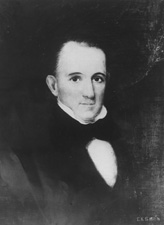
Arthur Bagby
Former U.S. Senator from Alabama · 1841–1849 · Democratic · Class 3
Arthur Bagby represented Alabama in the United States Senate (1841–1849) for the Democratic party. The page below collects sourced biographical facts, term history, committee roles, and provenance for Bagby.
Bioguide ID: B000030
Key facts
- Full name
- Arthur Bagby
- State
- Alabama
- Party
- Democratic
- Senate class
- Class III
- Senate service
- 1841–1849
- First Senate term
- 1841
- Status
- Left office
- Current term ends
- —
- Born
- —
- Bioguide ID
- B000030
- Committee assignments
- —
- Dataset version
- 1.20260602
Biographical narrative
899 words · sourced from the Wikipedia REST extract
Arthur Bagby was a prominent American politician who served as a U.S. Senator from Alabama and held the office of the state's governor. A member of the Democratic Party, Bagby’s political career spanned several decades, during which he played significant roles in both state and national politics. His tenure in the Senate was marked by his involvement in various committees and his support for key legislative measures, including the annexation of Texas. Following his time in the Senate, he served as the Minister to Russia, further extending his public service beyond the domestic sphere.
Early life and career
Arthur Pendleton Bagby was born in 1794 in Louisa County, Virginia. He pursued a legal education and was admitted to the bar in 1819, beginning his practice in Claiborne, Alabama. His early career was characterized by a strong commitment to public service, which he demonstrated through his involvement in local and state politics. Bagby first entered the political arena as a member of the Alabama State House of Representatives, where he served in multiple sessions during the early 1820s and again in the mid-1830s. Notably, he became the youngest speaker of the House in 1822 and again in 1836, showcasing his leadership abilities at a young age.
In addition to his role in the House, Bagby served in the Alabama State Senate in 1825. His political career at the state level laid the groundwork for his future endeavors in national politics. During his time in the Alabama legislature, he was known for his engagement in various issues affecting the state, including economic policies and governance.
Bagby’s political ascent continued when he was elected as the tenth governor of Alabama, serving from 1837 until 1841. His governorship coincided with the economic turmoil caused by the Panic of 1837, a significant financial crisis that affected many states. In response to the economic challenges, Bagby proposed measures aimed at assisting state banks, although these initiatives were largely rejected by the state legislature. His administration faced difficulties as all state banks were ultimately closed by his successor, Governor Benjamin Fitzpatrick, reflecting the broader economic struggles of the time.
Senate tenure
Arthur Bagby was elected to the United States Senate on November 21, 1841, to fill the vacancy left by the resignation of Senator Clement C. Clay. He served in the Senate until June 16, 1848, during which time he was a member of the Democratic Party. His Senate career was marked by his involvement in various legislative committees, where he held significant positions of leadership. Bagby served as the chairman of both the Committee on Territories and the Committee on Indian Affairs, in addition to being a member of the Committee on Claims.
Throughout his tenure in the Senate, Bagby was an advocate for the annexation of Texas, a contentious issue that was central to the political discourse of the time. His support for this measure aligned with the broader expansionist sentiments prevalent among many politicians and constituents in the United States during the mid-19th century. The annexation of Texas would later contribute to significant political and military conflicts, including the Mexican-American War.
Bagby’s Senate career was characterized by his engagement in discussions surrounding territorial expansion and Native American affairs, reflecting the complex dynamics of American politics during this period. His legislative work contributed to shaping policies that would have lasting impacts on the nation.
Legislative focus and committees
During his time in the Senate, Arthur Bagby was involved in several key legislative committees that addressed important issues of the day. As chairman of the Committee on Territories, he played a crucial role in discussions regarding the governance and organization of newly acquired lands. This position was particularly significant given the context of westward expansion and the ongoing debates about the status of territories in relation to slavery and statehood.
In addition to his work on territorial matters, Bagby chaired the Committee on Indian Affairs, where he dealt with issues affecting Native American tribes and their relations with the federal government. This committee's work was vital during a time when policies regarding Native American removal and land rights were contentious and often controversial. Bagby’s involvement in this committee reflects the complexities of American policy towards indigenous peoples during the 19th century.
Bagby also served on the Committee on Claims, which dealt with issues related to financial claims against the government. This role required him to navigate the interests of various constituents and stakeholders, balancing the needs of those seeking compensation with the fiscal responsibilities of the government.
After resigning from the Senate in 1848, Bagby transitioned to a diplomatic role, serving as the Minister to Russia until 1849. This appointment marked a significant shift in his career, allowing him to engage in international relations and represent American interests abroad. His time in Russia further exemplified his commitment to public service and his ability to adapt to various roles within the government.
Arthur Bagby’s political career, spanning from state-level governance to national legislative responsibilities, reflects the evolving landscape of American politics in the 19th century. His contributions to the Senate and his involvement in key committees underscore his engagement with critical issues of his time, including territorial expansion and Native American affairs. Following his public service, Bagby’s legacy continued to influence the political discourse in Alabama and beyond until his death in 1858 in Mobile, Alabama, where he was interred in Magnolia Cemetery.
Notable legislation
Sponsored and co-sponsored legislation for Arthur Bagby is pending operator curation. The biographical narrative above carries the same provenance trail until per-bill rows are written.
Sources
- [1]https://en.wikipedia.org/wiki/Arthur_P._BagbyWikipedia · retrieved 2026-06-02
Notable quotes
Sourced quotes for Arthur Bagby are pending operator curation. Narrative-scope provenance remains attached below.
Sources
- [1]https://en.wikipedia.org/wiki/Arthur_P._BagbyWikipedia · retrieved 2026-06-02
Key positions
Curated policy positions for Arthur Bagby are pending operator review. The biographical narrative above carries the same provenance trail until per-topic positions are written.
Sources
- [1]https://en.wikipedia.org/wiki/Arthur_P._BagbyWikipedia · retrieved 2026-06-02
Terms served
- 1841–1843U.S. Senate · Term 1 · Democratic · Class III
- 1843–1849U.S. Senate · Term 2 · Democratic · Class III
Sources & provenance
Every attributable claim above carries a per-section [N] marker that resolves to the corresponding URL below. Each entry records the upstream provider, the canonical URL, and the timestamp at which the source was retrieved by the ingest pipeline.
Key facts
- https://bioguide.congress.gov/search/bio/B000030bioguide · retrieved 2026-06-02
- https://www.govtrack.us/congress/members/401035govtrack · retrieved 2026-06-02
Biographical narrative
- https://en.wikipedia.org/wiki/Arthur_P._Bagbywikipedia · retrieved 2026-06-02
Find your senator
Every U.S. state elects two senators. Browse Alabama’s delegation, the full former-senator roster, or explore the role and term length.
Related on The Candidate
- Preceded by Clement ClayEarlier holder of the Alabama Class III Senate seat · Democratic.Open
- Succeeded by George SpencerLater holder of the Alabama Class III Senate seat · Republican.Open
- Benjamin FitzpatrickFormer U.S. Senator from Alabama · DemocraticOpen
- Braxton ComerFormer U.S. Senator from Alabama · DemocraticOpen
- Clement Clay Jr.Former U.S. Senator from Alabama · DemocraticOpen
- Democratic PartyFederal candidates and office holders on the Democratic line.Open