
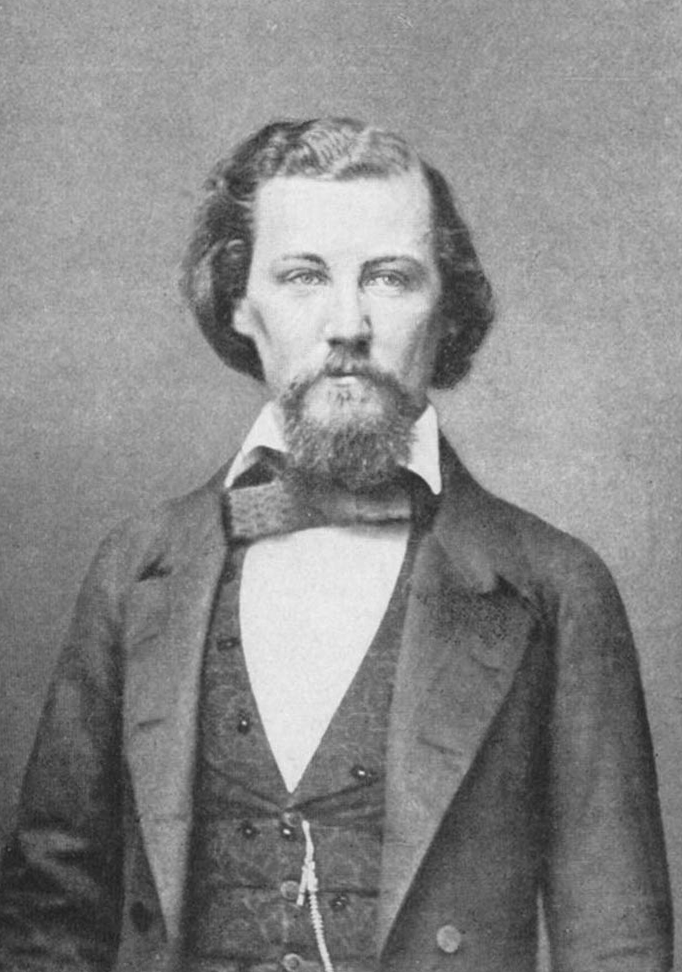
Historical · U.S. Senate · Alabama
Clement Clay Jr.
Former U.S. Senator from Alabama · 1853–1861 · Democratic · Class 2
Clement Clay Jr. represented Alabama in the United States Senate (1853–1861) for the Democratic party. The page below collects sourced biographical facts, term history, committee roles, and provenance for Jr..
Bioguide ID: C000480
Key facts
- Full name
- Clement Clay Jr.
- State
- Alabama
- Party
- Democratic
- Senate class
- Class II
- Senate service
- 1853–1861
- First Senate term
- 1853
- Status
- Left office
- Current term ends
- —
- Born
- 1816
- Bioguide ID
- C000480
- Committee assignments
- —
- Dataset version
- 1.20260602
Biographical narrative
898 words · sourced from the Wikipedia REST extract
Clement Clay Jr. was a prominent political figure in the mid-19th century, serving as a United States Senator from Alabama from 1853 until 1861. A member of the Democratic Party, Clay's political career was marked by his staunch defense of states' rights and his involvement in the events leading up to the American Civil War. Following his tenure in the U.S. Senate, he served as a senator for the Confederate States from 1862 to 1864. His legacy is intertwined with the tumultuous period of secession and the Civil War, as well as with the complex social dynamics of the South during that era.
Early life and career
Clement Claiborne Clay was born on December 13, 1816, in Huntsville, Alabama, into a family with a significant political legacy. He was the son of Clement Comer Clay, who served as both a U.S. senator and the governor of Alabama, and Susanna Claiborne Withers, the daughter of a prosperous planter. This familial background positioned Clay within the upper echelons of Southern society, where he was exposed to the political landscape from an early age. He was also a third cousin of the notable Kentucky statesman Henry Clay.
Clay's education began at the Huntsville Green Academy, after which he attended the University of Alabama at Tuscaloosa from 1833 to 1834, where he earned an A.B. degree at the age of seventeen. Following his graduation, he served as his father's secretary during his father's gubernatorial term from 1835 to 1837. Clay furthered his education at the University of Virginia, where he studied law and obtained a Bachelor of Laws degree in July 1839. He was admitted to the Alabama Bar later that year, marking the beginning of his legal career.
From 1839 to 1846, Clay practiced law in a family law firm before transitioning to public service. He served as a judge for Madison County from 1846 to 1848 and was a member of the Alabama State House of Representatives in the early 1840s. Although he sought a congressional seat in 1850, he was unsuccessful in his bid against the incumbent Williamson Robert Winfield Cobb.
Clay's political career took a significant turn in 1853 when he was elected by the Alabama legislature to the United States Senate. His first term began on March 4, 1853, and he was re-elected in 1857. He served in the Senate until January 21, 1861, during which time he became known for his defense of states' rights and his opposition to the policies of the Northern Republican Party.
Senate tenure
During his time in the U.S. Senate, Clay was an active participant in the heated debates surrounding the issues of slavery and states' rights. His political stance was characterized by a strong commitment to the interests of Alabama and the Southern states. He opposed the growing influence of the Republican Party, particularly in relation to its anti-slavery platform, which he viewed as a direct threat to the Southern way of life.
In the wake of the 1860 presidential election, which resulted in the election of Abraham Lincoln, Alabama seceded from the Union on January 11, 1861. Clay, along with several other Southern senators, resigned from the Senate on January 21, 1861. His resignation speech was notable for its impassioned defense of secession and condemnation of the Northern anti-slavery movement. He articulated a belief that the election of Lincoln represented a hostile act against the Southern states, leaving them with no choice but to secede in order to protect their rights and social order.
Following his resignation, Clay was elected by the Alabama Confederate legislature to serve as a senator in the First Confederate Congress. He held this position from 1862 until 1864, during which he aligned himself with the Confederate leadership, including President Jefferson Davis. Clay's role in the Confederate Senate involved supporting the war efforts and advocating for the Southern cause.
Legislative focus and committees
Clay's legislative focus during his Senate tenure was heavily influenced by the prevailing issues of his time, particularly the defense of slavery and the rights of states. He was a vocal proponent of the Fugitive Slave Act and argued against the encroachment of anti-slavery sentiments into the Southern territories. His commitment to these issues was a defining characteristic of his political career.
In addition to his legislative duties, Clay was involved in the Confederate War Department's efforts to establish a network for espionage and sabotage. Alongside fellow Confederate officials, he worked on initiatives to support the Southern war effort, including coordinating activities among Southern sympathizers in the North. In May 1864, he was sent to Canada on a secret mission to engage with Southern sympathizers and coordinate their efforts against the Union.
Clay's involvement in the Civil War extended beyond legislative matters. He was suspected of having connections to John Wilkes Booth, the assassin of President Lincoln, leading to his arrest after the war. Following the war, Clay was imprisoned due to suspicions regarding his involvement in the assassination plot. His wife, Virginia Clay, played a significant role in advocating for his release, eventually leading to his return to Alabama.
After the war, Clay faced the challenges of rebuilding his life in a changed South. His political career had ended, and he navigated the complexities of post-war society. He passed away on January 3, 1882, leaving behind a legacy intertwined with the political and social upheavals of his time.
Notable legislation
Sponsored and co-sponsored legislation for Clement Clay Jr. is pending operator curation. The biographical narrative above carries the same provenance trail until per-bill rows are written.
Sources
- [1]https://en.wikipedia.org/wiki/Clement_Claiborne_ClayWikipedia · retrieved 2026-06-02
Notable quotes
Sourced quotes for Clement Clay Jr. are pending operator curation. Narrative-scope provenance remains attached below.
Sources
- [1]https://en.wikipedia.org/wiki/Clement_Claiborne_ClayWikipedia · retrieved 2026-06-02
Key positions
Curated policy positions for Clement Clay Jr. are pending operator review. The biographical narrative above carries the same provenance trail until per-topic positions are written.
Sources
- [1]https://en.wikipedia.org/wiki/Clement_Claiborne_ClayWikipedia · retrieved 2026-06-02
Terms served
- 1853–1859U.S. Senate · Term 1 · Democratic · Class II
- 1859–1861U.S. Senate · Term 2 · Democratic · Class II
Sources & provenance
Every attributable claim above carries a per-section [N] marker that resolves to the corresponding URL below. Each entry records the upstream provider, the canonical URL, and the timestamp at which the source was retrieved by the ingest pipeline.
Key facts
- https://bioguide.congress.gov/search/bio/C000480bioguide · retrieved 2026-06-02
- https://www.govtrack.us/congress/members/402618govtrack · retrieved 2026-06-02
Biographical narrative
- https://en.wikipedia.org/wiki/Clement_Claiborne_Claywikipedia · retrieved 2026-06-02
Find your senator
Every U.S. state elects two senators. Browse Alabama’s delegation, the full former-senator roster, or explore the role and term length.
Related on The Candidate
- Preceded by Jeremiah ClemensEarlier holder of the Alabama Class II Senate seat · Democratic.Open
- Succeeded by Willard WarnerLater holder of the Alabama Class II Senate seat · Republican.Open
- Arthur BagbyFormer U.S. Senator from Alabama · DemocraticOpen
- Benjamin FitzpatrickFormer U.S. Senator from Alabama · DemocraticOpen
- Braxton ComerFormer U.S. Senator from Alabama · DemocraticOpen
- Clement ClayFormer U.S. Senator from Alabama · DemocraticOpen