
Historical · U.S. Senate · Arizona
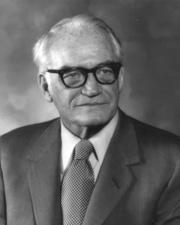
Barry Goldwater
Former U.S. Senator from Arizona · 1953–1987 · Republican · Class 3
Barry Goldwater represented Arizona in the United States Senate (1953–1987) for the Republican party. The page below collects sourced biographical facts, term history, committee roles, and provenance for Goldwater.
Bioguide ID: G000267
Key facts
- Full name
- Barry Goldwater
- State
- Arizona
- Party
- Republican
- Senate class
- Class III
- Senate service
- 1953–1987
- First Senate term
- 1953
- Status
- Left office
- Current term ends
- —
- Born
- 1909
- Bioguide ID
- G000267
- Committee assignments
- —
- Dataset version
- 1.20260602
Biographical narrative
912 words · sourced from the Wikipedia REST extract
Barry Goldwater was a prominent American politician who served as a U.S. Senator from Arizona for five terms, representing the Republican Party. His tenure in the Senate spanned from 1953 until 1987, marking him as a significant figure in American politics during the mid-20th century. Goldwater was known for his strong conservative views and played a crucial role in shaping the modern conservative movement in the United States.
Early life and career
Barry Goldwater was born on January 1, 1909, in Phoenix, Arizona. He grew up in a family that was deeply involved in the local community and business. His father was a successful businessman, which provided Goldwater with a stable upbringing. He attended local schools and later enrolled at the University of Arizona, where he studied business administration. However, he left college before completing his degree to join his family's business, which specialized in retail and wholesale.
Goldwater's early career was marked by his involvement in the family business, which helped him develop a keen understanding of commerce and economics. His experiences in the business world would later influence his political views, particularly his advocacy for free enterprise and limited government intervention in the economy.
In addition to his business endeavors, Goldwater served in the U.S. Army Air Forces during World War II. His military service further shaped his perspectives on national defense and foreign policy. After the war, he returned to Arizona and became increasingly active in local politics. He was elected to the Phoenix City Council in 1949, which marked the beginning of his political career. His time on the council allowed him to gain valuable experience in governance and public service.
Goldwater's political ambitions grew, and he successfully ran for the U.S. Senate in 1952. His campaign was characterized by a strong appeal to conservative values, which resonated with many voters in Arizona. He won the election and took office in January 1953, beginning a long and influential career in the Senate.
Senate tenure
Barry Goldwater's Senate career began in 1953, and he quickly established himself as a leading voice for conservative principles. Throughout his five terms, he was known for his staunch opposition to communism and his advocacy for a robust national defense. Goldwater was a prominent figure during the Cold War, often emphasizing the need for a strong military to counter perceived threats from the Soviet Union.
During his time in the Senate, Goldwater was involved in various significant legislative efforts. He served on several committees, which allowed him to influence a range of issues, including defense, foreign policy, and economic matters. His commitment to conservative ideals often put him at odds with more liberal members of Congress, leading to vigorous debates on key issues.
Goldwater's political philosophy was rooted in individual liberty and limited government. He believed that government should play a minimal role in the lives of citizens and that free-market principles should guide economic policy. This perspective was reflected in his voting record and public statements throughout his Senate tenure.
In 1964, Goldwater became the Republican Party's nominee for President of the United States. His candidacy marked a significant moment in American politics, as he represented a shift toward a more conservative platform within the party. Although he lost the election to Lyndon B. Johnson, Goldwater's campaign helped to galvanize the conservative movement and laid the groundwork for future Republican successes.
Goldwater continued to serve in the Senate until January 3, 1987. His long tenure allowed him to witness and participate in significant changes in American society and politics. He was known for his willingness to challenge the status quo and advocate for policies that aligned with his conservative beliefs.
Legislative focus and committees
Throughout his Senate career, Barry Goldwater focused on several key areas of legislation that reflected his conservative ideology. His commitment to national defense was a central theme, and he consistently advocated for increased military spending and a strong U.S. presence in global affairs. Goldwater believed that a robust military was essential for maintaining peace and deterring aggression from adversaries.
In addition to defense, Goldwater was a vocal proponent of free-market economics. He argued for reduced government regulation and lower taxes, believing that such measures would stimulate economic growth and innovation. His views on economic policy were influenced by his experiences in the business world, where he witnessed the benefits of entrepreneurial freedom.
Goldwater also took an interest in civil rights issues, although his positions were sometimes controversial. He initially opposed certain civil rights legislation, arguing that it infringed upon individual liberties and states' rights. However, as the political landscape evolved, he became more supportive of civil rights, recognizing the importance of addressing racial inequality in America.
During his Senate tenure, Goldwater served on various committees, including the Senate Armed Services Committee and the Senate Appropriations Committee. These roles allowed him to influence key legislation related to national security and government spending. His participation in these committees underscored his commitment to ensuring that the U.S. military remained strong and capable.
Goldwater's legacy in the Senate is marked by his unwavering dedication to conservative principles and his role in shaping the Republican Party's identity during a transformative period in American history. His influence extended beyond his time in office, as he became a symbol of the conservative movement and inspired future generations of politicians and activists. After leaving the Senate, Goldwater continued to be active in public life, contributing to discussions on policy and politics until his passing.
Notable legislation
Sponsored and co-sponsored legislation for Barry Goldwater is pending operator curation. The biographical narrative above carries the same provenance trail until per-bill rows are written.
Sources
- [1]https://en.wikipedia.org/wiki/Barry_GoldwaterWikipedia · retrieved 2026-06-02
Notable quotes
Sourced quotes for Barry Goldwater are pending operator curation. Narrative-scope provenance remains attached below.
Sources
- [1]https://en.wikipedia.org/wiki/Barry_GoldwaterWikipedia · retrieved 2026-06-02
Key positions
Curated policy positions for Barry Goldwater are pending operator review. The biographical narrative above carries the same provenance trail until per-topic positions are written.
Sources
- [1]https://en.wikipedia.org/wiki/Barry_GoldwaterWikipedia · retrieved 2026-06-02
Terms served
- 1953–1959U.S. Senate · Term 1 · Republican · Class I
- 1959–1965U.S. Senate · Term 2 · Republican · Class I
- 1969–1975U.S. Senate · Term 3 · Republican · Class III
- 1975–1981U.S. Senate · Term 4 · Republican · Class III
- 1981–1987U.S. Senate · Term 5 · Republican · Class III
Sources & provenance
Every attributable claim above carries a per-section [N] marker that resolves to the corresponding URL below. Each entry records the upstream provider, the canonical URL, and the timestamp at which the source was retrieved by the ingest pipeline.
Key facts
- https://bioguide.congress.gov/search/bio/G000267bioguide · retrieved 2026-06-02
- https://www.govtrack.us/congress/members/404629govtrack · retrieved 2026-06-02
Biographical narrative
- https://en.wikipedia.org/wiki/Barry_Goldwaterwikipedia · retrieved 2026-06-02
Find your senator
Every U.S. state elects two senators. Browse Arizona’s delegation, the full former-senator roster, or explore the role and term length.
Related on The Candidate
- Preceded by Ralph CameronEarlier holder of the Arizona Class III Senate seat · Republican.Open
- Succeeded by John McCainLater holder of the Arizona Class III Senate seat · Republican.Open
- Carl HaydenFormer U.S. Senator from Arizona · DemocraticOpen
- Dennis DeConciniFormer U.S. Senator from Arizona · DemocraticOpen
- Ernest McFarlandFormer U.S. Senator from Arizona · DemocraticOpen
- Henry AshurstFormer U.S. Senator from Arizona · DemocraticOpen